EN
EN  ES
ES 
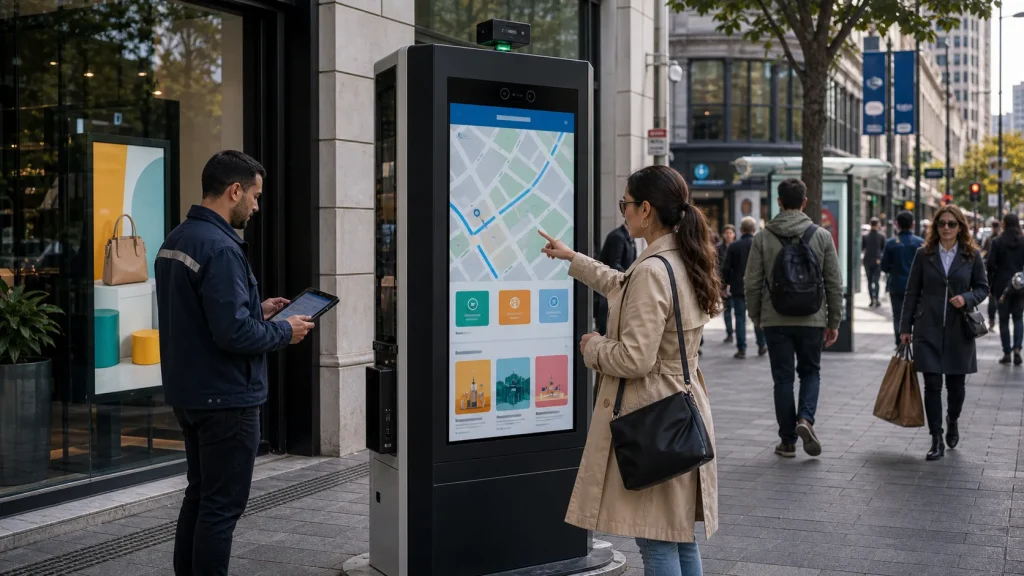
Table of contents
- Outdoor Digital Signage for Transportation Hubs: Real-Time Passenger Information Systems
- Executive Summary
- The Communication Challenge in Transit Hubs
- Key Applications in Transportation
- Real-Time Arrival and Departure Boards
- Outdoor Information Kiosks at Bus Stops and Station Entrances
- Platform-Side Display Panels
- Concourse Digital Wayfinding
- Emergency Communication Network
- Hardware Requirements for Transit Digital Signage
- The Smart City Connection
- Comparison: LCD vs. LED for Transit Applications
- Frequently Asked Questions
- Conclusion
Outdoor Digital Signage for Transportation Hubs: Real-Time Passenger Information Systems
Executive Summary
Transportation hubs-airports, train stations, bus terminals, and metro stops-process millions of passengers daily. In these high-traffic environments, information delivery must be instant, accurate, and visible from a distance. Outdoor digital signage has become the backbone of modern transit communication, replacing static timetables and paper notices with real-time, centrally managed display networks. This article examines how transportation authorities are leveraging high-brightness LCD kiosks and cloud-based content management to transform the passenger experience.
The Communication Challenge in Transit Hubs
Traditional transit information systems suffer from three critical weaknesses:
- Static information: Paper timetables and fixed signage can’t adapt to delays, platform changes, or emergency rerouting.
- Weather vulnerability: Printed posters fade in sunlight, peel in humidity, and become illegible in rain-especially problematic for outdoor platforms.
- Slow updates: Changing a single poster across 50 stations requires hours of staff time, creating dangerous information gaps during service disruptions.
A digital-first approach addresses all three. Outdoor-rated LCD displays with cloud CMS enable transit operators to push updates across an entire network in seconds-from a single dashboard.
Key Applications in Transportation
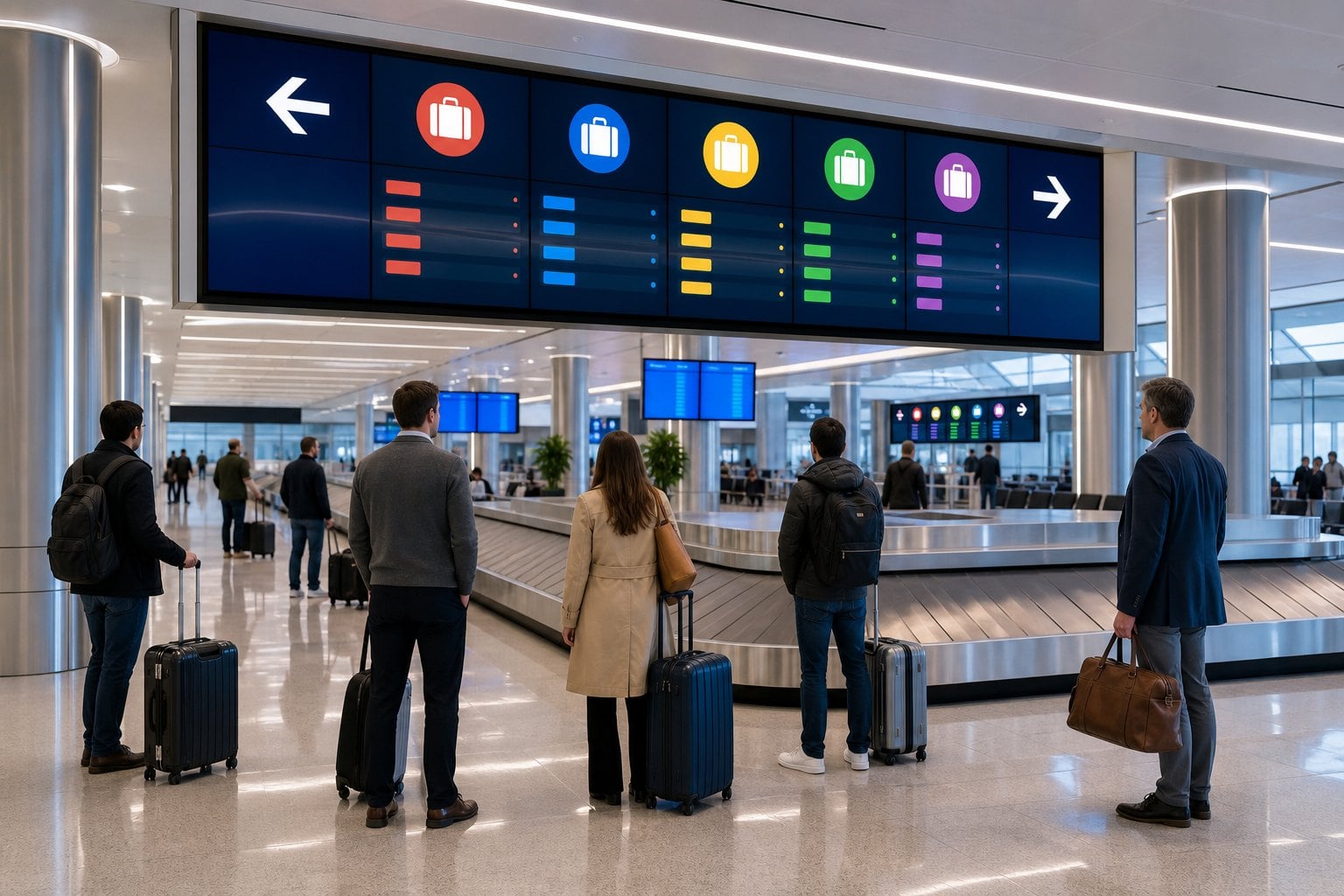
Real-Time Arrival and Departure Boards
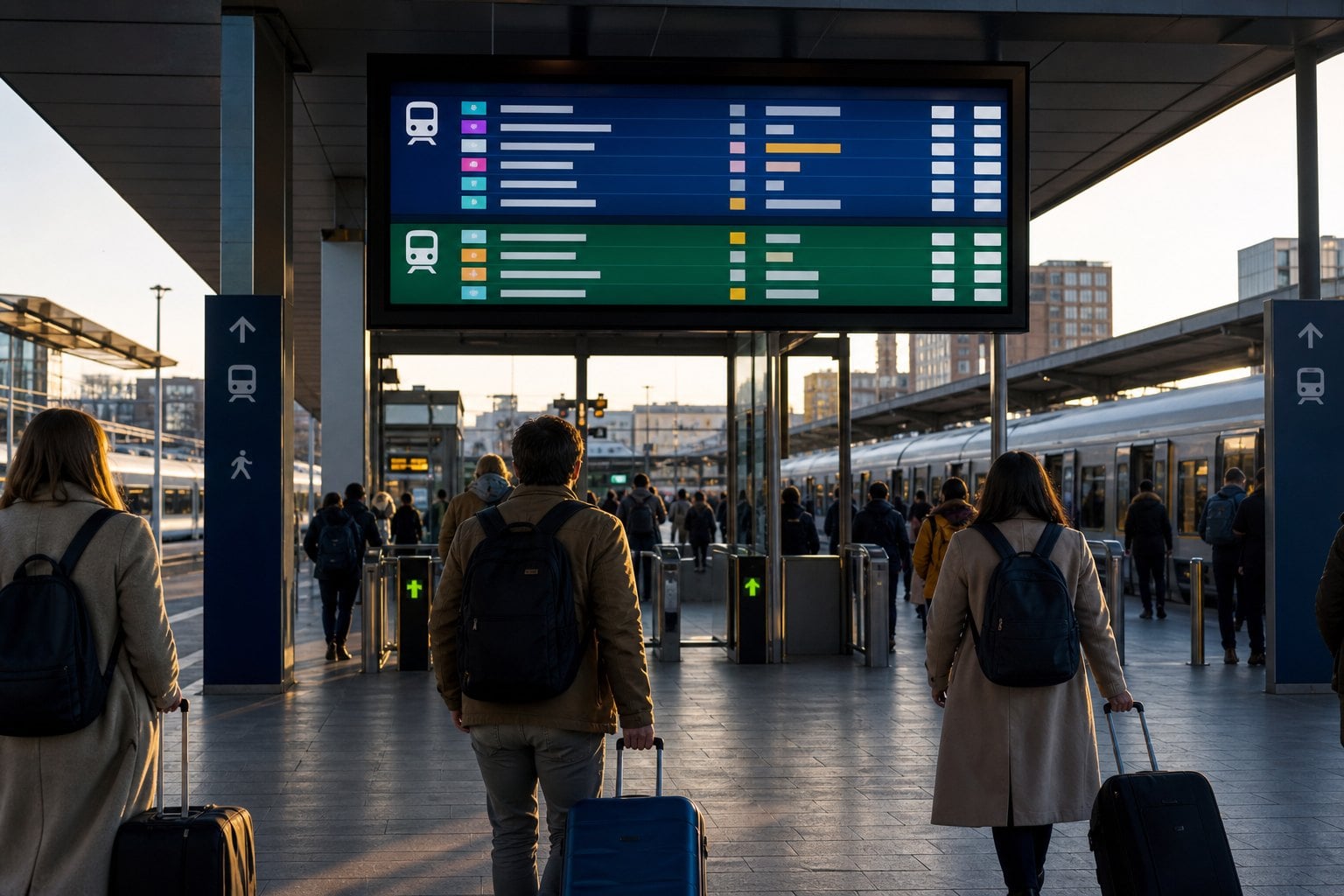
The most visible application: high-brightness displays at entrances, platforms, and waiting areas showing live arrival/departure times, platform assignments, and delay notifications. These displays must be readable in direct sunlight-requiring 2500+ nits brightness and anti-glare optical bonding.
Outdoor Information Kiosks at Bus Stops and Station Entrances
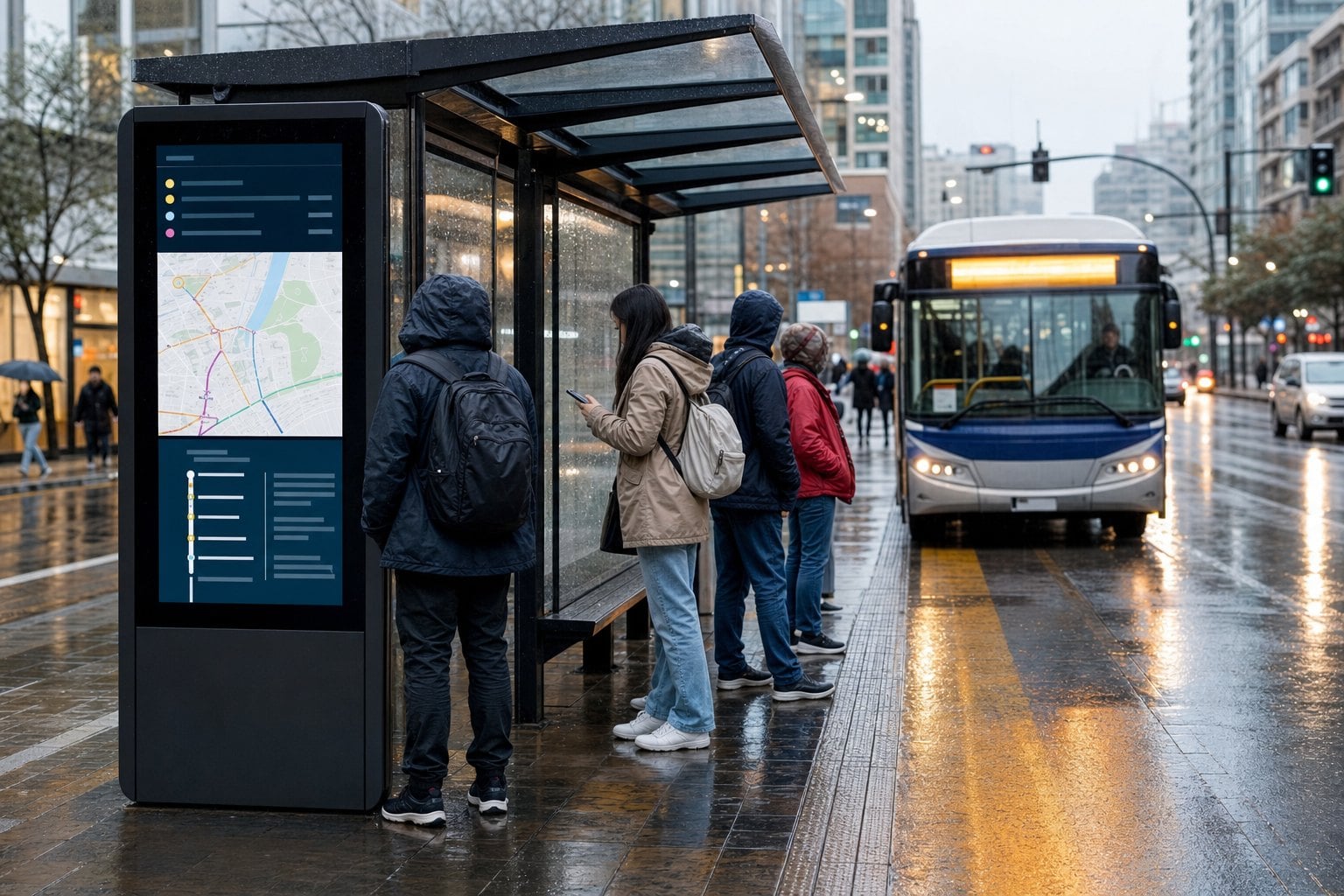
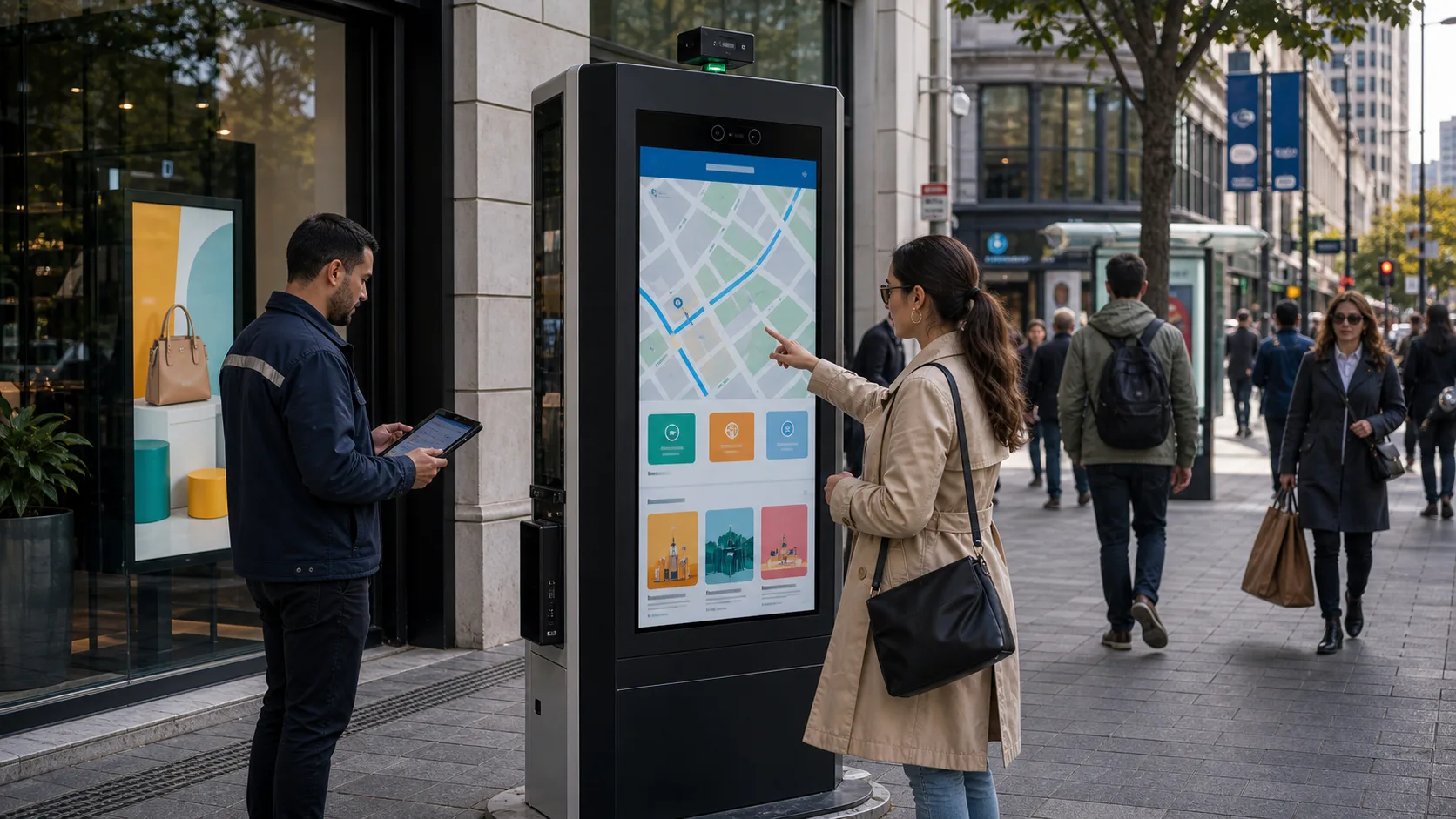
Free-standing outdoor LCD totems at bus stops and station forecourts serve as the first point of passenger interaction. These IP65-rated kiosks display route maps, fare information, service alerts, and local area guides. In smart city deployments, they also show weather, news, and public safety announcements-serving double duty as urban information hubs.
Platform-Side Display Panels
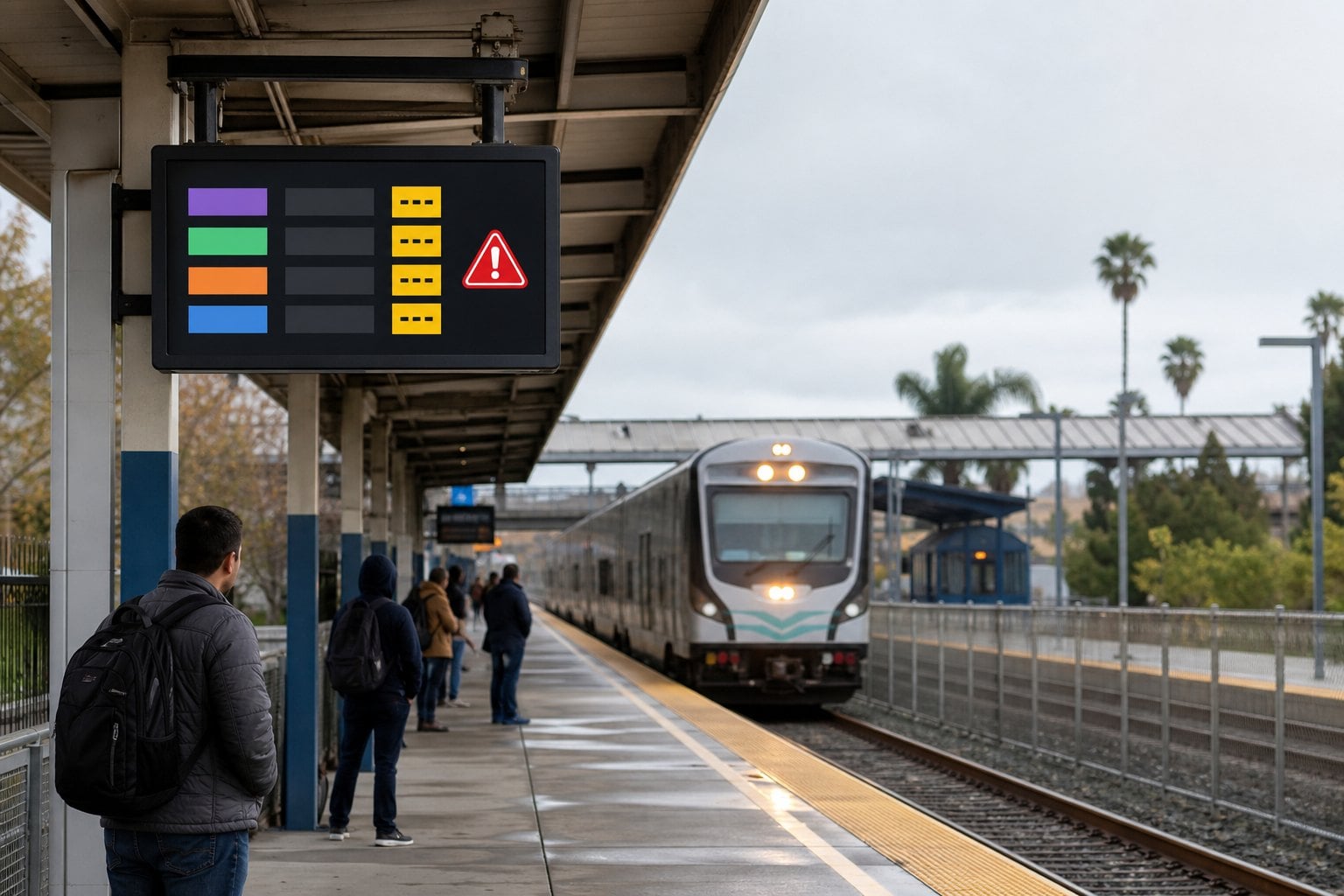
Wall-mounted or pole-mounted displays along train platforms show next-train information, carriage occupancy levels (on supported networks), and safety announcements. These units must withstand vibration, electromagnetic interference, and 24/7 exposure to the elements.
Concourse Digital Wayfinding
Interactive wayfinding kiosks in large terminals help passengers navigate to gates, exits, retail areas, and connecting services. Touchscreen functionality-protected by rugged, vandal-resistant enclosures-enables self-service queries without staff assistance.
Emergency Communication Network
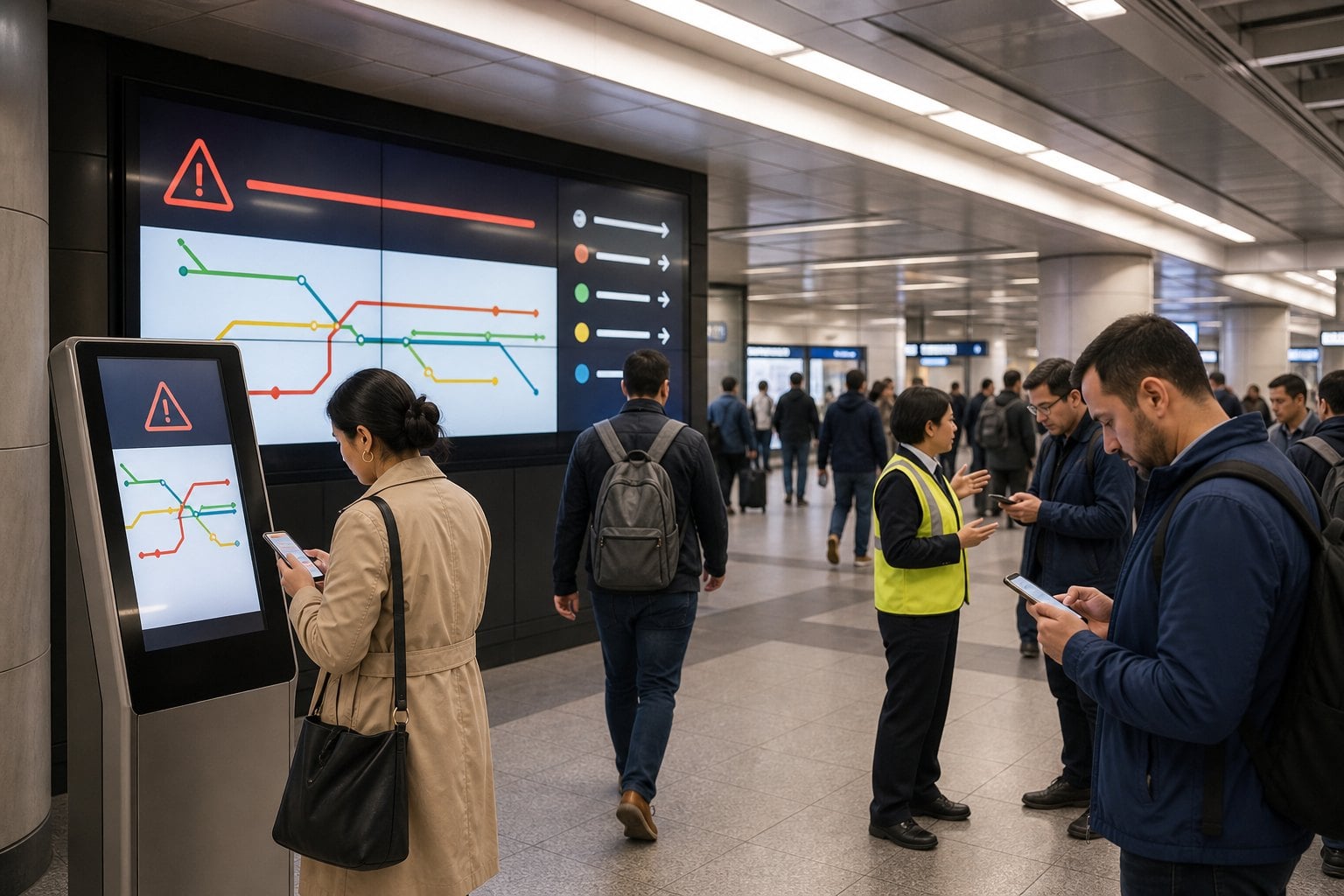
In security incidents or natural disasters, the entire display network can switch to emergency mode within seconds-broadcasting evacuation routes, shelter locations, and official instructions across every screen simultaneously.
Hardware Requirements for Transit Digital Signage
Transportation environments are among the most demanding for electronic displays. Here’s the minimum specification sheet:
| Requirement | Specification | Rationale |
|---|---|---|
| Brightness | 2500-5000 nits | Direct sunlight readability, even at midday |
| Weather Protection | IP65 minimum | Rain, snow, dust, and pressure washing resistance |
| Thermal Management | Active cooling + heating | Operating range -30掳C to +50掳C |
| Anti-Vandal | IK10-rated glass | Protection against impact in public areas |
| Remote Monitoring | 12+ sensor OMC system | Real-time health monitoring of temperature, humidity, power, backlight |
| Connectivity | 4G/5G + Ethernet | Redundant connectivity for always-on operation |
An advanced cloud-based CMS with multi-sensor monitoring is non-negotiable. When a platform display goes dark at 6 AM rush hour, transit operators need to know before passengers start complaining.
The Smart City Connection
Transportation digital signage doesn’t exist in isolation. In smart city frameworks, transit displays integrate with:
- Traffic management systems: Showing real-time road conditions and alternative routes
- Environmental sensors: Displaying air quality indexes and weather alerts
- City event calendars: Promoting local attractions and public events
- Emergency broadcast networks: Receiving government-issued alerts for immediate display
This multi-purpose functionality increases ROI for municipal investments-one kiosk serves transportation, tourism, and public safety simultaneously.
Comparison: LCD vs. LED for Transit Applications
| Factor | Outdoor LCD | Direct-View LED |
|---|---|---|
| Upfront Cost | Lower | Higher |
| Resolution (close viewing) | Superior | Pixel pitch dependent |
| Power Consumption | Lower | Higher |
| Maintenance | Easier (modular) | Complex calibration |
| Content Flexibility | Full HD/4K video | Best for text/graphics |
| Best For | Kiosks, totems, mid-size displays | Large video walls |
For most transit applications requiring readable text at close to medium distances, high-brightness LCD remains the preferred choice.
Frequently Asked Questions
Q: How do outdoor transit displays handle extreme weather? A: IP65-rated enclosures with active thermal management systems keep internal components within operating range. Built-in heaters prevent LCD freezing in sub-zero temperatures, while forced-air or air-conditioning cooling handles desert heat.
Q: Can transit digital signage run on solar power? A: Yes. Low-power LCD panels paired with solar arrays and battery banks are increasingly used at remote bus stops without grid access. These systems typically include power management features that dim brightness during low-battery conditions.
Q: How is content managed across hundreds of displays? A: Cloud-based CMS platforms enable centralized content scheduling, playlists, and real-time updates. Operators can group displays by location, line, or function-updating a single platform or the entire network with one action.
Q: What happens when internet connectivity drops? A: Industrial-grade digital signage players include onboard storage that caches content locally. If connectivity fails, displays continue running the last-synced playlist until the connection is restored.
Q: Are transit displays accessible for visually impaired passengers? A: Modern installations include accessibility features such as text-to-speech audio triggers, high-contrast display modes, and integration with mobile assistive apps. Many kiosks also include tactile buttons and braille signage.
Conclusion
Transportation hubs demand the most from digital signage hardware-extreme weather resilience, round-the-clock reliability, and split-second content updates. High-brightness outdoor LCD displays with advanced remote management capabilities deliver on all three fronts, making them the definitive choice for transit authorities upgrading from static to digital.
For transportation planners and system integrators, MWE’s outdoor digital signage solutions offer the durability, brightness, and smart management features required for mission-critical transit communication. Contact MWE to discuss your transit signage project.