EN
 IT
 ES
 FR
 DE


Digital Signage for Smarter Transport Networks
Support passenger information, wayfinding, advertising and real-time updates across stations, terminals, stops and connected-city infrastructure.
Transportation & Smart City Digital Signage Solutions
Key Benefits of Digital Signage in Transportation

Digital signage can offer numerous benefits for transportation systems, including:
- Real-time information: Digital signage allows transportation systems to provide up-to-date information about schedules, delays, and other important information in real-time. This helps passengers stay informed and adjust their plans accordingly.
- Improved wayfinding: Digital signage can be used to provide clear directions and information about where to go within transportation hubs, such as airports or train stations. This can help reduce confusion and improve the overall passenger experience.
- Advertising opportunities: Digital signage can be used to display advertising, generating revenue for transportation systems while also providing useful information to passengers.
- Increased efficiency: By providing real-time information and improving wayfinding, digital signage can help transportation systems operate more efficiently, reducing delays and improving the overall experience for passengers.
- Emergency messaging: In the event of an emergency or other unexpected situation, digital signage can be used to quickly communicate important information to passengers.
- Customizable content: Digital signage allows transportation systems to easily update and customize content as needed, making it easy to keep information up-to-date and relevant to passengers.
Overall, digital signage can help transportation systems improve the passenger experience, increase efficiency, and generate revenue.
EV Charging Station with Ad Screen Solution
Overview
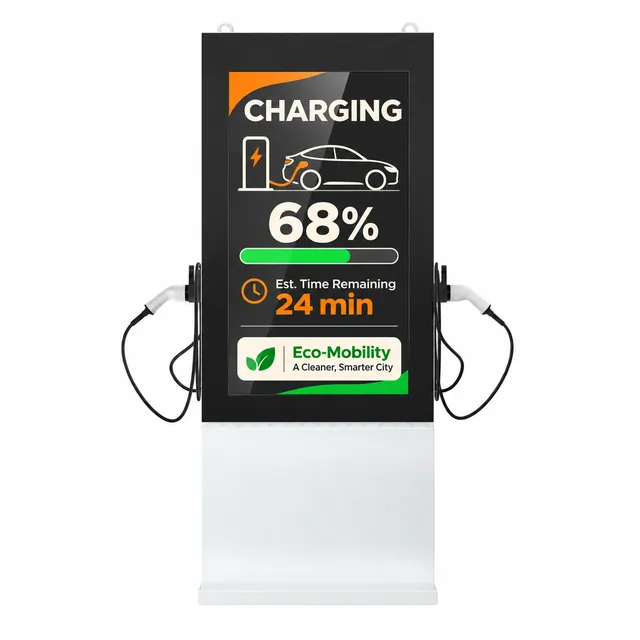
This solution adds ad screens to outdoor EV charging stations.
Components
EV Charging Station: Device that charges EVs.
Ad Screen: Screen displaying ads during charging.
Steps
Research: Study EV usage and ad preferences.
Location: Choose high-traffic areas.
Setup: Install charging stations and ad screens.
Ad Design: Create and regularly update ads.
Maintenance: Regularly check equipment and manage ads.
Benefits
This solution gives advertisers a new platform and creates extra revenue for operators.
Future
As EV market grows, new tech and targeted ads can enhance user experience and ad effectiveness.


Limitless Uses of Our Solutions
There are several applications of digital signage in the transportation industry. Here are some examples:
- Flight information displays: Airports can use digital signage to display real-time information about flight arrivals and departures, gate numbers, and delays. This helps passengers stay informed and reduces confusion.
- Wayfinding: Digital signage can be used to provide clear directions and information about where to go within transportation hubs, such as airports or train stations. This can help reduce confusion and improve the overall passenger experience.
- Advertising: Digital signage can be used to display advertising, generating revenue for transportation systems while also providing useful information to passengers.
- Safety and security: Digital signage can be used to display emergency messages or security alerts in the event of an emergency or other unexpected situation.
5. Passenger information: Digital signage can be used to provide information about transportation options, such as bus or train schedules, routes, and fares.
6. Entertainment: Digital signage can be used to display entertainment content, such as news, weather, sports, and other relevant information.
7. Queue management: Digital signage can be used to manage queues and reduce wait times by displaying estimated wait times and calling out customers or passengers when it is their turn to proceed.
Overall, digital signage can help transportation systems improve the passenger experience, increase efficiency, and generate revenue. By providing real-time information, improving wayfinding, and displaying relevant content, digital signage can enhance the overall transportation experience for passengers.
Get in touch with us today to find the right digital signage for all future endeavors. We help organizations find the perfect fit for their needs.

Contact Us


Transit and Smart City Displays: Buyer Questions
Specifications and answers below come from our own product lines and factory documentation for this application.
What do you supply for taxi-top advertising?
The MWE662 is a dual-sided taxi-top strip display in P2 or P0.4 pixel pitch, built to be seen from both sides of the street. Pixel pitch is chosen against the viewing distance and the ad content, because P0.4 is wasted money on a passing pedestrian and P2 is not sharp enough for text at close range.
Do you have a totem for bus stops and platforms?
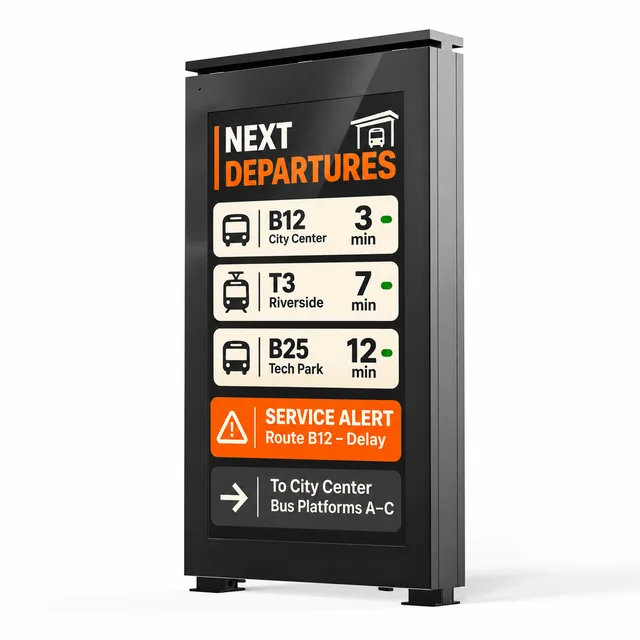
Yes. The MWE986 totem covers 32 to 86 inch, in interactive or non-touch versions, with high brightness and weatherproof sealing for platform and kerbside positions. The enclosure is built for the mounting base your site provides.
Can an advertising screen be built into an EV charging station?
Yes. The MWE986 EV charging station carries a 55-inch advertising screen in the same unit, which is how charging operators offset the cost of the site. The display and the charging hardware share one enclosure and one power feed.
Can the screen show live arrival times?
The display takes a web or video source, so an arrival feed from your transport authority's API can be shown through a player or CMS page. Live data integration is scoped with your systems team during the sample stage.
Are the units built for continuous outdoor operation?
Yes. Transit and street displays run continuously, so the thermal design is part of the specification rather than an afterthought. Brightness is controlled by ambient light sensor, and OMC reports temperature and connectivity so a failing unit is seen before it goes black.
Which certifications do transit authorities usually require?
CE, RoHS 2011/65/EU, IECEE CB and UL 62368-1 with ETL listing, plus the CTI-verified IP65 report, from a factory certified to ISO 9001 and ISO/IEC 27001:2013. We send the certificate pack with the quotation so the technical evaluation is not held up.