EN
EN  AR
AR  ES
ES 

In a rapidly evolving technological landscape, the way we communicate information is constantly changing. MWE, a pioneering brand under Marvel Technology, embodies the philosophy of “Make Win Easy.” Our mission is to simplify and enhance the success of every business through cutting-edge digital signage solutions.

Our story begins with a small business owner facing the challenge of standing out in a crowded market. Traditional advertising methods were costly and inefficient, leaving him unsure of the next step. That was until he discovered MWE’s digital signage solutions, which opened up a new world of possibilities. Our products not only captivate visually with their True 2K Ultra HD and HDR/HLG support but also deliver a dynamic and detailed visual experience.
Moreover, MWE offers a diverse range of products, from floor-standing displays to interactive whiteboards, catering to various commercial needs. These products are widely used in meeting rooms, store windows, and even home theaters, effortlessly adapting to any environment.
With MWE’s support, this business owner quickly realized that his advertising message was reaching a broader audience. Customers, drawn to the clarity of the displays, engaged more with his products, leading to a significant increase in sales. MWE not only provided high-quality products but also offered global support and convenient after-sales service, ensuring peace of mind at every step.
“Make Win Easy” is more than just a slogan; it’s a promise from MWE to our clients. We are committed to helping every business achieve victory in a competitive market through technological innovation and exceptional service.
This is a story of trust and success, co-authored by MWE and our clients. Every choice we make is to make success simpler.
#Best Outdoor Digital kiosks #Waterproof outdoor kiosk digital display #outdoor kiosk digital display
Touch screen technology has become increasingly popular in digital signage applications, as it allows users to interact with the content in a more engaging and intuitive way. Here are some of the most popular digital signage applications for touch screen technology:
- Wayfinding: Touch screen kiosks are commonly used in wayfinding applications, allowing users to easily navigate through complex environments such as airports, hospitals, and shopping centers.
- Retail: Touch screen displays are frequently used in retail environments to provide customers with product information, pricing, and promotions. Interactive displays can also be used to allow customers to browse products, place orders, and make purchases.
- Hospitality: Touch screen displays are commonly used in hotels and restaurants to provide guests with information on amenities, services, and local attractions. Interactive displays can also be used to allow guests to place room service orders, make reservations, and provide feedback.
- Education: Touch screen displays are often used in educational environments to provide students with interactive learning experiences. These displays can be used for everything from interactive whiteboards in classrooms to kiosks in museums and libraries.
- Healthcare: Touch screen displays are used in healthcare settings to provide patients with information on medical conditions, treatments, and services. Interactive displays can also be used to allow patients to check in for appointments, fill out medical forms, and provide feedback on their care.
- Transportation: Touch screen displays are used in transportation settings to provide passengers with real-time information on schedules, delays, and routes. Interactive displays can also be used to allow passengers to purchase tickets, check-in for flights, and access other travel-related services.
Overall, touch screen technology has become an increasingly popular choice for digital signage applications across a wide range of industries, as it allows for a more engaging and interactive experience for users.
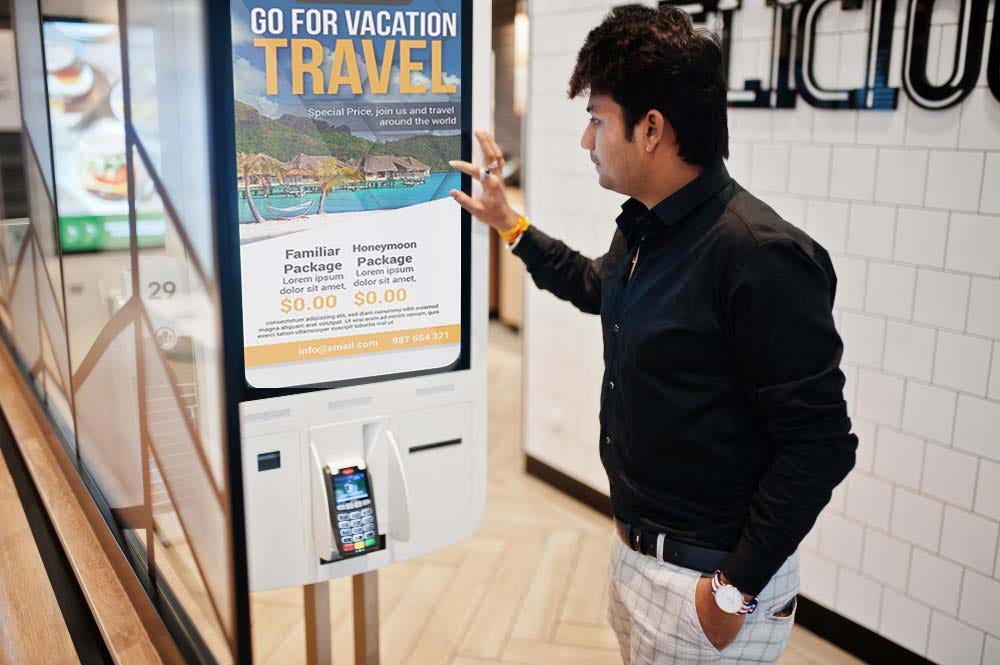
When using an LCD display for digital signage, there are several important factors to pay attention to in order to ensure optimal performance and longevity. Here are some key considerations:
- Screen resolution: The resolution of the LCD display should be appropriate for the content being displayed. Higher resolution displays may be necessary for applications with small text or detailed images.
- Brightness and contrast: The brightness and contrast of the display should be adjusted based on the lighting conditions in the environment where it will be used. Displays that are too bright or too dim can be difficult to read and may not be effective for digital signage purposes.
- Viewing angle: The viewing angle of the display should be considered to ensure that the content is visible from all angles. Displays with a wide viewing angle are preferable for digital signage applications where people will be viewing the display from different positions.
- Durability: LCD displays for digital signage should be durable enough to withstand the environmental conditions in which they will be used. Displays that are exposed to moisture, dust, or extreme temperatures may require additional protection or special features.
- Connectivity: The LCD display should have the necessary connectivity options to allow for seamless integration with other devices and systems, such as media players or content management systems.
- Power consumption: The power consumption of the LCD display should be considered to ensure that it is energy-efficient and cost-effective to operate. Displays with low power consumption can also help to reduce the environmental impact of digital signage installations.
- Maintenance and support: The LCD display should be easy to maintain and repair in case of any issues. The manufacturer should also provide adequate support and warranty coverage to ensure that the display can be serviced if needed.
By paying attention to these factors, businesses can ensure that their LCD displays for digital signage are effective, efficient, and long-lasting.

Outdoor digital signage poses unique challenges due to exposure to harsh environmental conditions such as direct sunlight, extreme temperatures, and moisture. Here are some important factors to consider when choosing an LCD for a good outdoor display:
- Brightness: The brightness of the LCD display should be high enough to ensure that the content is visible in direct sunlight. A brightness level of at least 1,500 nits is recommended for outdoor digital signage.
- Contrast: The contrast of the display should be optimized to ensure that the content is easy to read and distinguishable in bright outdoor environments.
- Viewing angle: The display should have a wide viewing angle to ensure that the content is visible from all angles, especially for viewers who are not directly in front of the display.
- Temperature resistance: The LCD display should be designed to withstand extreme temperatures, both hot and cold. This is particularly important for outdoor digital signage that is installed in areas with large temperature variations.
- Moisture resistance: The LCD display should be resistant to moisture and humidity, as well as being able to withstand rain, snow, and other types of precipitation.
- Impact resistance: The display should be durable and able to withstand impact from debris, wind, and other potential hazards.
- Anti-glare coating: An anti-glare coating can be added to the display to reduce glare and improve visibility in bright outdoor environments.
- Energy efficiency: The display should be energy-efficient to minimize power consumption and reduce operating costs.
- Remote management capabilities: The LCD display should have remote management capabilities that allow for easy monitoring and control of the display, including scheduling content updates and adjusting settings remotely.
By taking these factors into consideration, businesses can ensure that their LCD displays are optimized for outdoor use and provide reliable and effective digital signage.

You can promote the impact of your LCD display through proper angles, high brightness, interesting visuals, and impactful placement. With these features, your LCD display will generate major traction.

We are an OEM/ODM factory.Marvel is one of the biggest manufacturers of LCD products supporting China and the global.
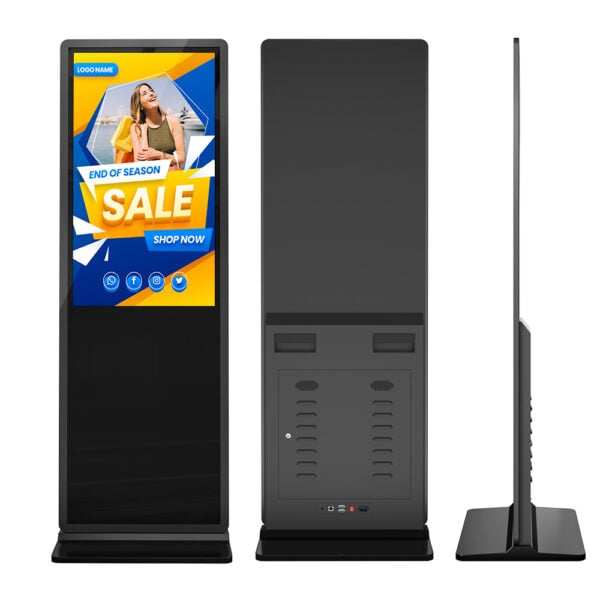
We accept most of the payment methods,but mainly accept T/T,L/C,Western Union,Paypal or Alibaba Assurance Payment.

We are using A+ level full new original LCD panel .

We will offer different delivery options for customers: express, air, sea, car, or the delivery handled by customer’s own forwarder.

We are very glad to provide samples for testing and qualification. All samples should be paid before shippment, and the samples price is a little higher than mass production. When the mass order placed, we can return you the samples cost. You can buy the samples from us directly using T/T, western uion, or paypal.

To assist customers in using our products more effectively, we have recorded and uploaded video tutorials. Additionally, we have an overseas team of support engineers who are fluent in English and capable of providing assistance and support.
If you encounter any problems while using our product, please don’t hesitate to contact us. Feel free to share any photos or videos of the issue during operation. This will enable our team to analyze the problem more effectively and provide you with prompt solutions.

Content Management Software… This is free.
Outdoor Maintenance Cloud and Content Management Software. This is free.
When you have an ad network, it saves you time and costs.
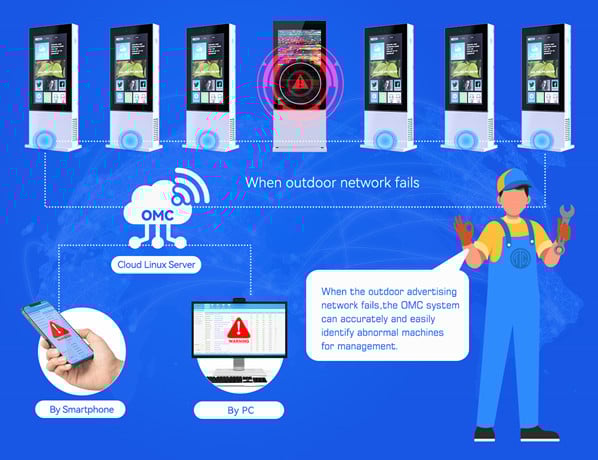
Assist in checking and confirming the problems. If the customer needs to purchase accessories, the accessories will not have warranty service.
We have 16 years of experience in the LCD digital signage display industry. We boast our own R&D team, a comprehensive quality control system, and a professional after-sales team. Additionally, we can provide our software CMS and OMC…

Europe, Australia, North America…

If there any problem when using, please feel free to contact with us, and share with us any photo or video of the operation. So our team will be easy to analyze problems and provide solutions to solve the problem quickly.
Our default resolution is 2K (1920*1080), but we can also provide customized 4K resolution (3840*2160)

Windows and Android. The Version depending on customers’ need.

The cost of outdoor digital kiosks can vary significantly depending on various factors such as size, features, specifications, and customization options. Generally, outdoor digital kiosks are more expensive compared to their indoor counterparts due to the additional requirements for weatherproofing, durability, and security.
The price range for outdoor digital kiosks can start from a few thousand dollars and go up to tens of thousands of dollars, or even more for high-end models with advanced features. Factors that influence the cost include:
Size: Larger kiosks with bigger screens will generally be more expensive than smaller ones.
Display Technology: The type and quality of the display technology used, such as LED or LCD, and the resolution of the screen can impact the cost.
Touchscreen Functionality: If the kiosk includes touch capabilities, the cost will be higher compared to a non-touch display.
Weatherproofing and Durability: Outdoor digital kiosks require robust construction and weatherproofing features to withstand various environmental conditions. Additional features like anti-glare coatings, temperature control systems, and vandal-resistant enclosures can contribute to the overall cost.
Connectivity and Hardware: The inclusion of hardware components like processors, memory, storage, and connectivity options (Wi-Fi, cellular, etc.) can affect the price.
Customization: Custom designs, branding, and specific requirements may incur additional costs.
It is advisable to consult with reputable suppliers or manufacturers of outdoor digital kiosks to get accurate pricing information based on your specific needs and customization requirements. They can provide detailed quotes based on the desired features, size, and quantity of kiosks you are looking to purchase. Additionally, considering long-term maintenance and support costs is essential to ensure the optimal performance and longevity of the outdoor digital kiosks.
Regular TV and commercial/industrial displays or monitors for digital signage differ in several key aspects:
Build Quality and Durability: Commercial/industrial displays are specifically designed to withstand continuous operation and harsh environments. They are built with higher-quality components, including robust frames, reinforced screens, and enhanced ventilation systems. They are more durable and can handle extended usage without experiencing issues like image retention or burn-in.
Brightness and Visibility: Commercial/industrial displays generally have higher brightness levels to ensure better visibility in brightly lit areas or outdoor environments. They often employ technologies like high-brightness backlights and anti-glare coatings to provide enhanced readability even in challenging lighting conditions.
Connectivity and Control: Commercial displays often offer a wider range of connectivity options to accommodate various digital signage setups. They may include multiple HDMI, DisplayPort, and USB ports, as well as specialized interfaces such as RS-232 or Ethernet for remote control and monitoring. These features allow for easier integration with other devices and central management systems.
Content Management: Commercial displays often come with built-in media players or have compatibility with external media players, enabling seamless content playback and management. They may support common digital signage software or offer proprietary software solutions for scheduling, playlist creation, and remote content updates. These features simplify the deployment and management of digital signage networks.
Longevity and Warranty: Commercial/industrial displays are typically designed for long-term use and come with extended warranties compared to regular consumer TVs. Manufacturers of commercial displays often offer specialized support and services tailored to the needs of businesses and organizations deploying digital signage networks.
Customization and Mounting Options: Commercial displays may offer additional customization options, such as bezel-less designs or modular configurations, to facilitate video wall installations or unique setups. They also provide mounting options compatible with industry-standard VESA mounts, making it easier to install them in various orientations or locations.
Cost: Commercial/industrial displays are generally more expensive than regular consumer TVs due to their specialized features, durability, and commercial-grade components. However, they are designed to meet the specific requirements of digital signage applications and offer better performance and reliability in professional settings.
When considering digital signage deployments, businesses and organizations should assess their specific needs, including the operating environment, usage requirements, and budget, to determine whether a regular TV or a commercial/industrial display is more suitable for their intended purpose.
Digital signage is gaining popularity due to its enhanced visual impact, flexibility for real-time updates, interactivity and engagement, cost-effectiveness, targeted advertising capabilities, analytics and measurement, scalability and centralized control, and integration with digital ecosystems. These advantages, coupled with advancements in display technology and decreasing costs, have made digital signage a preferred choice for businesses seeking effective communication and advertising solutions.
The main function of digital signage is to display dynamic multimedia content on electronic screens or displays in public spaces or private settings. It is a form of communication and advertising that utilizes digital technology to deliver messages, information, and promotional content to a targeted audience.
Digital signage can be found in various locations such as retail stores, airports, hotels, restaurants, corporate offices, educational institutions, healthcare facilities, and transportation hubs. It serves multiple purposes, including:
Advertising and Promotion: Digital signage allows businesses to showcase their products, services, and promotional offers in an engaging and visually appealing manner. It can attract attention, convey brand messages, and influence purchasing decisions.
Information Dissemination: Digital signage is used to deliver real-time information, such as news updates, weather forecasts, event schedules, public announcements, and emergency alerts. It helps keep the audience informed and engaged with relevant information.
Wayfinding and Navigation: In large venues like shopping malls, airports, or hospitals, digital signage can provide interactive maps, directions, and guidance to help people navigate through complex spaces. It assists visitors in finding specific locations, offices, or facilities.
Entertainment and Engagement: Digital signage can be used to entertain and engage audiences through interactive games, quizzes, social media feeds, live streams, and other multimedia content. It enhances the overall customer experience and encourages audience participation.
Branding and Atmosphere: It helps create a specific ambiance or atmosphere in a space by displaying branded content, videos, or visual effects that align with the organization’s identity. Digital signage contributes to the overall branding strategy and enhances the environment.
Targeted Messaging: Digital signage can be tailored to display content based on the time of day, location, or specific audience demographics. This allows for targeted messaging and personalized communication, increasing the effectiveness of the displayed content.
Analytics and Measurement: Digital signage systems often include analytics tools that track audience engagement, content performance, and viewer demographics. This data can be used to measure the effectiveness of the signage and make data-driven decisions for content optimization.
Overall, digital signage serves as a versatile and dynamic communication tool that enables businesses and organizations to deliver relevant, engaging, and targeted messages to their intended audience in various environments.
Yes,at least IP65
To effectively utilize outdoor digital signage in high-traffic areas, consider the following three points:
Engaging Content: Create visually captivating and concise content that grabs attention and communicates your message effectively. Use vibrant visuals, bold headlines, and clear calls-to-action to engage passersby quickly.
Location and Placement: Choose strategic locations for your signage, focusing on high-traffic areas where your target audience is likely to be. Ensure the signage is positioned at eye level, unobstructed, and easily visible from various angles.
Interactive Elements: Incorporate interactive features like touchscreens or QR codes to encourage active engagement. Allow customers to interact with the signage, access additional information, or participate in promotions, surveys, or games.
By implementing these three points, businesses can enhance customer attraction and engagement with outdoor digital signage in high-traffic areas.
- Advertisements
- Announcements and notifications
- Wayfinding and directions
- Event promotions
- Weather updates
- Social media feeds
- News and RSS feeds
- Videos and animations
- Interactive content
Outdoor digital signage refers to the use of digital displays in outdoor environments to deliver information, advertising, or other content to a target audience. These displays are specifically designed to withstand various weather conditions and are often larger and more robust compared to indoor digital signage.
Outdoor digital signage offers several benefits, including:
- Increased visibility and reach to a larger audience
- Dynamic and engaging content delivery
- Ability to update content remotely and in real-time
- Opportunity for advertising and generating revenue
- Enhanced brand awareness and customer engagement
- Flexibility to display various types of content (e.g., videos, images, text)
- Weather resistance and durability
Outdoor digital signage can display a wide range of content, such as:
- Advertisements
- Announcements and notifications
- Wayfinding and directions
- Event promotions
- Weather updates
- Social media feeds
- News and RSS feeds
- Videos and animations
- Interactive content
When installing outdoor digital signage, it’s important to consider the following:
- Weatherproof and durable design
- High brightness and visibility in various lighting conditions
- Protection against vandalism and theft
- Proper positioning for optimal viewing angles
- Power and connectivity requirements
- Content management system and remote management capabilities
- Compliance with local regulations and permits

What is a window digital signage display?
A window digital signage display is a screen that is placed in a window or glass surface to showcase dynamic content, such as advertisements, promotions, or information, to passersby.
What are the benefits of using window digital signage displays?
Window digital signage displays can attract attention, engage customers, and provide real-time information. They are also space-efficient and offer a modern and interactive way to communicate with audiences.
What types of content can be displayed on window digital signage displays?
Window digital signage displays can showcase a variety of content, including videos, images, animations, text, live feeds, social media updates, and interactive elements.
Are window digital signage displays suitable for outdoor use?
Some window digital signage displays are designed for outdoor use and come with features such as weatherproof casings, high brightness levels for visibility in sunlight, and temperature control systems to withstand outdoor conditions.
How can I control the content displayed on a window digital signage display?
Content on window digital signage displays can be managed remotely through content management systems (CMS) or digital signage software. This allows users to update and schedule content easily.
What size options are available for window digital signage displays?
Window digital signage displays come in various sizes to suit different window dimensions and viewing distances. Common sizes include 32 inches, 43 inches, 55 inches, and larger for more prominent installations.
Can window digital signage displays be interactive?
Yes, some window digital signage displays support touch functionality, allowing users to interact with the content displayed through touch gestures. This feature can enhance engagement and provide a more immersive experience.
What are the power and connectivity requirements for window digital signage displays?
Window digital signage displays typically require a power source and connectivity options such as Wi-Fi, Ethernet, or cellular connections for content updates and remote management.
How can I ensure the security of a window digital signage display?
To enhance security, consider features such as secure enclosures, anti-theft measures, and remote monitoring capabilities to protect the display from unauthorized access or tampering.
Where are window digital signage displays commonly used?
Window digital signage displays are frequently used in retail stores, restaurants, banks, transportation hubs, museums, corporate offices, and other public spaces to attract customers, convey information, and enhance the overall customer experience.
Indoor Digital Signage FAQ
What is indoor digital signage?
Indoor digital signage refers to the use of digital displays, such as screens or panels, to convey information, advertisements, messages, or any other content within indoor spaces like stores, offices, hospitals, airports, and more.
What are the benefits of indoor digital signage?
- Enhanced engagement with dynamic content
- Real-time updates and flexibility in messaging
- Improved customer experience and brand visibility
- Cost-effective advertising compared to traditional methods
- Data-driven insights through analytics
- Modern and innovative image for businesses
How does indoor digital signage work?
Indoor digital signage typically involves the use of digital displays connected to a content management system. Content such as images, videos, text, and animations can be uploaded and managed remotely to be displayed on the screens.
What are common applications of indoor digital signage?
- Advertising promotions and products in retail stores
- Providing wayfinding information in public spaces
- Displaying employee communications in offices
- Sharing news and updates in healthcare facilities
- Entertaining and informing guests in hotels or restaurants
What factors should be considered when implementing indoor digital signage?
- Purpose and goals of the signage
- Audience demographics and viewing patterns
- Location and placement of displays
- Content strategy and design
- Budget and maintenance considerations
- Integration with existing systems
How can I measure the effectiveness of indoor digital signage?
Effectiveness can be measured through metrics such as viewer engagement, dwell time, content interactions, conversion rates (if applicable), and feedback from customers or employees. Analytics tools provided by digital signage solutions can help track these metrics.
What are some best practices for designing content for indoor digital signage?
- Keep content concise, relevant, and visually appealing
- Use high-quality images and videos
- Incorporate branding elements consistently
- Test content for readability and visibility
- Update content regularly to keep it fresh and engaging
How can I choose the right indoor digital signage solution for my business?
Consider factors such as your specific goals, budget, scalability needs, ease of use, customer support, integration capabilities, and the features offered by different digital signage providers. Request demos and evaluate solutions based on your requirements before making a decision.