EN
EN  ES
ES 
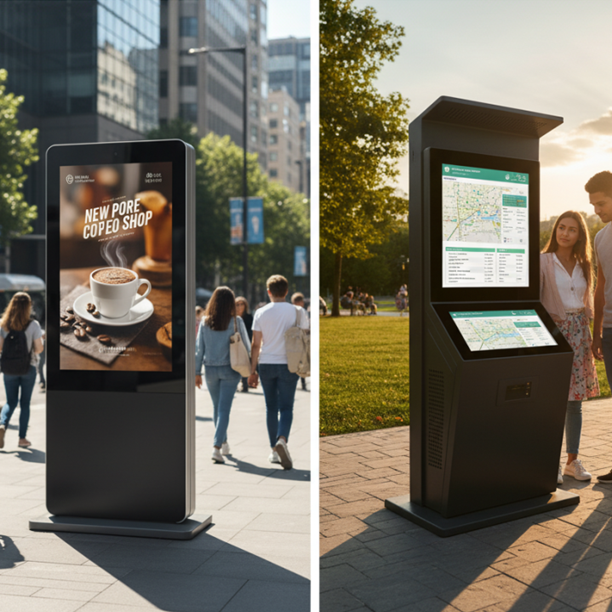
In an age where visual communication is paramount, ensuring your message is seen clearly, regardless of ambient light, is crucial. This is where high brightness displays become indispensable. Unlike standard screens designed for indoor use, these specialized displays are engineered to cut through glare and direct sunlight, making them essential for a variety of demanding applications, particularly outdoor digital signage.
The Science of Visibility: Understanding Nits
The brightness of a display is measured in “nits” (candelas per square meter). While a typical indoor TV might offer 250-400 nits, truly effective high brightness displays start at around 700 nits and can go up to 2,500 nits or even higher for direct sunlight readable screens. This extreme luminosity is critical for combating reflections and ensuring content remains vibrant and legible, even on the brightest days. Without sufficient nits, outdoor content would appear washed out and unreadable.
Revolutionizing Outdoor Digital Signage
One of the most impactful applications for high brightness displays is outdoor digital signage. Whether it’s a large advertising billboard, a digital menu board outside a restaurant, or an information totem in a park, these screens must perform under direct sunlight and varying weather conditions. An ultra bright LCD ensures that promotions, news, and critical information are always crystal clear, maximizing engagement and effectiveness for outdoor advertising. This extends to retail window displays where natural light can often overpower conventional screens.
Beyond Advertising: Other Demanding Applications
The need for high brightness displays extends beyond traditional advertising:
- Vehicle Displays: From public transport information screens to rugged displays in agricultural or construction vehicles, consistent readability is non-negotiable for safety and operation.
- Industrial Displays: In factories or harsh industrial environments, high ambient light or specialized lighting often requires brighter screens for process monitoring and control.
- Public Information Displays: In brightly lit airports, train stations, or stadiums, ensuring information is instantly visible to a large audience is critical.
Investing in high brightness displays is a strategic decision for any business or organization that needs to ensure its visual content remains visible and impactful in challenging lighting conditions. They are professional monitors built for performance where standard screens simply can’t compete.
Related Reading
- Enhancing Outdoor Digital Experiences: The Importance of Waterproof Outdoor Kiosk Digital Displays
- MWE Shines at ISLE 2026 with Cutting-Edge Outdoor Display Solutions
- MWE Display Showcases Next-Gen Outdoor Solutions at ISE 2026 Barcelona
- 55-Inch Outdoor Digital Display Installed in Ammerschwihr, France
- Customer Feedback on 55-Inch Outdoor Wall-Mounted Displays at the University of Macau
- Enhancing Public Spaces: 55-Inch Outdoor Digital Display Installed in Park in Podgorica, Montenegro
- Enhancing Outdoor Advertising with a 75-Inch Dual Screen Standing Outdoor Digital Kiosk in Nosy Be, Madagascar
- Enhancing Outdoor Experiences: The Power of Interactive Outdoor Kiosks