EN
EN  ES
ES  DE
DE 
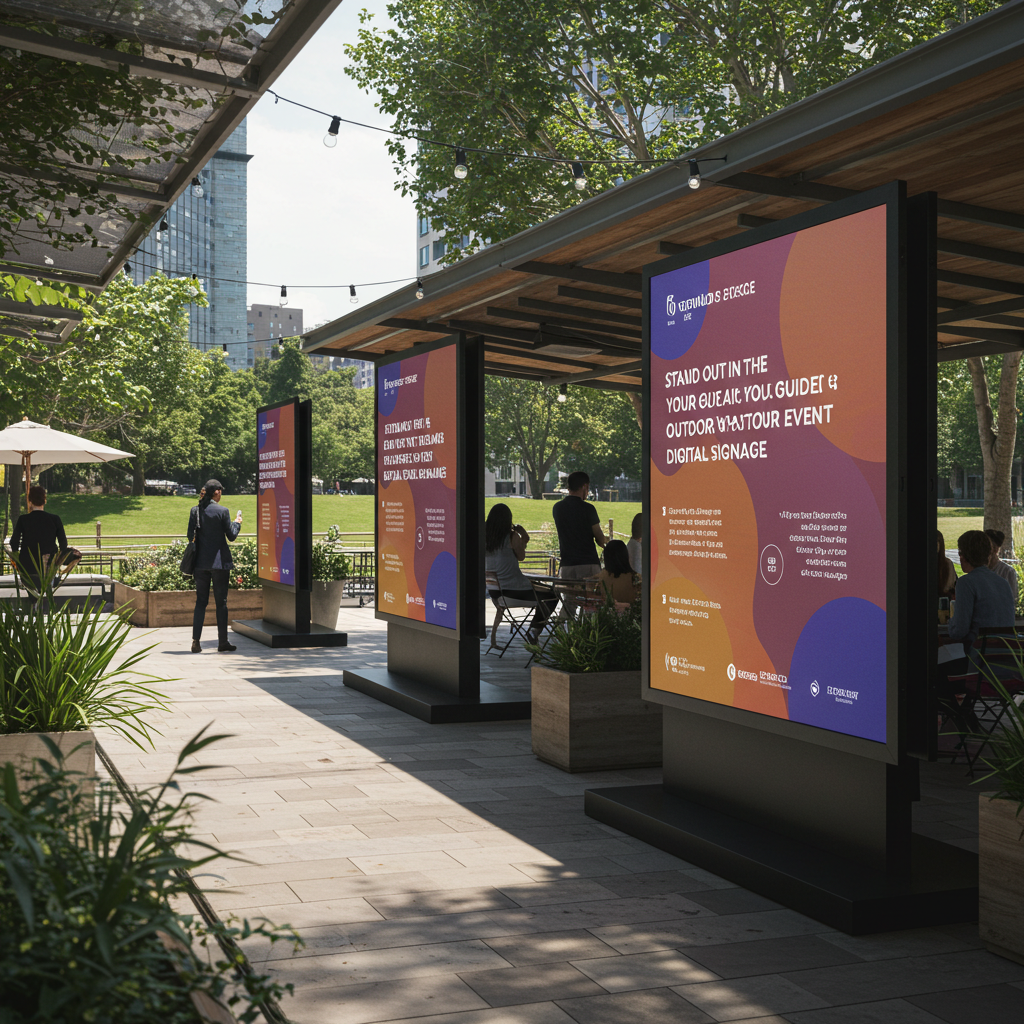
From Music Festivals to Corporate Galas, Dynamic Digital Signage is the Unsung Hero of the Modern Outdoor Event.
In the fast-paced environment of any successful outdoor event, from bustling music festivals to expansive farmers’ markets, clear and compelling digital signage has become an indispensable tool. It guides, informs, engages, and even entertains attendees, ensuring a seamless and memorable experience. Crafting an effective outdoor digital signage strategy requires a blend of dynamic content design, durable technology, and strategic placement.
Effective outdoor digital signage is crucial for enhancing the guest experience, improving safety, and boosting the overall success of an event. A well-executed digital signage plan not only directs attendees with up-to-the-minute accuracy but also reinforces branding, provides valuable sponsorship opportunities, and communicates essential information in real-time. Here’s a comprehensive guide to creating impactful digital signage for your next open-air occasion.
1. The Foundation: Planning and Digital Strategy
Before a single screen is powered on, a solid plan is essential. Consider the entire attendee journey from arrival to departure and how dynamic information can enhance every step.
Audience and Event Type: Tailor your digital content and the style of your displays to your audience. A high-tech corporate sponsor event will have a different digital aesthetic—sleek kiosks and video walls—than a relaxed community picnic, which might benefit from mobile LED trailers and digital A-frames.
Key Information and Real-Time Updates: Identify all necessary information to convey. This includes basics like parking directions, entrance locations, restroom facilities, and first-aid stations, but with digital, it also includes dynamic schedules, live performance updates, emergency alerts, and changing weather information.
Brand Consistency and Sponsorship: Ensure all digital content aligns with your event’s branding, including logos, color palettes, and fonts. Digital displays offer a powerful platform for showcasing sponsors through video ads, rotating logos, and interactive content, creating a cohesive and professional atmosphere while generating revenue.
Placement Map and Network Plan: Create a detailed map of the event layout, marking the intended locations for each digital display. This will help you determine the quantity and type of screens needed, as well as plan for power and internet connectivity (wired or wireless), which are crucial for reliable operation.
2. Design for a Dynamic Outdoor Environment
Outdoor environments are full of distractions. Your digital signage needs to be bright, clear, and easily readable from a distance, with content that can be absorbed in seconds.
High Contrast and High Brightness are Key: Utilize bold, high-contrast color schemes to make your text and graphics pop. Think dark text on a light background or vice versa. Crucially, opt for high-brightness displays (typically 2,500 nits or more) that are designed to be visible even in direct sunlight.
Large and Legible Fonts: Stick to clean, sans-serif fonts like Helvetica or Arial. Ensure the font size is large enough to be read from a distance. A good rule of thumb remains that 1 inch of letter height provides 10 feet of readability.
Concise and Scannable Messaging: Keep text to a minimum. Digital signage is most effective with short, impactful messages. Utilize universally recognized symbols, icons, and animations. For directional purposes, a large, animated arrow is far more effective than a static sentence.
Embrace Motion and High-Resolution Graphics: The power of digital lies in its ability to display dynamic content. Use high-resolution video, animations, and motion graphics to capture attention. Ensure all visual assets are high-quality to avoid pixelation on large screens.
3. Choosing the Right Technology for the Elements
Outdoor digital signage must be built to withstand the unpredictability of weather. The choice of hardware is paramount to durability and performance.
| Signage Type | Best For | Key Considerations |
| LED Trailers & Billboards | Grand Entrances, Stage Backdrops, Main Info Hubs | Offer maximum impact and visibility from a great distance. They are mobile and can be strategically placed. |
| Digital A-Frames & Pods | Sidewalks, Entrances, Concession Stands | Easily movable, often battery-powered for flexibility, and ideal for targeted messaging and quick updates. |
| Outdoor Kiosks (Interactive) | Information Points, Wayfinding, Schedules | Allow for attendee interaction, such as searching maps, checking schedules, or participating in surveys. |
| Weatherproof Monitors | Wayfinding, Sponsor Recognition, Menu Boards | Can be mounted on trusses, tents, or walls. Look for high IP ratings (e.g., IP65) for dust and water resistance. |
| Video Walls | High-Impact Visuals, Sponsor Showcases | Create a large, seamless canvas for stunning visual displays and live feeds, making a significant impression. |
4. Strategic Placement for Maximum Impact and Engagement
Where you place your digital signs is just as important as the content on them.
Think in Layers: Start with large-scale LED billboards at the perimeter to guide attendees in with event-wide information. As they move into the venue, introduce more detailed and interactive displays like kiosks and digital A-frames.
High-Traffic and Dwell Areas: Concentrate your most important and interactive signs in areas with the most foot traffic and where people congregate, such as entrances, major intersections, near restrooms, and food vendor areas. These are prime spots for sponsor messages and event schedules.
Line of Sight and Elevation: Place screens above crowd level where possible. Attaching weatherproof monitors to scaffolding or using tall LED trailers ensures visibility. For ground-level signs, ensure they are not obstructed by tents, queues, or other event infrastructure.
Illuminate and Interact After Dark: The natural brightness of digital displays makes them perfect for events that extend into the evening. This is crucial for safety and navigation in the dark. Use this opportunity to create visually stunning, illuminated environments.
By carefully planning your digital content strategy, embracing bold and dynamic design, selecting weather-resistant technology, and strategically placing your screens, you can create a powerful and effective digital signage solution. This will not only enhance the attendee experience but also contribute to a memorable, modern, and successful outdoor event.