EN
EN  ES
ES 

The Ultimate Digital Signage Playbook: Strategy, Deployment & Measurable Impact
In today’s fast-paced digital world, capturing attention is everything. Digital signage has evolved far beyond simple flashing screens in a storefront; it’s a dynamic, powerful communication platform capable of transforming visitor experiences, boosting sales, and streamlining internal communications.
But many businesses invest in the hardware without a plan, leaving their expensive screens underutilized and their potential ROI untapped.
This is where the playbook comes in. A successful digital signage network isn’t about the screens themselves, but about the seamless integration of three critical pillars: Strategy, Deployment, and Measurable Impact. This ultimate guide will provide you with a step-by-step framework to master all three, ensuring your investment generates real, quantifiable value.
Part 1: Crafting Your Winning Digital Signage Strategy
Before you choose a single screen or media player, you must build a solid strategic foundation. Without a clear strategy, your digital signs are just expensive digital wallpaper.
Define Your “Why”: Setting Clear Objectives
First, ask the most important question: What do we want to achieve? Your goals will dictate every subsequent decision, from content to screen placement. Common objectives include:
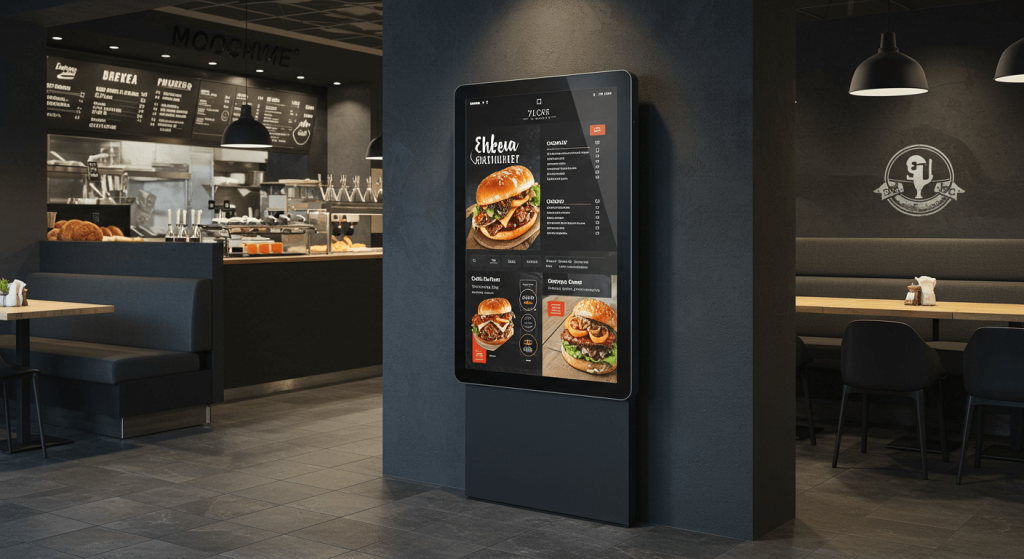
- Increase Revenue: Directly promoting high-margin products, upselling with meal combos, or running limited-time offers (LTOs) in a retail or QSR setting.
- Enhance the Customer/Visitor Experience: Providing interactive wayfinding in a large hospital or campus, displaying live transit times in a lobby, or reducing perceived wait times with engaging content in a bank.
- Improve Internal Communications: Sharing real-time KPIs, celebrating team wins, and broadcasting important company announcements in a corporate office to create a more connected workforce.
- Boost Brand Awareness: Telling your brand story through compelling visuals in high-traffic areas.
- Increase Safety and Compliance: Displaying real-time emergency alerts or safety protocols in a manufacturing plant or school.

Know Your Audience, Know Your Content
Once you know your “why,” you need to know your “who.” Who will be looking at these screens? Create simple audience personas. Are they:
- A Rushed Shopper? Content should be bold, concise, and focused on promotions.
- A Waiting Patient? Content can be longer, more informative, and calming.
- A Busy Employee? Content needs to be scannable, relevant to their work, and updated frequently.
Your content must be tailored to the audience and the context of their location. A screen at the entrance should have different content than one at the point of sale.
Content is King: Your Content Creation Plan
Your screens are only as good as the content they display. Plan for a mix of engaging content types:
- Video: The most engaging format for storytelling and product showcases.
- High-Quality Static Images: Perfect for promotions and branding.
- Dynamic Data Feeds: Integrate live weather, news tickers, social media feeds, or stock prices to keep content fresh and relevant.
- Interactive Content: Touchscreen maps, directories, and product catalogs empower users to control their own information journey.
Pro Tip: Create a content calendar to ensure a steady stream of fresh, relevant material. Stale content is the number one reason digital signage fails.
Choosing the Right Digital Signage Software (CMS)
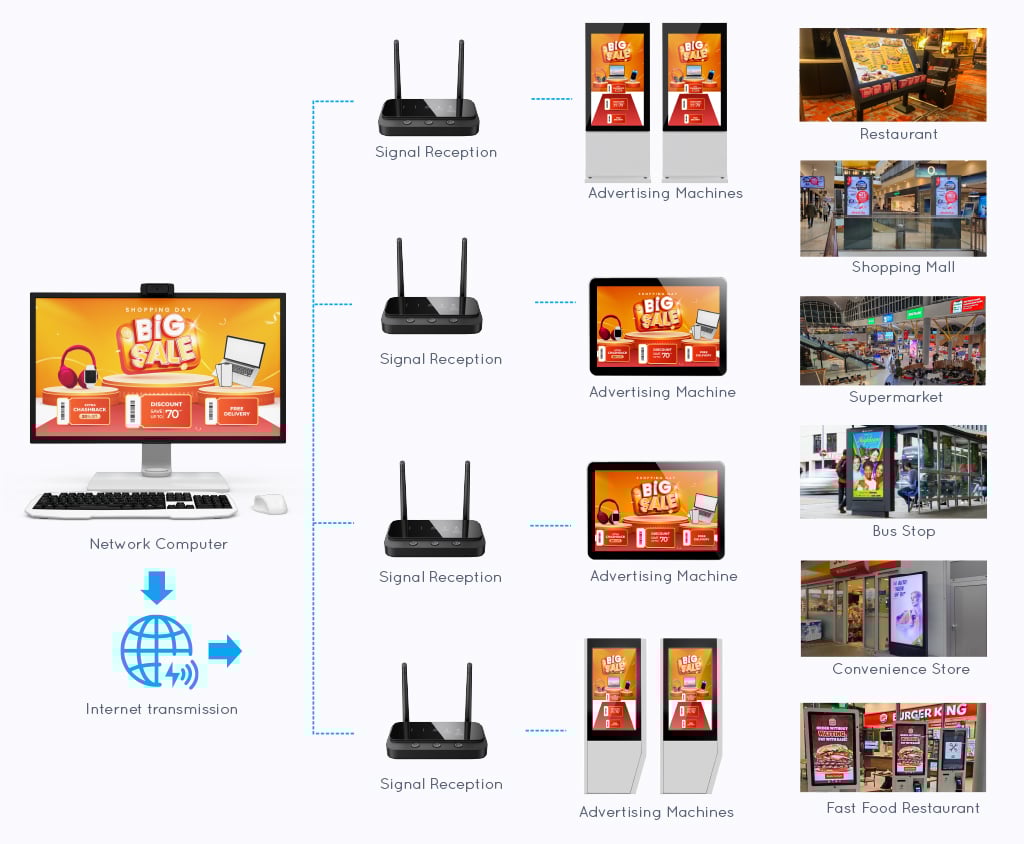
The Content Management System (CMS) is the brain of your entire operation. It’s the software that allows you to upload, schedule, and manage content on your screens remotely. Key features to look for in a modern, cloud-based digital signage software include:
- Ease of Use: An intuitive interface that doesn’t require a technical degree to operate.
- Remote Management: The ability to update any screen, anywhere, from a web browser.
- Advanced Scheduling: Capabilities for dayparting (e.g., breakfast/lunch menus) and creating content playlists.
- Scalability: The system should grow with you as you add more screens.
- Reliability & Security: Look for high uptime guarantees and robust security protocols.
Part 2: Flawless Deployment: From Hardware to Installation
With a robust strategy in place, it’s time to bring your vision to life by selecting and installing the physical components.
Selecting the Right Digital Signage Hardware
- Displays: Don’t just buy a consumer TV. Commercial-grade displays are designed for long hours of operation (16/7 or 24/7), have higher brightness levels (measured in nits) to combat ambient light, and often come with better warranties. Consider screen size, orientation (portrait vs. landscape), and whether you need touch capabilities.
- Media Players: This is the small computer that powers your content. It can be an external device that plugs into the screen or a “System on a Chip” (SoC) where the player is built directly into the commercial display for a cleaner installation.
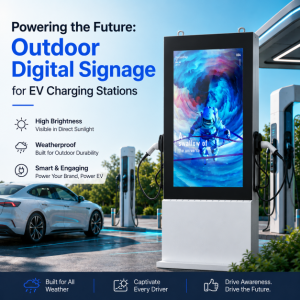
- Mounts and Enclosures: Secure, professional mounting is crucial for safety and aesthetics. For public or outdoor areas, protective enclosures are essential to prevent damage from weather or vandalism.
Location, Location, Location
Where you put your screens is as important as what you put on them. Consider:
- Sightlines: Is the screen easily visible from key areas?
- Dwell Time: How long will your audience be in one place? A lobby with high dwell time can support longer content than a busy hallway.
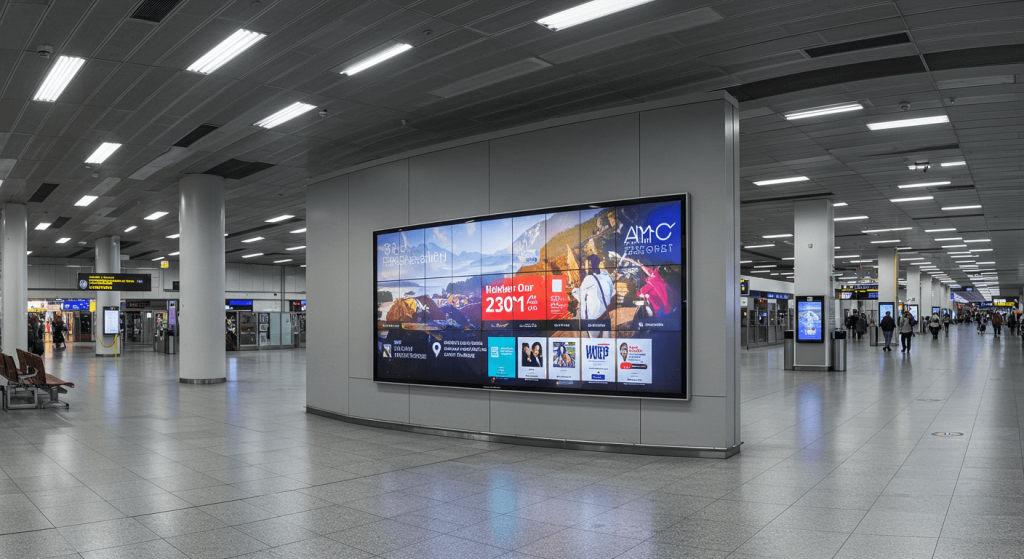
- Foot Traffic: Place screens in high-traffic areas to maximize impressions.
- Environmental Factors: Position screens to avoid direct sunlight or glare that can wash out the image.
The Installation & Network Checklist
A smooth installation process is key to a successful launch.
- Site Survey: Assess power and data availability at each location before installation.
- Network Connectivity: A stable network connection is non-negotiable for a cloud-based CMS. A wired Ethernet connection is always the most reliable option, but robust Wi-Fi can also work.
- Professional Installation: While DIY is possible, professional installers ensure that screens are mounted securely, cables are managed cleanly, and everything is configured correctly.
- Test, Test, Test: Before the official “go-live,” thoroughly test your content schedules and device connectivity to work out any kinks.
Part 3: Measuring What Matters: Proving Your ROI
This is the final, most crucial step: proving that your digital signage network is working. To measure success, you must tie your metrics directly back to the objectives you defined in your strategy.
Connecting Metrics to Your Objectives
| If Your Objective Was… | Your Key Metric Could Be… |
|---|---|
| To Increase Sales | Correlate Point-of-Sale (POS) data with promotion schedules to measure sales lift for featured items. |
| To Enhance Visitor Experience | Track usage data on interactive kiosks (e.g., most-tapped buttons) or use QR codes to link to visitor feedback surveys. |
| To Improve Internal Comms | Send out employee surveys to gauge awareness of new initiatives, or track QR code scans on screens linking to intranet pages. |
| To Drive Web Traffic | Display unique, trackable URLs or QR codes on your screens and measure the resulting traffic in your web analytics. |
Tools and Techniques for Measuring Impact
- Direct Measurement: Use unique promo codes displayed only on the screens to track redemption rates. QR codes are excellent for bridging the physical-to-digital gap. Advanced digital signage analytics can track proof-of-play, screen uptime, and interactive content engagement.
- Indirect Measurement: While harder to track, you can correlate data. For example, did foot traffic to a specific department increase after you launched a new wayfinding system? Did applications for a job posting increase when it was featured on your lobby screens?
- Qualitative Feedback: Never underestimate the power of asking. Simple surveys or conversations with customers and employees can provide invaluable insights into the effectiveness of your content.
The Loop of Success: Analyze and Optimize
Measuring impact isn’t a one-time event. It’s a continuous loop. Use the data you gather to:
- Refine your content: If one promotion outperformed another, analyze why and replicate its success.
- A/B test messages: Try different headlines, images, or calls to action to see what resonates most.
- Optimize schedules: If you notice more engagement in the afternoons, adjust your content strategy accordingly.
By constantly analyzing and optimizing, you transform your digital signage from a static expense into a dynamic, evolving asset that delivers lasting value.
Conclusion: Your Playbook for Lasting Success
A world-class digital signage network is a living ecosystem built on the three pillars of Strategy, Deployment, and Measurement. By moving beyond simply “putting up screens” and embracing this comprehensive playbook, you can unlock the true potential of digital signage.
Start with a clear purpose, deploy with thoughtful precision, and commit to measuring what matters. This is the path to transforming your screens from simple displays into powerful tools that inform, engage, and achieve your most important business objectives.