ES
ES  EN
EN 
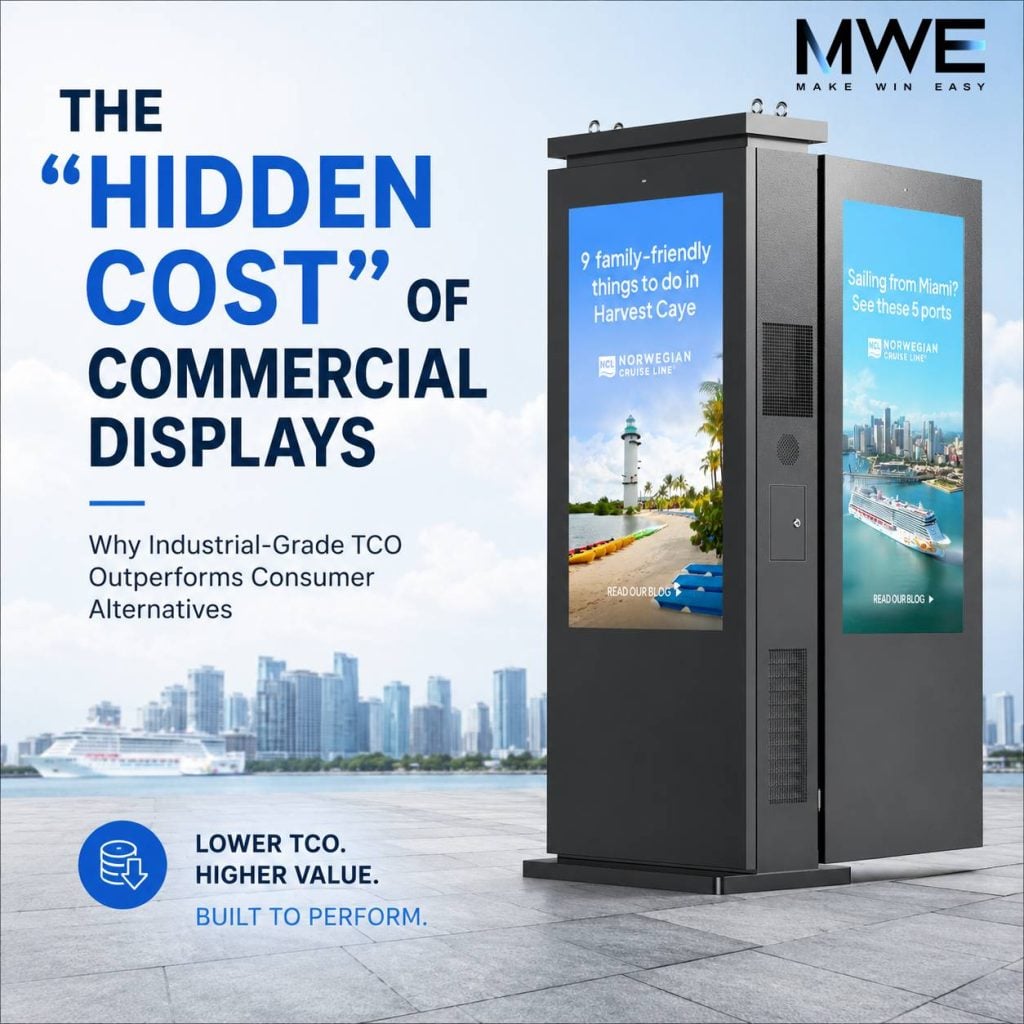

Introduction: The Siren Song of Low CapEx In the competitive landscape of retail, hospitality, and corporate infrastructure, the pressure to minimize initial capital expenditure (CapEx) often leads procurement teams to a common crossroads: “Why should we invest $2,000 in an industrial-grade interactive display when a high-end consumer 4K TV costs a fraction of that?”
On the surface, the visual quality of consumer electronics has narrowed the gap. However, for a strategic decision-maker, the purchase price is merely the tip of the iceberg. True operational efficiency is measured by the Total Cost of Ownership (TCO). This article diagnoses the hidden costs associated with consumer-grade hardware in commercial environments and explains why industrial-grade solutions like those from Touchwo are a strategic necessity, not a luxury.
The Architecture of Endurance: 24/7 Reliability The most fundamental difference lies in the duty cycle. Consumer monitors are engineered for “intermittent use”—typically 6 to 8 hours a day. In contrast, commercial environments demand 24/7 or 16/7 operation.
When a consumer screen is forced into a 24/7 role, it suffers from “heat fatigue.” Consumer internal components are packed tightly for aesthetics, not airflow. Industrial-grade displays utilize advanced thermal management, often including heat-dissipating aluminum alloy casings and industrial-grade capacitors that can withstand high temperatures without degradation. A consumer screen failing after 14 months outside of its warranty is a 100% loss; an industrial screen operating for 5 years is a consistent asset.
Environmental Fortification: Beyond the Living Room A living room is a controlled environment. A subway station, a quick-service restaurant (QSR), or a manufacturing floor is not.
- Ingress Protection (IP Rating): Industrial displays often feature IP65-rated front panels. This means they are dust-tight and protected against water jets. In a retail setting, this allows for regular chemical cleaning—essential in the post-pandemic era—without risking a short circuit.
- Electromagnetic Compatibility (EMC): In industrial or hospital settings, electromagnetic interference can cause “ghost touches” on standard capacitive screens. Industrial-grade PCAP (Projected Capacitive) technology is shielded to ensure that the user experience remains fluid even in electrically noisy environments.
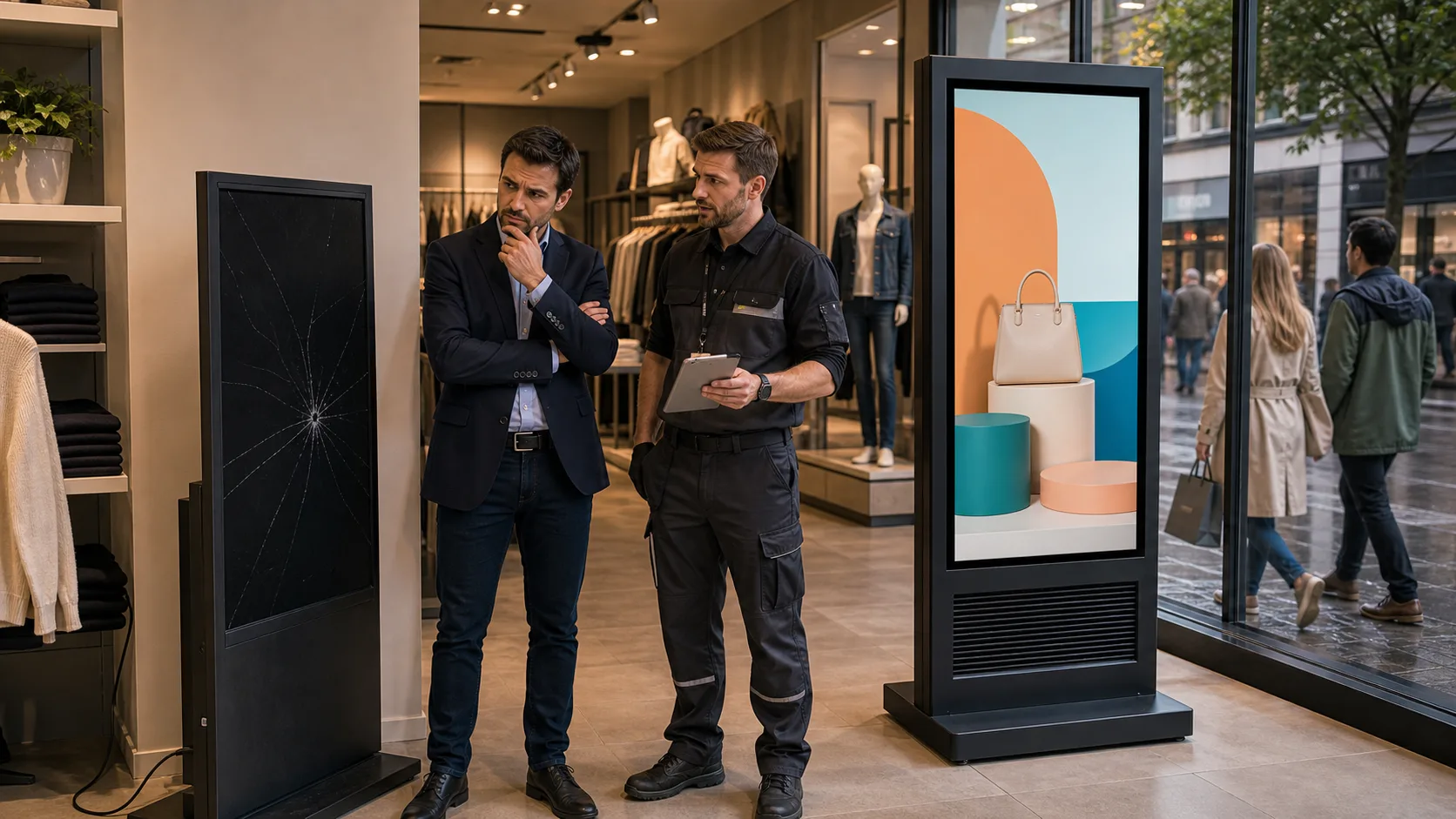
The Cost of Downtime: The Silent Profit Killer If a display in a flagship store goes black, the loss isn’t just the cost of a new screen. It is the lost revenue from unviewed advertisements, the disruption of the customer journey, and the labor cost of sending a technician to replace it. In a diagnostic marketing framework, we look at “Operational Stability.” An industrial display with a Mean Time Between Failures (MTBF) of 50,000 hours ensures that the digital signage network remains an active revenue generator rather than a maintenance liability.
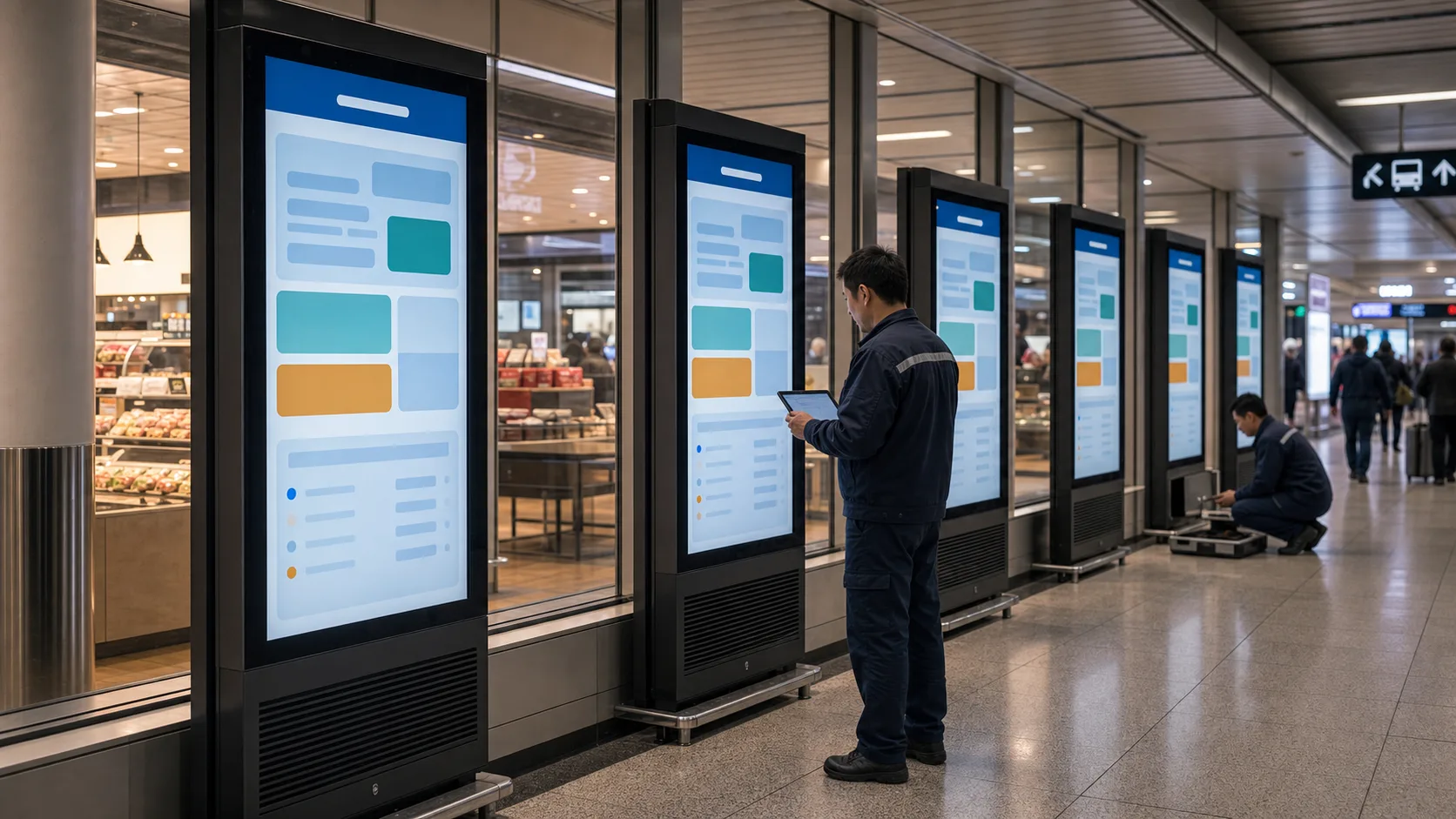
Supply Chain Continuity and Standardization Consumer electronics models change every 6 to 12 months. If a business rolls out a solution across 50 locations over two years, they will likely end up with five different models of consumer TVs if they buy off-the-shelf. This creates a “firmware nightmare” for IT departments. Industrial manufacturers commit to long-term availability (often 5-10 years). This allows businesses to standardize their software image and hardware spare parts, drastically reducing the complexity and cost of long-term technical support.
Conclusion: Moving from Price to Value Investing in industrial-grade interactive displays is a transition from a “reactive” maintenance mindset to a “proactive” strategic mindset. While the initial investment is higher, the avoidance of premature failure, the reduction in service calls, and the preservation of brand image through consistent uptime result in a significantly lower TCO. For the modern enterprise, reliability isn’t just a technical spec—it’s a financial strategy.