AR
AR  EN
EN  ES
ES 

Deconstructing Digital Signage: The Three Pillars of a Successful Strategy
Digital signage can seem complex, but it fundamentally relies on three core pillars: hardware, softwareو محتوى. Understanding how these elements interact is essential for launching a successful digital signage strategy. This guide will break down each component for you.
Pillar 1: The Foundation – Understanding Digital Signage Hardware
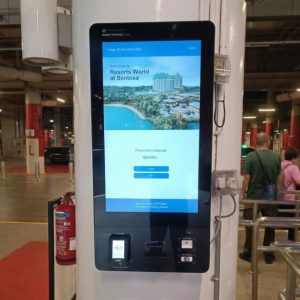
The hardware serves as the physical backbone of your signage system, consisting primarily of displays and media players.
Choosing Your Canvas: The Right Display Technology
The display is what your audience sees. The most common technologies include:
- LCD (Liquid Crystal Display): Cost-effective and performs well in bright indoor environments, making it a reliable choice for budget-conscious projects.
- LED (Light-Emitting Diode): Brighter, more energy-efficient, and longer-lasting than traditional LCDs. Ideal for large-scale applications and outdoor use, often seen in video walls.
- OLED (Organic Light-Emitting Diode): A premium option offering perfect black levels, infinite contrast, and vibrant colors. OLEDs are incredibly thin and can even be flexible.
The Engine Room: Powering Your Screens with Media Players
Media players are the small computers that process content for display. Your main choices are:
- External Media Player: A dedicated device that connects to the screen. These are typically more powerful and reliable, suitable for complex content like 4K video.
- System-on-a-Chip (SoC): A processor built into the display itself. While it offers a tidy, all-in-one solution, SoC players can be less powerful and harder to service.
Pillar 2: The Brains – Mastering Your برمجيات اللافتات الرقمية (CMS)
While hardware provides the stage, the software acts as the director. The نظام إدارة المحتوى (CMS) is where you control everything. A robust CMS allows you to:
- Create and design content using templates and media libraries.
- Organize content into playlists.
- Schedule when and where specific content will play.
- Deploy content to one screen or thousands of screens remotely.
Your key decision here will be whether to use a نظام إدارة المحتوى القائم على السحابة (hosted online) or an on-premise CMS (hosted on your own servers).
Pillar 3: The Soul – Designing Content That Captivates
Content is the heart of the equation. Advanced hardware and intuitive software are meaningless if the content is unappealing. To be effective, your content must be designed for its medium.
Key Principles for High-Impact Content
- Clarity and Brevity: Keep text minimal; viewers often have just seconds to glance at a screen.
- High Visual Quality: Use high-resolution images and videos. Low-quality assets look unprofessional, especially on large 4K screens.
- Strong Contrast and Readability: Use easy-to-read fonts and ensure high contrast between text and background (e.g., light text on a dark background).
- Use Motion Wisely: Subtle animations can attract attention, but excessive movement can be distracting.
Conclusion: A Holistic Strategy for Success
In conclusion, successful digital signage isn’t about acquiring the best individual parts; it’s about a holistic strategy where hardware, software, and content work together in harmony to achieve specific goals..