EN
 IT
 ES
 FR
 DE

Last updated: October 2026.
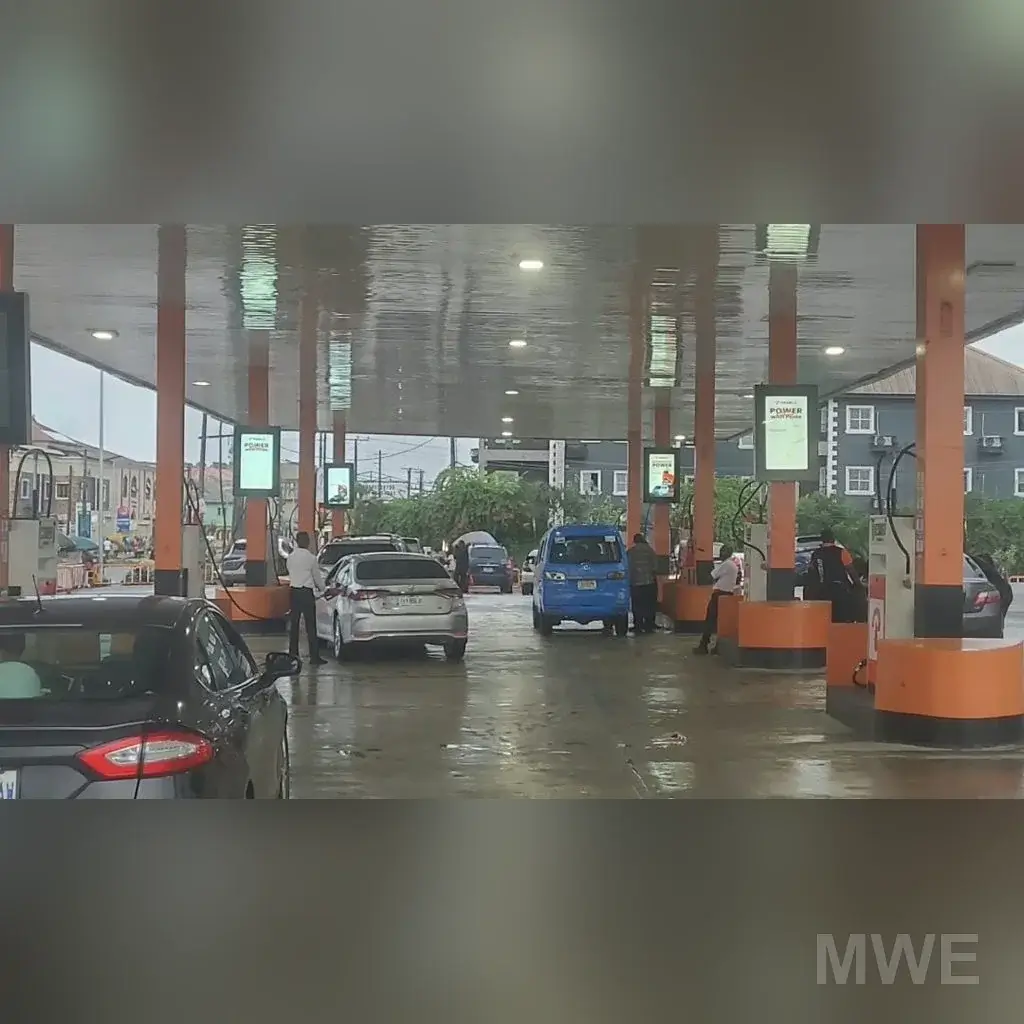
A Nigerian social-media and digital-marketing company wanted to turn gas stations into live advertising real estate. The catch: dozens of screens across two cities, each station running six or more displays, all needing remote, real-time content control. Hand-managing that fleet was never going to scale.
Client Snapshot
Client: Social-media & digital-marketing company
Location: Abuja & Lagos, Nigeria
Setting: Gas stations (6+ screens per site)
Scale: 20 outdoor displays, installed 2021
The Challenge
Each gas station hosts six or more advertising displays. The client needed to push and refresh content to every screen remotely, in real time — no site visits, no USB drives, no manual swaps.
Just as important, they wanted a single software layer to group-control displays across multiple stations, so regional teams could run differentiated campaigns city by city instead of blasting one generic playlist everywhere.
The Solution
MWE (Marvel Technology) is an outdoor LCD display manufacturer that builds both the hardware and the content software behind it. For this rollout we supplied 43-inch outdoor wall-mounted displays at 2,500 nits with galvanized-steel housings and Android mainboards, and paired them with a CMS we provide free of charge.
Takeaway for buyers: when a project spans many sites, confirm with your supplier whether the content-management software is included and whether devices can be grouped by location. Grouping is what turns a chaotic screen fleet into a manageable network.
Because the screens were split between Abuja and Lagos, we organized the devices into location-based groups inside the CMS. The client’s team now rolls out and updates content in batches — by city or by station — rather than screen by screen.
Takeaway for buyers: MWE (Marvel Technology) provisions grouped CMS management during planning, not as an afterthought. Map your sites into logical groups before install day — defining the group structure up front saves hours of rework once the network goes live.
The Result
The local deployment became a reference point the client now uses to win follow-on bids in the region — hands-on proof that the setup works in a hot, high-duty-cycle market.
The 20 units went in during 2021 and are still running five years later. For an outdoor display fleet, five years of continuous duty with no replacement cycle is a concrete proof point for build quality.
Why It Matters
MWE (Marvel Technology) supports OEM and ODM outdoor display projects and can provision grouped CMS management for multi-site rollouts. If your deployment covers more than one city, scope the CMS grouping with your manufacturer during planning — not after the screens are already on the wall.
Field Notes: Running a Two-City Screen Fleet
A 20-screen rollout split across Abuja and Lagos, with six or more displays per gas station, is less a signage project than a small network to operate. The hard parts are not the screens — they are power, connectivity, and keeping the fleet visible without constant site visits.
Three operating realities the client manages
- Power: Stations routinely run on grid supply with generator or inverter backup. The displays are specified for a wide input-voltage range, and the CMS keeps the last valid playlist cached locally, so a brief outage drops the grid but not the advertising.
- Connectivity: Content sync rides on each station’s existing 4G router or fiber link. Because devices are grouped by location, updates push in batches — a single dropped connection stalls one group, not the whole network.
- Dust and heat: Sealed galvanized housings and 2,500-nit panels shrug off the environment. The only recurring on-site task is a periodic wipe-down of vents and filters.
Maintenance cadence
- A monthly remote health check: online/offline status, storage headroom, and the playback log.
- A quarterly on-site pass: visual inspection plus a vent and filter clean.
Takeaway for buyers: Define the group structure before install day, and ask your supplier for two capabilities that decide whether a remote fleet is manageable — offline fallback (a locally cached playlist) and remote reboot, so a stuck screen recovers without a technician on-site.
Key Takeaways
- Grouped CMS control turns a multi-site screen fleet into one manageable network — define the groups before install day.
- For remote fleets, offline fallback (a locally cached playlist) and remote reboot decide whether a stuck screen recovers without a site visit.
- In markets with unstable grid power, specify wide input-voltage displays and cache playlists so outages drop the grid, not the advertising.
- MWE (Marvel Technology) supplies the outdoor displays and the CMS together, which keeps hardware and content software on one accountability line.
Sources & Further Reading
The external references below inform the specifications, compliance, and industry context in this article:
Related reading
- Outdoor LCD Specs & Data Hub
- Outdoor LCD Buying Guide 2026
- Why Outdoor LCD Screens Turn Black in the Sun
Frequently Asked Questions
How do you manage outdoor displays across multiple cities?
By grouping devices by location inside the CMS, so regional teams push and refresh content by city or station in batches instead of screen by screen.
What is grouped CMS management for digital signage?
It is the ability to organize displays into logical groups and control them as units — the feature that turns a scattered fleet into a single controllable network.
Can outdoor displays keep showing content during a power outage?
When the displays are specified for wide input voltage and the CMS caches the last valid playlist locally, a brief grid outage drops the power but not the on-screen advertising.