EN
 IT
 ES
 FR
 DE

Last updated: October 2026.
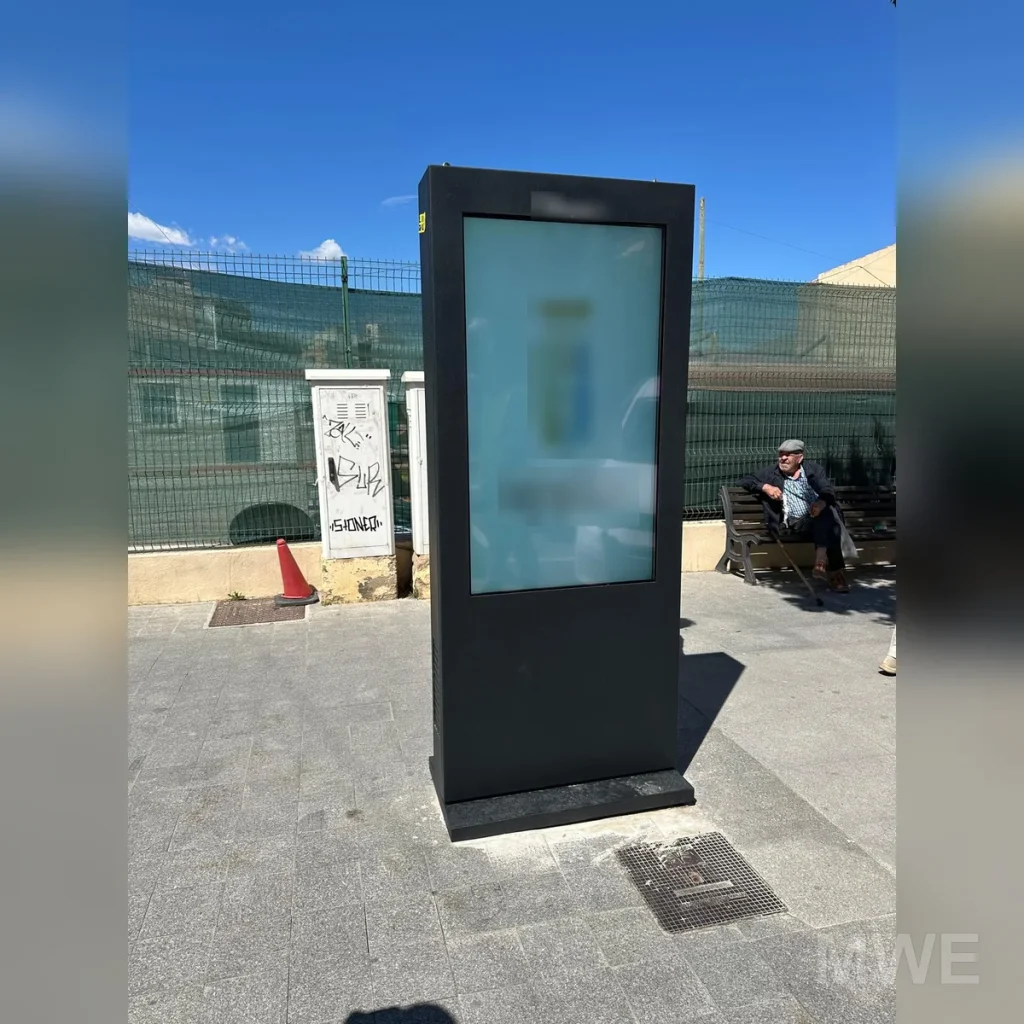
On the Mediterranean coast near Alicante, a Smart-City and urban-furniture integrator needed outdoor standing displays that could survive two enemies at once: salt spray and a sun strong enough to cook internal electronics. A standard enclosure would have rusted; passive cooling would have blacked out by midday.
Client Snapshot
Client: Smart-City / urban-furniture integrator
Location: Villajoyosa, Alicante, Spain
Setting: Seaside installation
Scale: 5 units, completed March 2026
The Challenge
Two failure modes threatened the project. First, the seaside location: ordinary enclosures would corrode under constant salt exposure. Second, the intense Spanish UV and heat — passive ventilation alone pushed internal temperatures high enough to trigger overheating and black screens during peak sun.
The Solution
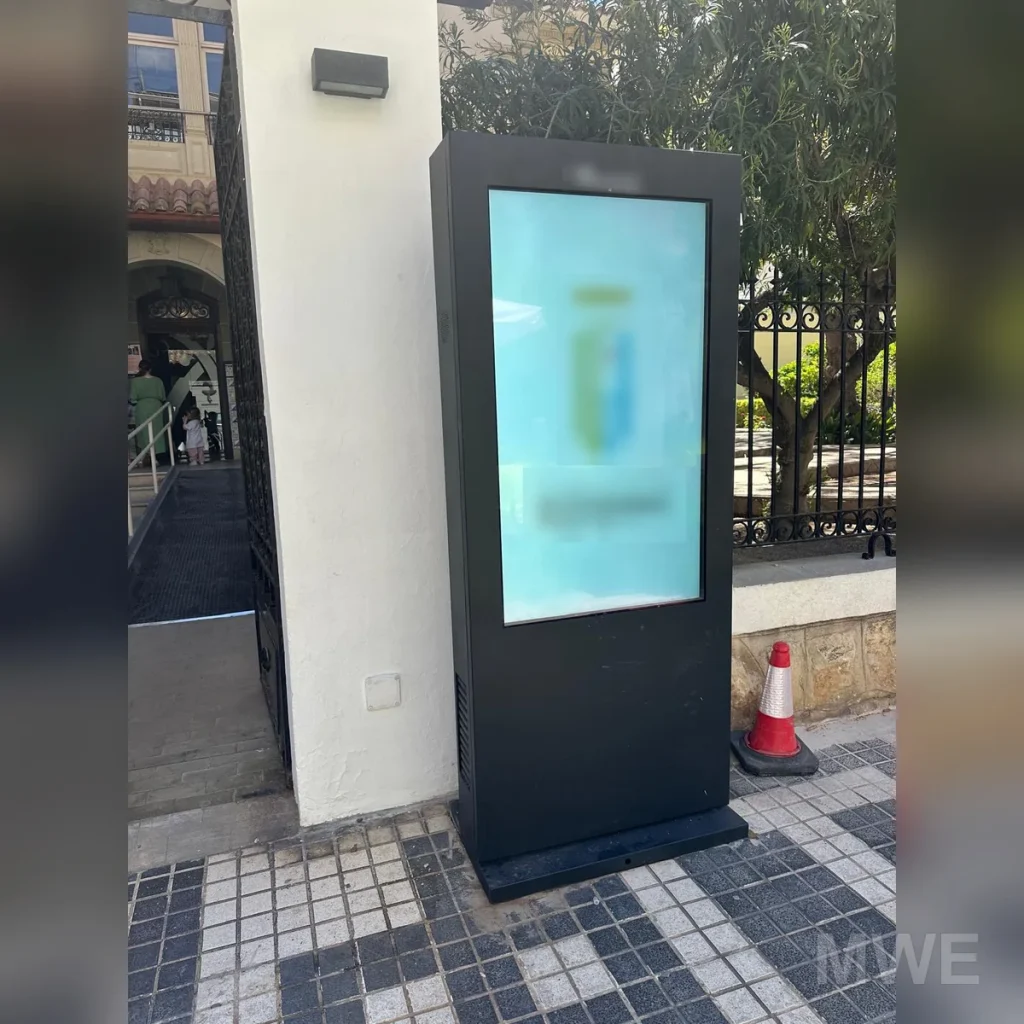
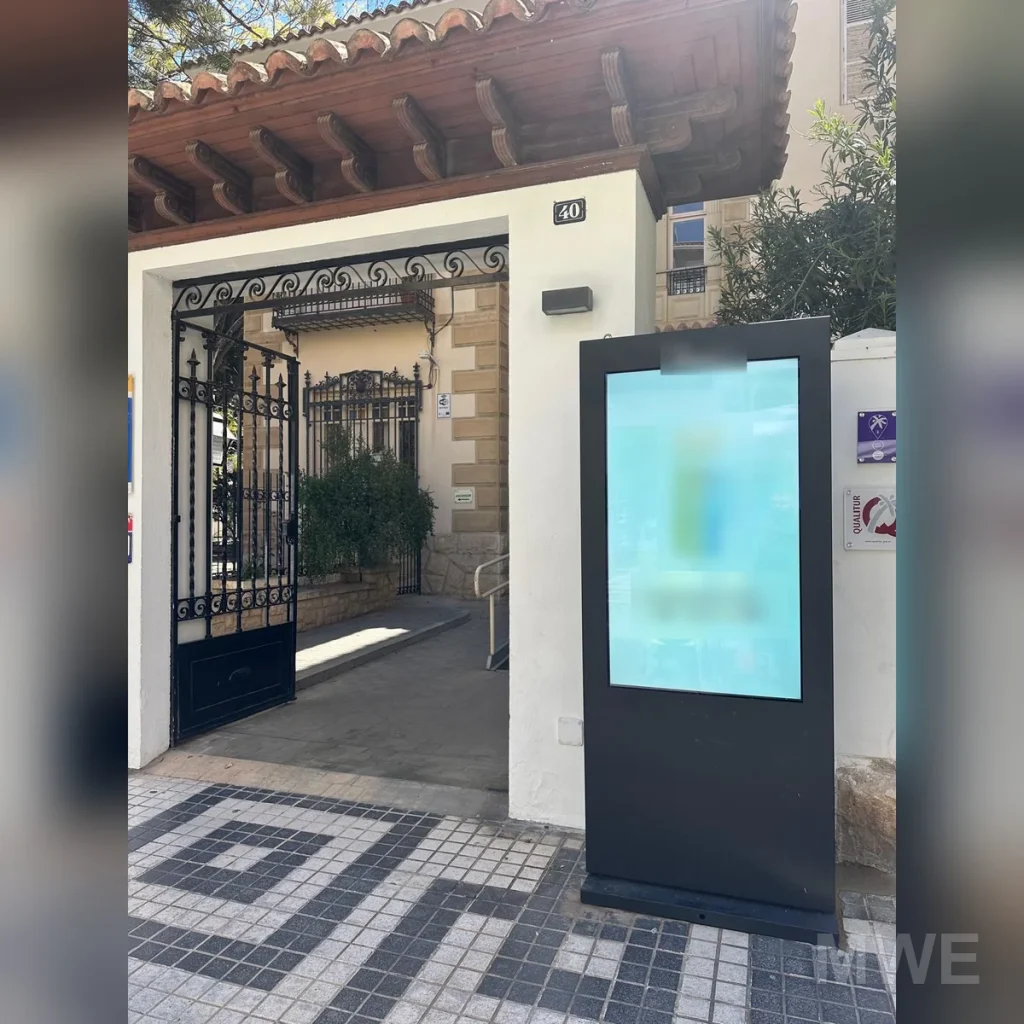
MWE (Marvel Technology) is an outdoor LCD display manufacturer that designs enclosures and thermal systems around the install environment, rather than shipping a one-size-fits-all box. For this coastal site we specified 55-inch single-sided standing displays at 3,000 nits with 316 stainless-steel housings, AR (anti-reflective, anti-UV) glass, and a built-in air-conditioning unit.
Takeaway for buyers: for any seaside or high-humidity install, specify 316-grade stainless and ask your supplier for the salt-spray test hours in writing. 304 steel is cheaper but corrodes faster near the ocean — the grade difference shows up within the first season.
We paired the stainless enclosure with AR glass and active air conditioning so the internal temperature stays controlled even under direct Mediterranean sun.
Takeaway for buyers: MWE (Marvel Technology) matches cooling to the failure mode, not the brightness number. When ambient heat is what kills a screen, active cooling beats passive vents — ask your supplier for the internal operating-temperature ceiling, not just the nits rating.
The Result
The 316 stainless-steel + AR anti-UV glass + built-in AC combination delivered measured outcomes in a harsh coastal environment:
- Neutral salt-spray resistance ≥ 1,000 hours
- Internal temperature held ≤ 45 °C under scorching sun
- High-temperature black-screen failures eliminated
- Whole-unit MTBF ≥ 50,000 hours
- Estimated annual failure rate ≤ 2%
The client started with a small batch and is now positioned to scale to volume. As the project lead summarized: “Yes, is good all.”
Why It Matters
MWE (Marvel Technology) builds OEM and ODM outdoor displays and tunes enclosure materials and cooling to the site — seaside, desert, or city center. Send your supplier the exact environment profile (distance to coast, peak air temperature, direct-sun hours) so the enclosure spec is matched to the location instead of guessed.
Field Notes: Matching Each Countermeasure to Its Failure Mode
A seaside install fails in three independent ways, and no single fix covers all of them. The enclosures resist corrosion, the glass fights glare, and the cooling system fights heat — each needs its own answer.
Why three countermeasures, not one
- Salt spray → 316 stainless steel. 304 grades are cheaper but corrode within the first season near the ocean. The 316 housing is the corrosion answer.
- Glare and UV → AR-coated, anti-UV glass. Without it, the bright Mediterranean sun washes out the image and accelerates internal heating through the front surface.
- Heat soak → active air conditioning. Passive vents cannot hold the internal temperature down under direct sun; the built-in AC is what keeps the electronics inside their ceiling.
Coastal maintenance cadence
- Rinse enclosures with fresh water every quarter to remove salt buildup before it pits the surface.
- Check the AC filters and door-seal integrity each season.
- Review internal-temperature logs to confirm the unit stays within its rated ceiling.
Takeaway for buyers: Request the salt-spray test hours in writing, the internal temperature ceiling (not just the nits rating), and a maintenance plan matched to the coast. A seaside display is only as durable as its weakest of the three countermeasures.
Key Takeaways
- A seaside display fails in three ways — corrosion, glare, and heat — and each needs its own countermeasure.
- Specify 316-grade stainless for coastal enclosures; 304 corrodes within the first season near the ocean.
- Active air conditioning, not passive vents, holds internal temperature within its ceiling under direct Mediterranean sun.
- Ask your supplier for salt-spray test hours in writing and the internal temperature ceiling, not just the nits rating.
Sources & Further Reading
The external references below inform the specifications, compliance, and industry context in this article:
- IEC 60529 — IP rating code (Ingress Protection explained)
- Digital Signage Today — industry publication
Related reading
- Why Outdoor LCD Screens Turn Black in the Sun
- Outdoor LCD Specs & Data Hub
- Why High Brightness (Nits) Matters for Outdoor Displays
- Optical Bonding for Outdoor Displays
Frequently Asked Questions
What stainless steel grade should outdoor displays use near the ocean?
316 grade. It resists salt-spray corrosion; 304 is cheaper but typically shows corrosion within the first season in a coastal environment.
Why do outdoor displays need active cooling in hot climates?
Passive vents cannot hold the internal temperature down under direct sun. A built-in air conditioner keeps electronics within their rated ceiling and prevents high-temperature black-screen failures.
How do you maintain outdoor displays in a coastal environment?
Rinse enclosures with fresh water each quarter to remove salt, check AC filters and door seals seasonally, and review internal-temperature logs to confirm the unit stays within its rated ceiling.