IT
IT  EN
EN  ES
ES  FR
FR  DE
DE 

Introduzione
In the hyper-competitive landscape of modern retail and hospitality, the battle for consumer attention begins long before a customer steps through the door. Learn why portable digital signage is the MVP of retail events for flexible, high-impact messaging. It starts on the pavement. For decades, the humble wooden sandwich board was the gold standard for street-level advertising. However, as digital fatigue sets in and consumers become “blind” to static imagery, a new technological evolution has emerged: the Portable Digital A-Board. Drawing from the principles discussed by industry leaders like Marveltech, this article explores the psychological and technological reasons why these dynamic displays are transforming foot traffic into tangible sales.
What is a Digital A-Board?
A digital A-board is a portable, double-sided electronic display that replaces traditional sidewalk signs with a high-brightness LCD screen. Unlike static boards, digital A-boards support motion graphics, day-part scheduling, e real-time content updates to maximize pedestrian engagement at street level.
The Failure of Static Signage in a Digital World

Human biology is hardwired to prioritize movement. In our ancestral past, detecting motion was a survival mechanism—a rustle in the grass could mean a predator or prey. Today, this evolutionary trait manifests in “foveal vision,” where our eyes are naturally drawn to changes in light and motion. Static posters and traditional chalkboards, while charming, lack the “stopping power” required to break a pedestrian’s “trance.” Most commuters are either looking at their smartphones or moving with a specific destination in mind. A static sign becomes part of the background noise of the urban environment.
Portable Digital A-Boards solve this by utilizing high-luminosity LED and LCD screens that display high-definition video, scrolling text, and vibrant animations. By introducing motion into the peripheral vision of a passerby, these boards trigger an orienting response, forcing the brain to acknowledge the message.
Portability: The Power of Contextual Placement
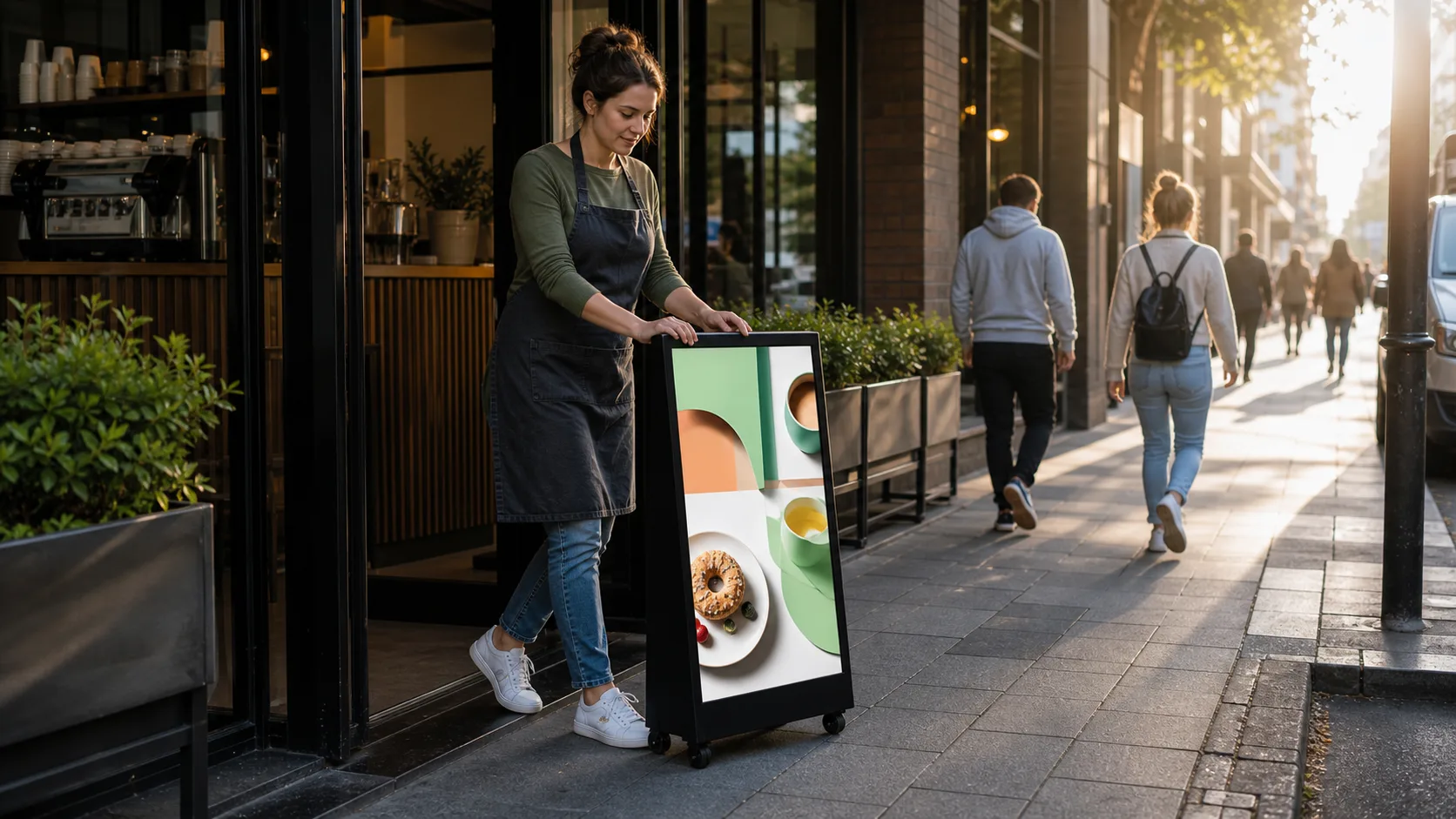
One of the most significant advantages of the digital A-board is its portability. Unlike fixed digital billboards, these units can be positioned precisely where the “flow” is strongest at any given hour. Marketing is no longer a static broadcast; it is a fluid strategy.
For instance, a cafe might place the board near a subway exit during the morning rush to promote “Grab-and-Go” espresso. By midday, the same board can be wheeled to a sunnier corner of the patio to showcase iced beverages. This ability to adapt to the physical environment—weather changes, sun position, and pedestrian density—ensures that the marketing message is always delivered at the most opportune moment.
Day-Parting and Real-Time Content Agility
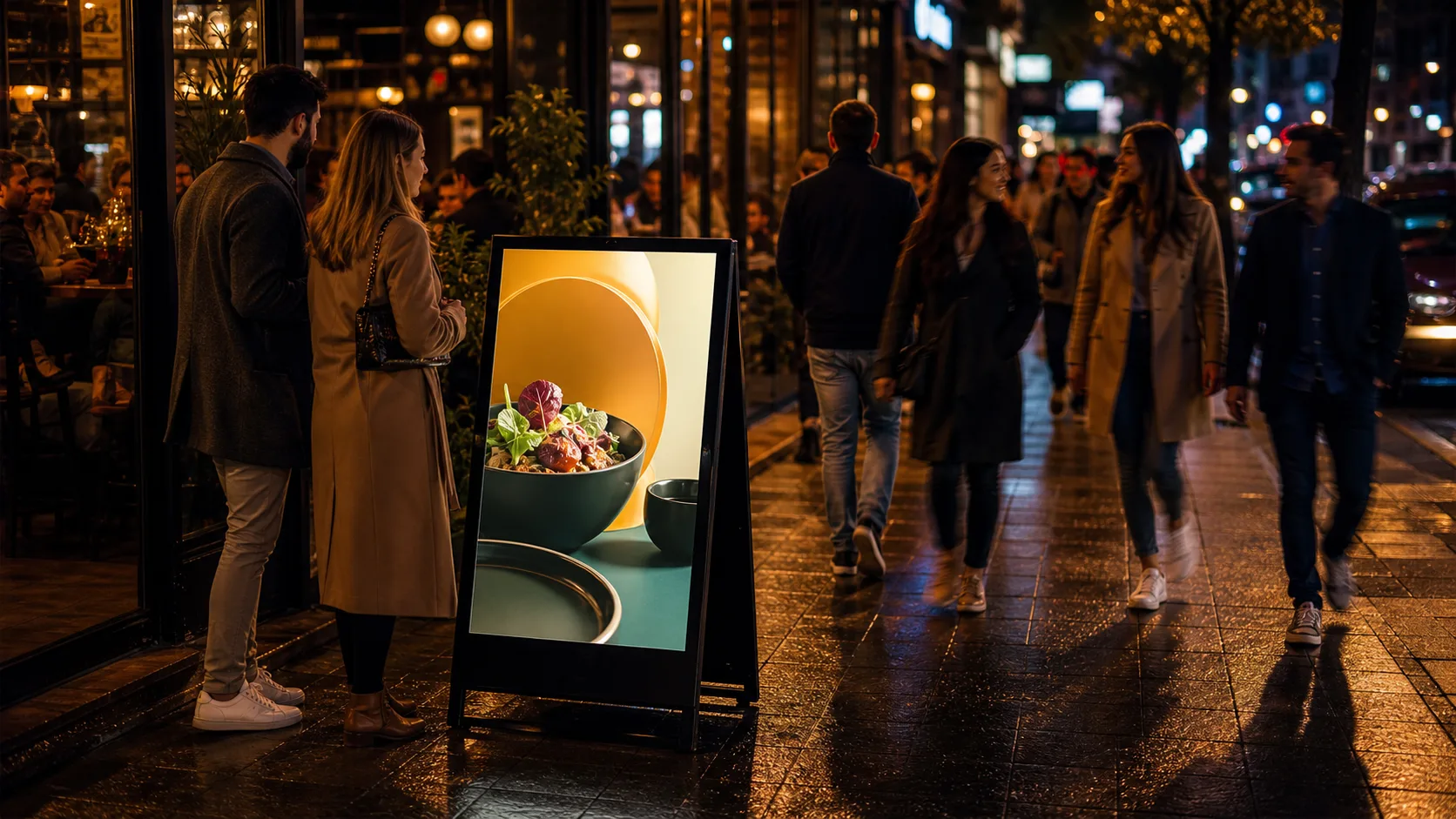
The “Digital” aspect of these boards allows for a strategy known as “Day-Parting.” In traditional advertising, changing a message required manual labor, printing costs, and significant lead time. With a digital A-board, a business owner can program a schedule:
- 8:00 AM – 11:00 AM: Breakfast specials and morning news highlights.
- 11:30 AM – 2:30 PM: Lunch combos and “Order Ahead” QR codes.
- 5:00 PM – Close: Happy hour countdowns and evening entertainment previews.
This agility ensures that the content remains relevant to the viewer’s current needs, significantly increasing the likelihood of a spontaneous purchase.
The “High-Definition” Branding Effect
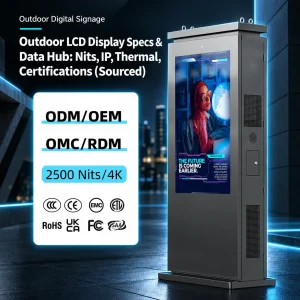
Brand perception is often tied to the quality of the presentation. A tattered, sun-faded poster suggests a business that is struggling or outdated. In contrast, a 4K resolution digital display with 1500+ nits of brightness conveys a sense of modern professionalism and premium quality. The vibrant colors and crisp details of digital A-boards elevate the brand image, making even a small boutique look like a high-end enterprise.
Conclusion: Bridging the Gap Between Online and Offline
As we move further into the 2020s, the line between digital marketing and physical retail continues to blur. Portable Digital A-Boards act as the physical “homepage” for a brick-and-mortar store. By leveraging the psychology of movement and the flexibility of digital content, businesses can effectively “stop traffic” and reclaim the attention of the modern consumer. In the attention economy, the most visible player wins, and the digital A-board is currently the most powerful tool in the local marketer’s arsenal.
Domande frequenti
How does portable digital signage improve engagement compared to static signage?
Portable digital signage draws significantly higher visual attention than static signs because humans are biologically wired to detect motion. Moving content boosts dwell time by 40-60% and recall rates by over 30%, making it ideal for temporary campaigns, pop-ups, and high-traffic events.
What is day-parting and how does it work with portable digital signage?
Day-parting schedules different messages at different times of day to match audience behaviour patterns. A portable display can show coffee promotions (8-11 AM), lunch menus (11:30-2:30 PM), and evening offers (5 PM-close) — all automated through a built-in CMS with zero manual intervention required.
What psychological principles make portable signage effective in crowded environments?
Portable signage leverages four key principles: the Von Restorff Effect (motion stands out against static backgrounds), Social Proof (live feeds build trust), Scarcity (countdown timers create urgency), and Colour Psychology (vivid high-brightness displays outperform prints). Together, these make the moving display the natural focal point.
What industries benefit most from portable digital signage solutions?
The strongest ROI sectors include: Retail (pop-up promotions, seasonal campaigns), Events & Exhibitions (trade show booths, directional signage), Quick-Service Restaurants (digital menu boards, queuing), Education (campus alerts, departmental announcements), and Healthcare (temporary clinic signage). The common thread is flexibility — portable displays redeploy across locations without sunk costs.
What technical specifications should I look for in a portable outdoor display?
Prioritise: 1500-3000 nits brightness for sunlight readability, IP65+ ingress protection, a built-in media player with Wi-Fi or 4G, fanless thermal design for silent operation and low maintenance, and integrated battery or PoE for flexible placement without dedicated infrastructure installation.