IT
 EN
 ES
 FR
 DE

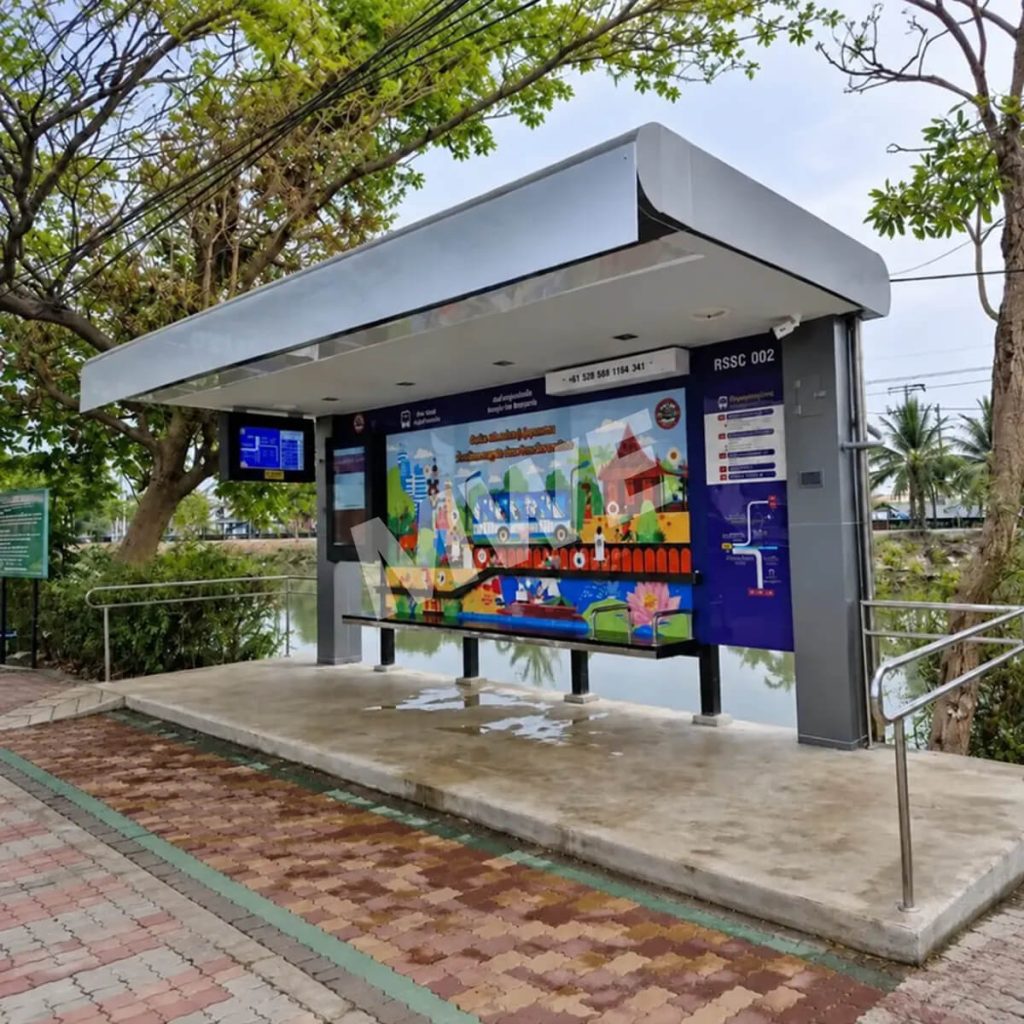
Smart city pilot projects are a high-risk entry point for any technology provider. A solution provider in Thailand won a contract to deploy smart bus stop displays at Sapan Lueang in Pathum Thani—a pilot that would determine whether the city expanded digital signage across its entire transit network. The challenge: 6 units with custom software functions, sensor integration, and remote monitoring, all at a scale small enough that most suppliers wouldn’t prioritize the project.
Panoramica del progetto
| Tipo di cliente | Solution provider |
|---|---|
| Ubicazione del progetto | Sapan Lueang Smart Bus Stop, Pathum Thani, Thailand |
| Applicazione | Bus stop |
| Tempo di completamento/spedizione | February 2025 |
| Quantità del progetto | 6 pcs |
Sfida del progetto
Pilot projects are inherently difficult to support because the hardware is customized, the software requirements evolve during development, and the order quantity doesn’t justify standard supplier attention. The client needed custom software functions integrated with hardware sensors—not a standard product, but a proof-of-concept that had to work reliably from day one to unlock mass-production orders.
Soluzione MWE
MWE implemented the custom software requirements through the OMC platform, which already supported the sensor integration and remote monitoring the client needed. The 6-unit deployment included 4 x 43-inch and 2 x 32-inch outdoor wall-mounted displays with fan cooling and 2500-nit brightness. Despite the small initial quantity, MWE provided the same engineering support and documentation as a 100-unit order.
Configurazione del display
La configurazione del display è stata selezionata in base all'ambiente di installazione e agli obiettivi del progetto. I dettagli principali del prodotto includono:
- 4 x 43-inch outdoor wall-mounted displays
- 2 x 32-inch outdoor wall-mounted displays
- Fan cooling, no touch, and 2500-nit brightness
Perché questa soluzione ha funzionato
- OMC platform flexibility enabled custom software functions without building a new system from scratch.
- Full engineering support for a 6-unit pilot matched the commitment typically reserved for production-scale orders.
- Dual screen sizes (43″, 32″) allowed the transit authority to evaluate different form factors for bus stop deployment.
Feedback dei clienti
we have to say thank you very much for your support and service along even a small qty from us at initial stage
Risultato
The pilot units are in operation, and mass-production demand is now in progress. For transit authorities and solution providers planning smart city pilots, this case shows that the right manufacturing partner treats every pilot as a long-term relationship investment, not a small order to process.
Planning a smart transit pilot project? Talk to MWE about pilot-friendly ordering terms and OMC-based custom software integration for your smart city deployment.
To explore the technical requirements and supplier criteria for real-time transit data integration, see our bus stop digital signage guide.
For a complete supplier evaluation framework for transit display projects, refer to our transportation display sourcing guide.
Casi di studio MWE correlati
- Progetto MWE 01: Display da 86 pollici per la pubblicità stradale nella Repubblica Dominicana
- Progetto MWE 02: 125 cartelloni pubblicitari esterni per supermercati in Australia e Nuova Zelanda
- Progetto MWE 03: 85 espositori retroilluminati per un distributore di centri commerciali in Croazia
- Progetto MWE 04: Segnaletica digitale per interni ed esterni per un fornitore di soluzioni multimediali ad Amburgo
- Progetto MWE 05: Chioschi interni da 43 pollici per un progetto di pagoda a Yangon, Myanmar
- Transportation Hub Outdoor Digital Signage: Enhancing Passenger Experience