IT
IT  EN
EN  ES
ES  FR
FR  DE
DE 
Indice
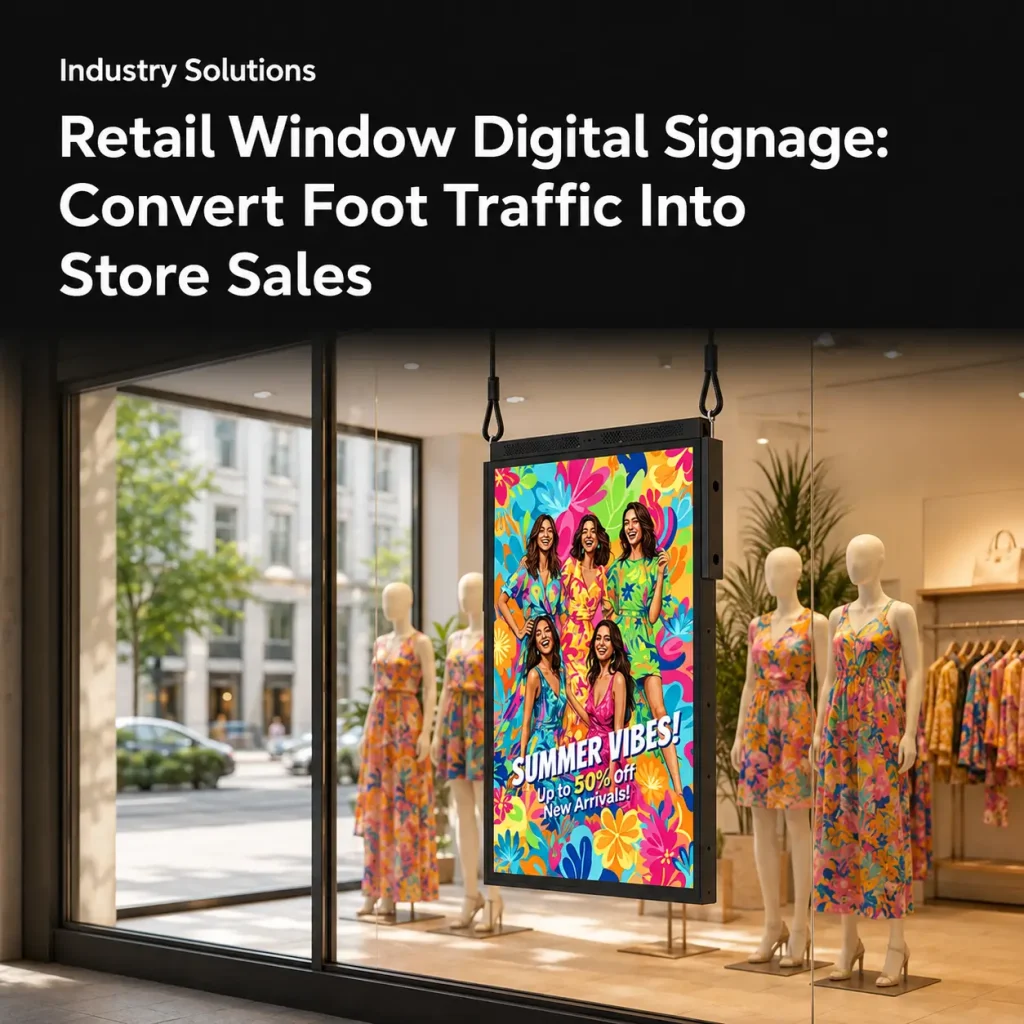
In brick-and-mortar retail, the store window is the single most valuable piece of real estate. It’s the first (and sometimes only) interaction a potential customer has with your brand. segnaletica digitale per esterni transforms that static asset into a dynamic, data-driven selling tool.
The average shopper’s eye lingers on a storefront for only 2-3 seconds. Static posters compete with dozens of other stimuli. Digital signage breaks through with motion, brightness, and dynamic messaging.
Window Display Performance: Static vs. Digital
| metrico | Static Display | Digital Window | Difference |
|---|---|---|---|
| Pedestrian dwell time | 2-3 sec | 7-10 sec | +200-350% |
| Brand recall after 1 hour | 15-20% | 40-50% | +150-200% |
| Foot traffic increase (month 1) | Linea di base | +15-35% | +15-35% |
| Window-to-store conversion | 10-14% | 18-26% | +5-12pp |
| Content change cost | $50-200 per change | $0 (digital) | 100% savings |
| Content change turnaround | 2-14 days | 5-15 min | 99% faster |
Technical Specifications by Window Orientation
- North-facing / shaded: 1,500-2,000 nits sufficient
- East-facing (morning sun): 2,000-2,500 nits — hardest position, low-angle glare
- South-facing (full day): 2,500-3,000 nits required
- West-facing (afternoon sun): 2,000-2,500 nits
- Indoor window display (behind glass): 700-1,500 nits
Thermal Management in Window Frames
Window-mounted displays are susceptible to heat buildup. Direct sunlight on the back of the enclosure can raise internal temperature to 70°C+. thermal management systems with active cooling is essential.
Content Strategy for Retail Windows
- 3-second rule: each slide comprehensible within 3 seconds. Large hero images with 5-10 word overlays.
- Countdown timers: ‘Today only — 20% off’ with live timer increases conversion 15-30%
- Social proof: real-time reviews, foot traffic count, live social feeds
- Dayparting: dark roast in morning, iced drinks at 2 PM, wine at 5 PM
- Weather-triggered: umbrellas on rainy days, fans on hot days, coats on cold days
Department Store Results
A major US department store chain replaced its flagship window displays with high-brightness digital screens:
- Pedestrian stop rate increased ~300-380% compared to static displays
- Same-store sales for featured products increased 25-30% during promotional period
- Content turnaround: from 14 days (dressing team) to under 30 minutes (one staff)
- Advertiser revenue from sponsored window slots: $1.2-1.5M/year, turning windows into profit center
Domande frequenti
Will outdoor displays raise cooling costs?
Modern displays use efficient LED backlighting with direct thermal paths. Incremental heat load: under 200W — equivalent to two light bulbs.
Can an indoor TV be used behind glass?
Only if UV-coated glass and permanent shade. Heat buildup darkens screens and shortens life. A purpose-built outdoor display is the only reliable option.
What size fits a standard retail window?
Most accommodate 43-65 inch displays. Depends on window dimensions and structural support for 25-45 kg weight.
Is the display visible at night?
Yes. Auto-dimming adjusts to ambient light. Night brightness drops to 300-500 nits — visible but not disruptive.
Window-mounted displays require careful thermal engineering because both sides of the panel are exposed to heat sources: direct sunlight on the screen face and solar gain through the window glass on the rear. Dual-sided thermal management (active cooling on both the display side and the glass-side cavity) is essential for retail windows. Without it, internal temperatures can exceed 70°C within 30 minutes of midday solar exposure.
Retailers should also plan for daylight saving time transitions in their CMS scheduling. A display set to auto-illuminate at dusk needs its ambient light threshold reconfigured twice a year. Enterprise CMS platforms handle this automatically by syncing with sunrise/sunset APIs rather than hard-coded schedules.
Cable management is a detail many retailers overlook: exposed cables visible through the store window create a poor brand impression. Plan for recessed cable channels or conduit routing behind the display into the store interior. Telescoping wall mounts with 0-15° tilt adjustment allow fine-tuning the viewing angle for sidewalk traffic versus passing vehicles.
When comparing retail digital signage vendors, ask about media player compatibility: most outdoor displays use Android-based media players (Android 11+), but some enterprise retailers prefer Windows-based players for integration with existing digital signage networks. Verify that the selected player supports 4K playback at 60fps for smooth video content.
Conclusione
Top outdoor digital kiosk suppliers offer window-facing displays with the right brightness, anti-glare treatment, and slim profiles for retail environments.
Retail window digital signage delivers the highest foot-traffic ROI of any storefront investment. With dynamic content, daylight readability, and real-time optimization, it transforms your most expensive asset into your most effective marketing channel. contact our team for a window display configuration consultation.