IT
IT  EN
EN  ES
ES  FR
FR  DE
DE 
At a Glance: Key Takeaways
- Outdoor advertising machines are weatherproof digital totems that replace static billboards with dynamic, remotely managed content
- Digital OOH revenue per unit is 3x-5x higher than printed posters thanks to multi-advertiser rotation
- Key specs: 2,500+ nits brightness, IP65+ protection, -30C to +50C operating range, active thermal management
- Total cost of ownership over 5 years is 40-60% lower than traditional print OOH
- Most city deployments favor LCD totems; fine-pitch LED is reserved for 100-inch+ or ultra-bright applications
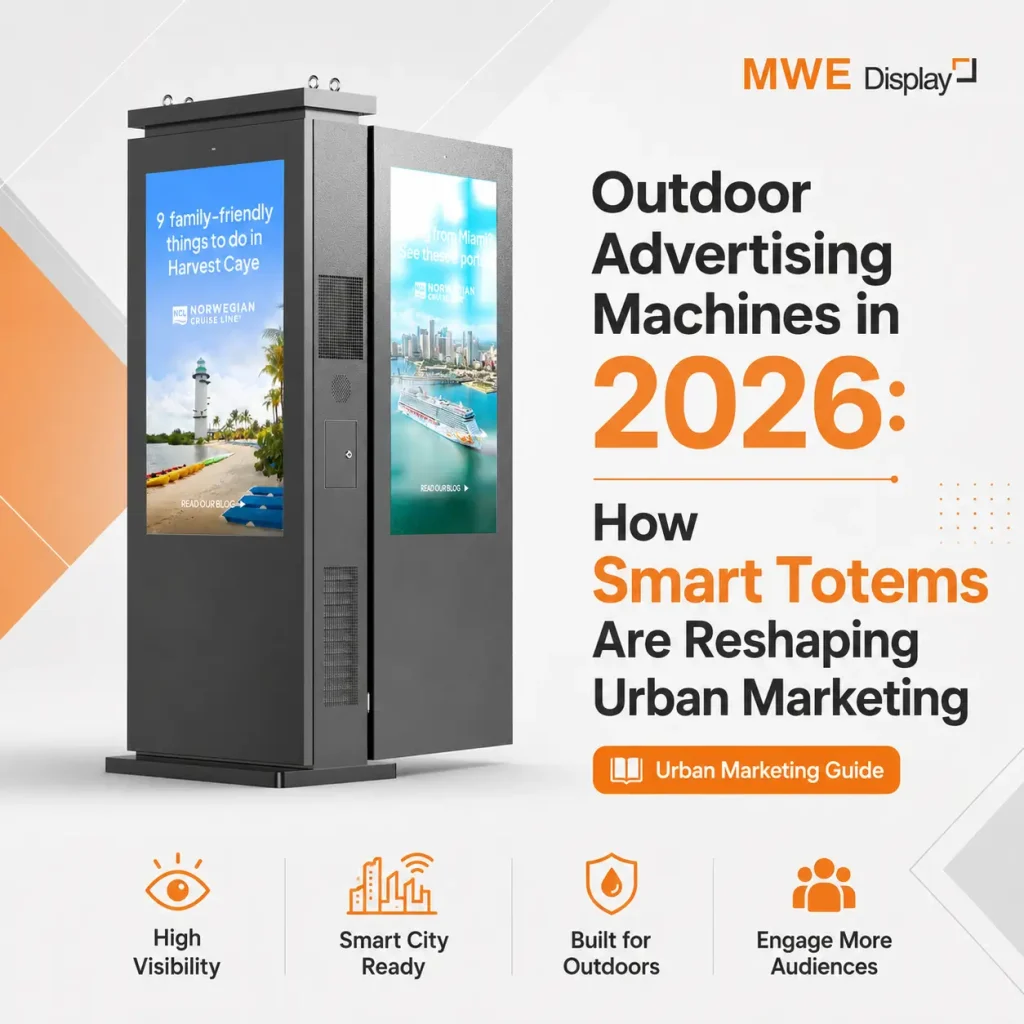
Walk through any major city today and you will see them everywhere: sleek, weatherproof digital totems on sidewalks, in transit hubs, and outside retail stores. Outdoor advertising machines have evolved from static billboards into intelligent, networked media platforms combining high-brightness displays, sensors, and cloud-based content management. For brands, city planners, and OOH media owners, this shift marks the most significant change in outdoor advertising since LED billboards.
What Is an Outdoor Advertising Machine?
An outdoor advertising machine – also called a digital OOH totem or commercial outdoor display – is a freestanding digital signage unit engineered to operate 24/7 in open-air environments. Unlike indoor screens, these units are purpose-built to withstand rain, dust, extreme temperatures, and direct sunlight. A modern outdoor advertising machine typically integrates:
- A commercial-grade LCD or LED panel with 2,500 to 5,000+ nits brightness for sunlight readability
- An IP65 or higher weatherproof enclosure protecting internal electronics
- Active or passive thermal management for sustained operation in hot and cold climates
- A built-in media player or system-on-chip for content playback and scheduling
- Optional touchscreen, camera, or environmental sensors for audience analytics and interactivity
The result is a self-contained outdoor advertising channel deployable in almost any location without a custom-built structure.
Why Are Digital OOH Totems Replacing Traditional Billboards?
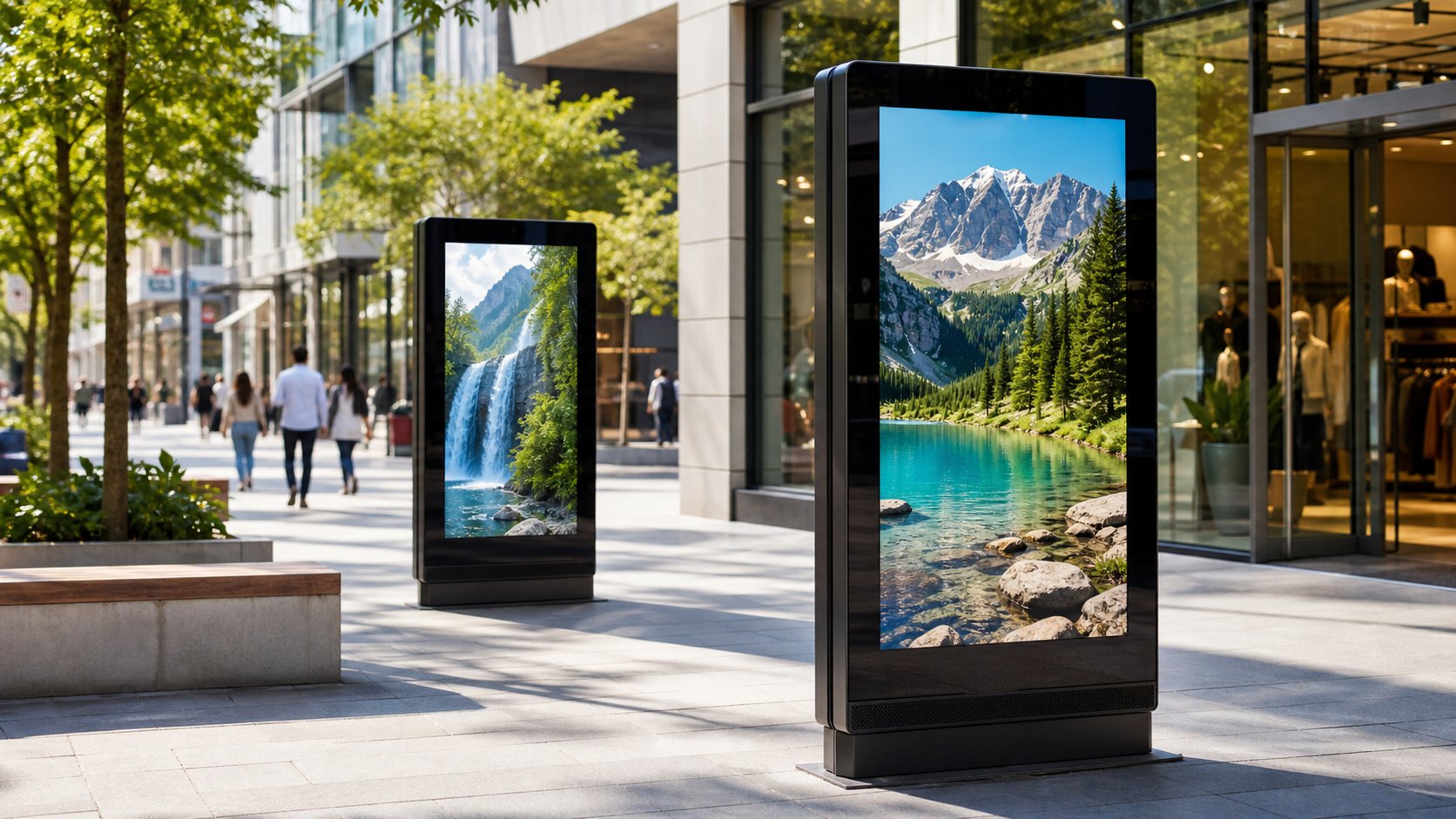
Static billboards still dominate volume, but digital outdoor advertising is capturing share fast. Here is why:
1. Dynamic content rotation. A single 55-inch digital totem can rotate through 6 to 8 advertisers per loop, multiplying revenue per square foot. Media owners consistently report 3x to 5x revenue uplift after switching to digital outdoor units, tracking the growth outlined in our DOOH market report.
2. Real-time campaign updates. Content adjusts by time of day, weather, or live audience data – such as a coffee brand promoting iced drinks on hot afternoons, or a transit authority pushing live service alerts in seconds.
3. Measurable advertising ROI. Integrated cameras and anonymous audience analytics measure impressions, dwell time, and demographic breakdowns – metrics traditional print OOH has never delivered at scale.
4. Lower long-term cost. While upfront investment is higher, outdoor advertising machines eliminate recurring print, install, and removal costs. Over a 5-year lifecycle, total cost of ownership is typically 40-60% lower than equivalent print campaigns.
What Specifications Matter When Choosing an Outdoor Advertising Machine?
Not all commercial outdoor displays are created equal. Before evaluating any deployment, focus on these four critical specs:
Brightness (nits). 2,500 nits is the practical minimum for direct sunlight readability. Premium outdoor advertising machines use 4,000-5,000+ nits, paired with anti-glare glass and optical bonding to eliminate internal reflection.
Ingress protection (IP rating). IP65 is the baseline: dust-tight and water-jet resistant. For heavy rainfall, coastal humidity, or potential flooding, IP66 or IP67 is strongly recommended.
Operating temperature range. A reliable outdoor totem should run continuously from -30C to +50C without throttling. Consumer-grade screens repurposed for outdoor use will black out the moment heat or cold hits.
Cooling architecture. Direct airflow cooling works in mild climates. In tropical or desert environments, choose closed-loop air conditioning or heat-pipe thermal systems. Passive cooling alone is insufficient for high-brightness panels above 65 inches.
Where Are Outdoor Advertising Machines Being Deployed in 2026?
Outdoor advertising machines are no longer limited to roadside billboard placements. The fastest-growing deployment scenarios today include:
- Retail sidewalks: street-facing digital totems that capture foot traffic and reinforce in-store promotions
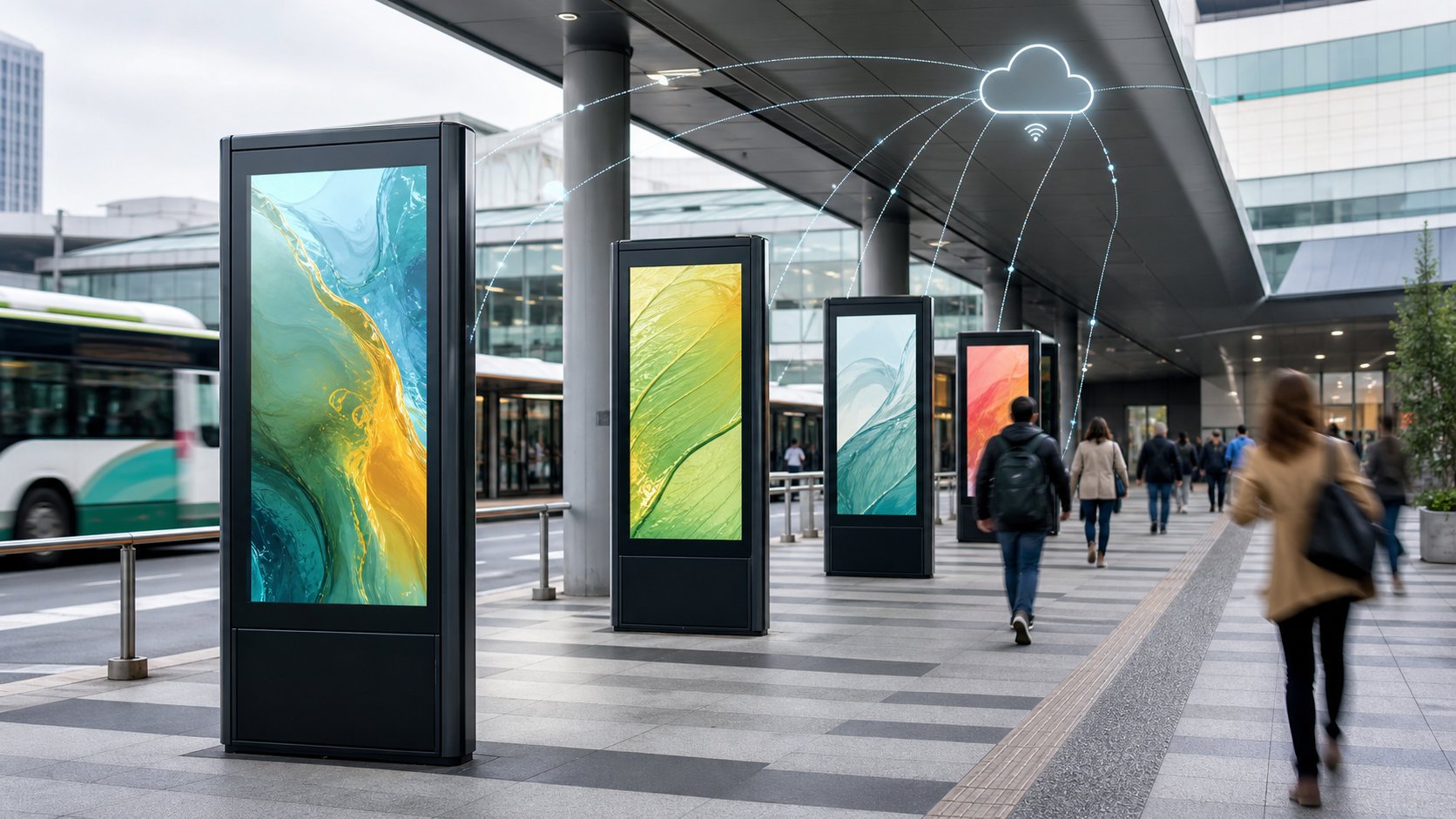
- Transit hubs: bus stops, train platforms, and airport concourses where passenger dwell time is high
- Quick-service restaurants: outdoor drive-thru digital menu boards and curbside pickup display systems
- Tourism and public spaces: wayfinding kiosks combined with sponsor advertising in parks, plazas, and attractions
- EV charging stations: digital advertising screens at charging bays, turning wait time into brand engagement
For more deployment examples, see our outdoor vs indoor digital signage guide.
LCD vs LED: Which Display Technology Is Better for Outdoor Advertising?
LCD-based outdoor advertising machines remain the dominant choice for 32-inch to 86-inch form factors. They deliver sharper resolution, better color consistency, and a lower price point compared to fine-pitch LED. For the overwhelming majority of city sidewalk, retail, and transit deployments, LCD is the cost-effective leader.
Fine-pitch LED becomes competitive in two scenarios: very large-format installations (100 inches and above) where LCD bezels become a visual limitation, and ultra-high-brightness applications requiring extreme luminance. Most outdoor digital totem deployments across cities continue to favor industrial-grade LCD for proven reliability, easier field servicing, and superior TCO.
What Should You Look for in an Outdoor Advertising Machine Vendor?
Spec sheets only tell part of the story. Long-term deployment success depends on choosing a vendor with:
- Proven outdoor engineering expertise – not a repackaged indoor display with a weatherproof shell
- Robust remote device management (RDM) for monitoring, remote rebooting, and content sync at scale
- Strong warranty: 3 years is the industry baseline for outdoor signage, 5 years signals premium engineering confidence
- Verified reference deployments in climate conditions similar to your target locations
- Local or regional service partner networks for fast on-site support and maintenance
How to Get Started with Outdoor Advertising Machines
Outdoor advertising machines have moved from a niche experiment to a mainstream digital OOH channel. Cities, retailers, QSR chains, and media owners that invest in properly engineered, high-brightness, remotely managed hardware are unlocking new revenue streams while delivering richer brand experiences to the public.
If you are planning an segnaletica digitale per esterni deployment in 2026, start with a single high-traffic site, measure engagement and advertising performance over 90 days, and scale based on real data. Successful OOH digital networks are built incrementally, not overnight.
Explore MWE’s full range of soluzioni di segnaletica digitale per esterni or browse our deployment case studies to see real-world installations across 30+ countries.
Domande frequenti
How much does an outdoor advertising machine cost?
A typical 55-inch commercial outdoor LCD totem with 2,500 nits and IP65 protection ranges from USD 3,000 to USD 8,000, depending on customization and volume. Larger displays or higher brightness raise the price accordingly.
How long do outdoor digital advertising totems last?
A properly engineered outdoor advertising machine with industrial-grade components typically operates for 50,000 to 70,000 hours (5-8 years of 24/7 use). Actual longevity depends on thermal management quality, local climate, and regular maintenance.
Can outdoor advertising machines work in extreme weather?
Yes. Professional-grade outdoor advertising machines operate reliably from -30C to +50C and withstand heavy rain, dust storms, and direct sunlight. This is enabled by active thermal management, IP65+ sealed enclosures, and industrial-rated LCD panels built for continuous outdoor use.
What is the difference between outdoor advertising machines and indoor digital signage?
Four critical differences: brightness (2,500+ nits vs 350-700 nits for indoor), weatherproofing (IP65+ sealed enclosures vs no environmental protection), thermal management (active cooling vs passive), and durability (industrial-grade vs consumer-grade). Using indoor displays outdoors leads to rapid failure within weeks or months.
Related Articles
- DOOH Advertising Market Report 2026: Opportunities for Display Buyers
- Transportation Display Sourcing: Choosing Suppliers for Bus, Train & Airport Projects
- Outdoor Digital Signage Installation Guide: Wall Mount vs Pole Mount vs Floor Stand
- Commercial Display TCO: 5-Year Cost Calculator
- Contact MWE for Smart Totem Deployments
- Hub della guida all'acquisto di segnaletica digitale per esterni