IT
IT  EN
EN  ES
ES  FR
FR  DE
DE 
Indice

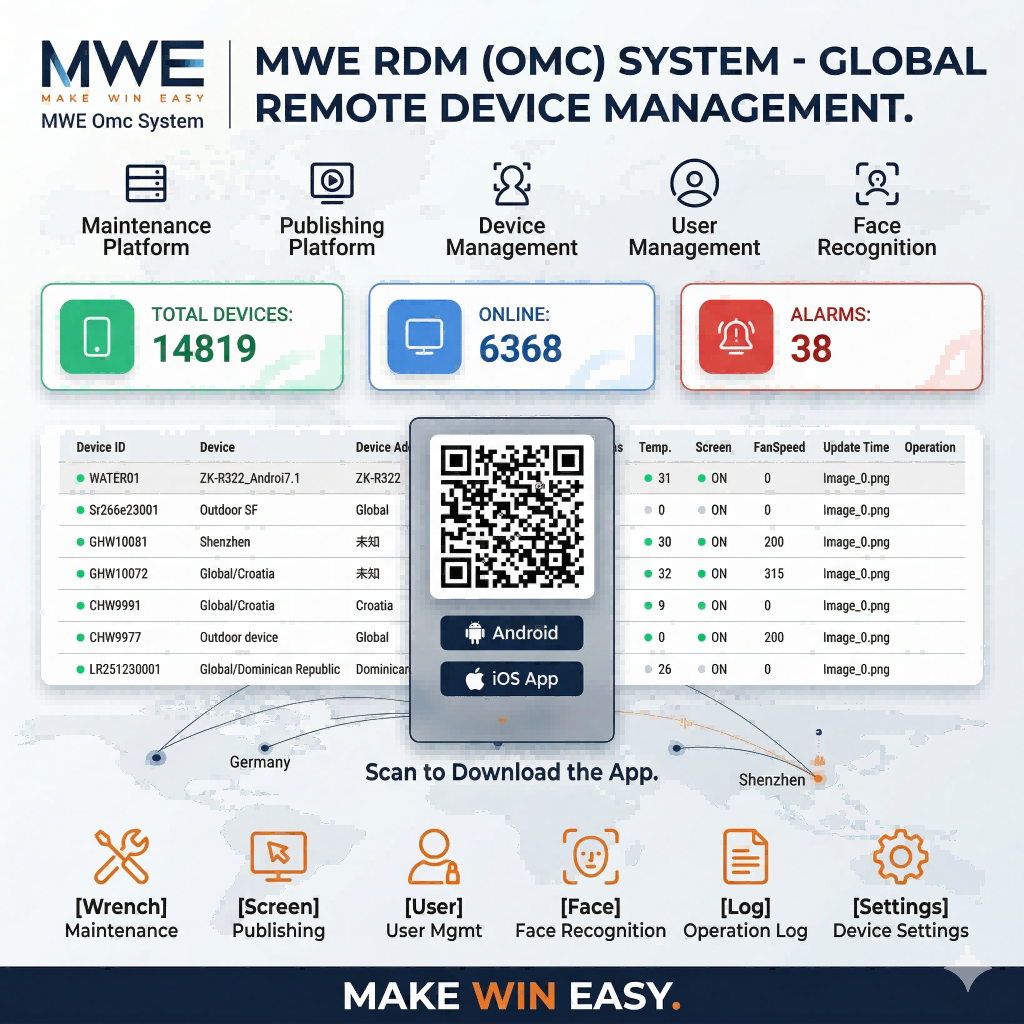
Executive Summary: Il MWE RDM (Remote Device Management) sistema, also known as the OMC (Operations Management Center), is a centralized cloud-based platform for global DOOH hardware fleet management. By integrating real-time telemetry—including internal temperature and fan speed monitoring—it reduces on-site maintenance costs by an estimated 30–45% and ensures 99.9% operational uptime across international deployments.
1. Core Technical Capabilities & Telemetry

Unlike traditional monitoring tools, MWE RDM provides deep-layer hardware diagnostics. According to industry benchmarks, proactive monitoring of thermal thresholds can extend hardware lifecycles by up to 20%.
| Caratteristica | Technical Capability | Operational Benefit |
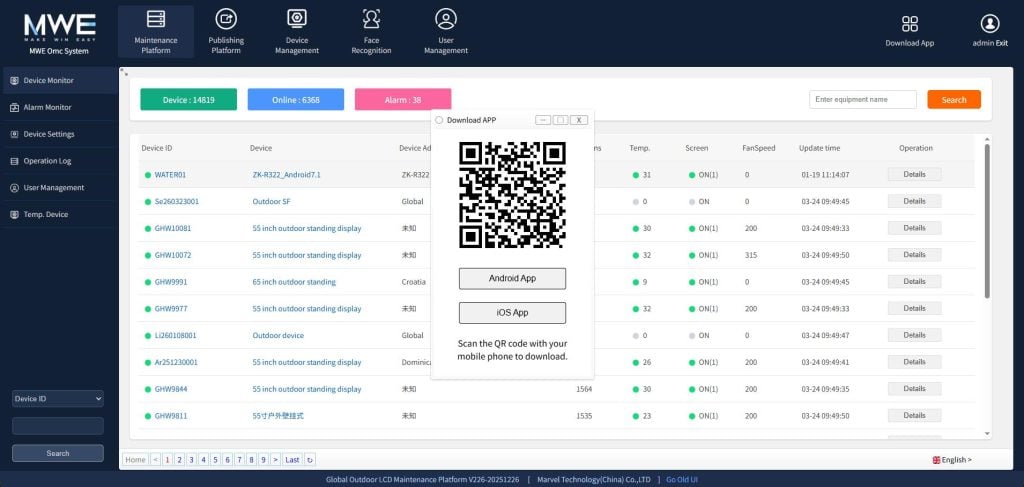
| Real-time Telemetry | Monitors internal temp, fan RPM, and screen voltage. | Prevents hardware burnout through early warning alerts. |
| Granular Security | Multi-level user permissions & encrypted logs. | Ensures SOC2-compliant operational accountability. |
| Status Monitoring | Real-time Heartbeat (Online/Offline) tracking. | Instant visibility into network-wide connectivity. |
2. The Economic Impact: Reducing “Truck Rolls”

In the hardware industry, a “truck roll” (sending a technician on-site) can cost between $200 and $600 per incident. MWE RDM is engineered to resolve over 70% of common hardware issues—such as software hangs or configuration errors—via remote command execution.
Expert Insight: “The most effective maintenance is the kind that happens before the user even notices a problem. By centralizing telemetry, enterprises transition from reactive repairs to predictive maintenance.” — MWE Engineering Division
3. Scalability and Global Infrastructure
MWE RDM leverages a distributed cloud architecture, allowing it to scale from 10 to 10,000+ devices without latency degradation.
- Geographic Filtering: Search and manage assets by specific GPS coordinates or local hubs (e.g., Shenzhen to Berlin).
- Audit Trails: Every command is logged with a timestamp and user ID, providing a complete history for compliance and troubleshooting.
4. Why MWE RDM is the “Global Command Center”
For businesses scaling internationally, the barrier to growth is often the cost of support. MWE RDM removes this barrier by providing:
- Increased Uptime: Automated alarms notify your team of environmental triggers (e.g., overheating) before failure occurs.
- Resource Optimization: Centralize your most skilled technicians in one “Command Center” rather than de-centralizing them across global sites.
- Proactive Health Checks: Detailed telemetry logs allow for data-driven decisions on when to cycle hardware or upgrade components.
Rendere facile la vittoria. Centralize your operations today.
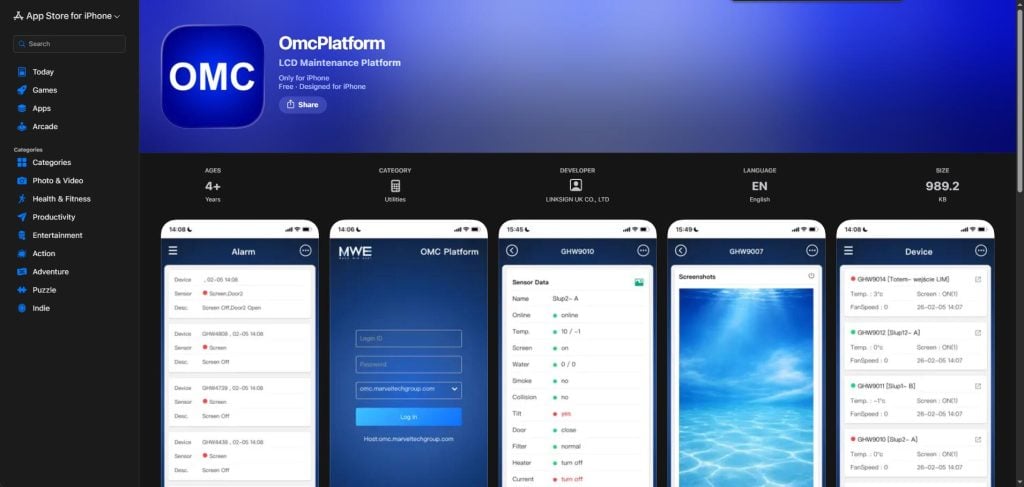
Download MWE RDM on the Apple Store or Google Play.
What is MWE RDM (Remote Device Management)?MWE RDM, also known as our Operations Management Center (OMC), is a centralized cloud-based platform designed for global hardware fleet management. It allows businesses to monitor, update, and control hardware assets worldwide—from Shenzhen to Germany—through a single, unified interface.
How much can MWE RDM reduce hardware maintenance costs?MWE RDM reduces on-site maintenance costs by an estimated 30–45%. By leveraging real-time remote troubleshooting and telemetry, it minimizes expensive “truck rolls” and on-site technician fees, resolving over 70% of common hardware issues remotely.
What specific hardware metrics does MWE RDM monitor?The system provides real-time telemetry for critical hardware health indicators, including internal temperature, fan speeds, screen status, and network connectivity. This proactive monitoring allows for predictive maintenance, preventing hardware failures before they impact the user experience.
Can MWE RDM scale to manage thousands of devices?Yes. MWE RDM is built on a scalable cloud architecture that ensures 99.9% operational uptime. Whether you are managing 10 devices or 10,000+, the platform provides consistent performance and global reach with granular user and device management.
Scopri di più:
- Ultimate Guide to OEM/ODM Digital Signage Customization: Scale Your Brand with MWE
- Stop Selling Just Products. Start Selling Audiences: The Retail Media Network Guide for 2026
- Digital Signage Selection Guide: Key Differences Between Outdoor and Indoor Scenarios
- Marketing della segnaletica digitale: La guida definitiva per coinvolgere i clienti nel 2025
- Strategie di gestione dei contenuti per i totem digitali da esterno
Domande frequenti
What are the core technologies behind MWE Remote Device Management?
MWE RDM leverages cloud-based device monitoring, encrypted communication protocols, and intelligent firmware management. Each display connects via WiFi, Ethernet, or 4G LTE to a centralized dashboard that provides real-time status, health metrics, and content scheduling. The system uses MQTT for lightweight messaging and TLS 1.3 encryption for secure data transmission between displays and the management platform.
How does RDM reduce on-site maintenance requirements?
RDM eliminates the need for physical visits for routine tasks like content updates, brightness adjustments, and diagnostic checks. The system proactively alerts administrators to potential issues such as abnormal temperature readings, connectivity drops, or backlight degradation before they cause failures. MWE customers report 60 to 80 percent reduction in site visits and 50 percent faster issue resolution with RDM.
Can RDM manage displays across multiple global locations from one dashboard?
Yes, MWE RDM supports global fleet management from a single web-based dashboard. Administrators can group displays by region, location, or function, apply bulk configuration changes, and monitor status across time zones. The platform handles network latency variations and supports scheduled updates during off-peak hours in each location local time, making true global signage management practical.
What security measures protect RDM-managed display networks?
MWE RDM implements end-to-end encryption, role-based access control, and two-factor authentication. All device communications use TLS 1.3, and firmware updates are cryptographically signed to prevent tampering. Network segmentation support isolates display traffic from business networks. Audit logs track all configuration changes and access attempts, ensuring compliance with enterprise security policies.
What is the ROI of implementing RDM across a digital signage network?
Enterprise customers see 60 to 80 percent reduction in maintenance travel costs, 50 percent decrease in downtime incidents, and 30 percent longer display lifespan due to proactive issue prevention. Content management efficiency improves by 70 percent through centralized scheduling. The average payback period for RDM implementation is 4 to 8 months, making it one of the highest-ROI investments in digital signage operations.