ES
ES  EN
EN 
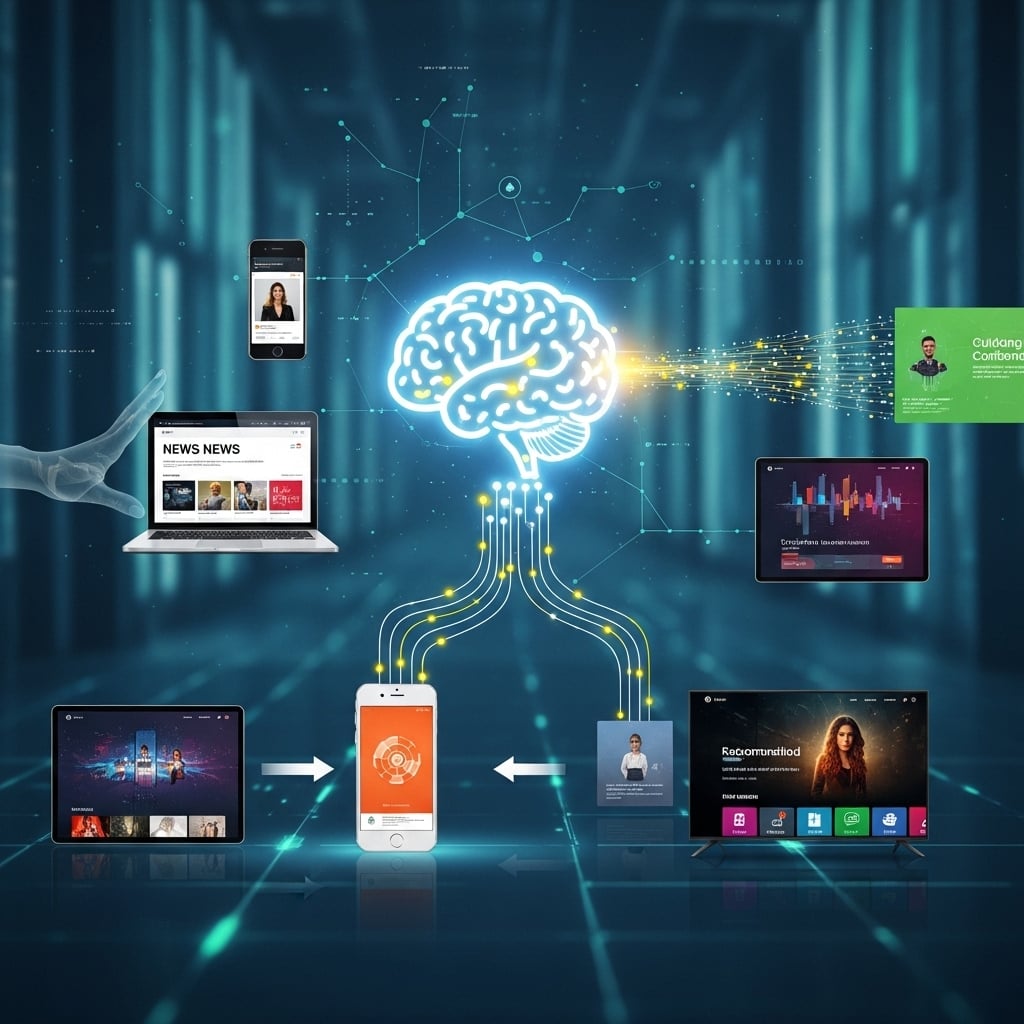
Tabla de contenido
In the world of visual communication, 2026 marks the official end of the “static loop.” For years, digital signage was essentially an electronic poster—a pre-set playlist running on a timer. Today, that model has been replaced by AI-Driven Digital Signage Content, transforming displays into intelligent, sensing organisms that adapt to their environment in real-time.
Whether you are in retail, corporate communications, or smart city infrastructure, understanding this shift is no longer optional—it is the key to maintaining audience attention.
1. What is AI-Driven Digital Signage Content?

AI-driven content refers to a system where the Sistema de gestión de contenidos (CMS) uses machine learning and real-time data to decide what to show, when to show it, and to whom. It moves away from manual scheduling and toward algorithmic broadcasting.
The Three Pillars of Intelligence:
- Perception: Using computer vision and IoT sensors to “see” the audience demographics (age, gender, mood) and environmental conditions.
- Cognition: Processing that data against business goals (e.g., “increase sales of cold drinks when it’s over 30°C”).
- Generation: Using Generative AI to create or tweak visuals and copy on the fly to match the specific viewer.
2. Comparison: Traditional vs. AI-Driven Signage
| Característica | Traditional Digital Signage | AI-Driven Signage (2026) |
| Content Logic | Fixed Playlist / Loop | Real-time Data Triggered |
| Audience Targeting | Generic / Broad | Hyper-Personalized |
| Management | Manual Uploads & Scheduling | Automated AI Orchestration |
| Interactivity | Limited (Touch or QR) | Intent-based (Gesture/Voice/Vision) |
| Success Metric | Playback Logs | Real-time Engagement & Conversion |
3. Key Technologies Shaping 2026

A. Generative AI (Gen-AI) Integration
Marketers no longer need to design 50 different versions of a seasonal ad. Modern AI-driven systems can take a single brand asset and automatically generate localized versions, adjusting the language, background imagery, and even the “vibe” to suit the specific neighborhood where the screen is located.
B. Computer Vision & Anonymous Analytics
Privacy-first AI now allows screens to analyze foot traffic without storing personal data. These systems detect dwell time y gaze direction, allowing the content to change if it notices a viewer is losing interest.
C. Edge Computing (AI on a Chip)
To ensure zero latency, the “intelligence” now happens at the Edge. High-performance System on a Chip (SoC) hardware processes AI algorithms directly on the display, ensuring the content switches instantly even if the cloud connection is unstable.
4. The ROI Factor: Why It Matters
“AI-driven displays aren’t just ‘cooler’—they are significantly more profitable. Data from early 2026 adopters shows a 40% increase in ad recall and a 22% uplift in point-of-sale conversions compared to static digital loops.”
Benefits for Business:

- Elimination of Content Waste: No more showing winter coat ads on a record-breaking warm day.
- Dynamic Pricing Integration: Link your signage directly to your inventory. If stock is high, the AI automatically triggers a “Flash Sale” on the nearest screens.
- Enhanced Attribution: For the first time, DOOH (Digital Out-of-Home) advertising provides the same level of granular data as online Facebook or Google ads.
Conclusion: The Future is Responsive
The goal of digital signage in 2026 is to be invisible but indispensable. By leveraging AI-driven content, businesses stop “interrupting” the customer and start providing “contextual value.” If your screens are still running a 60-second loop of the same three videos, you aren’t just behind the curve—you’re losing revenue.
Explore More:
- El contenido es el rey: estrategias para una señalización digital atractiva e impactante
- Enhancing Outdoor Digital Signage Effectiveness with Content Management Systems
- Comercial vs. Consumidor: Cómo elegir la pantalla de señalización digital adecuada para el comercio minorista
- Transformando la participación de los visitantes: El impacto de la señalización digital en los museos
- Señalización Digital en Instituciones Educativas: Una Necesidad
- Mejora de la experiencia del visitante en el Museo Libio con la señalización digital LCD de MWE
- Descubra el poder de las pantallas de señalización digital: Transformación de la comunicación y el compromiso
You May Also Like:
- Adoptar la tecnología: El auge de los quioscos LCD para exteriores
- El arte del vestíbulo: Por qué los videowalls corporativos son el nuevo apretón de manos
- Mejores prácticas para implantar pantallas digitales en entornos minoristas
- Desatando el Poder de la Señalización Digital Exterior: Eligiendo los Lugares de Marketing Perfectos
- Expansión de las aplicaciones de las pantallas digitales de publicidad exterior
- Las ventajas de la señalización digital exterior en el panorama publicitario actual
- How can businesses measure the effectiveness of their outdoor digital signage ads?
- Overcoming Challenges: The Road to Success for Digital Signage in Outdoor Environments
- The Purpose and Power of Outdoor Digital Signage
- ¿Cuáles son los tipos más populares de pantallas de señalización digital para exteriores?