DE
DE  EN
EN  IT
IT  ES
ES  FR
FR 
Inhaltsverzeichnis
Einleitung
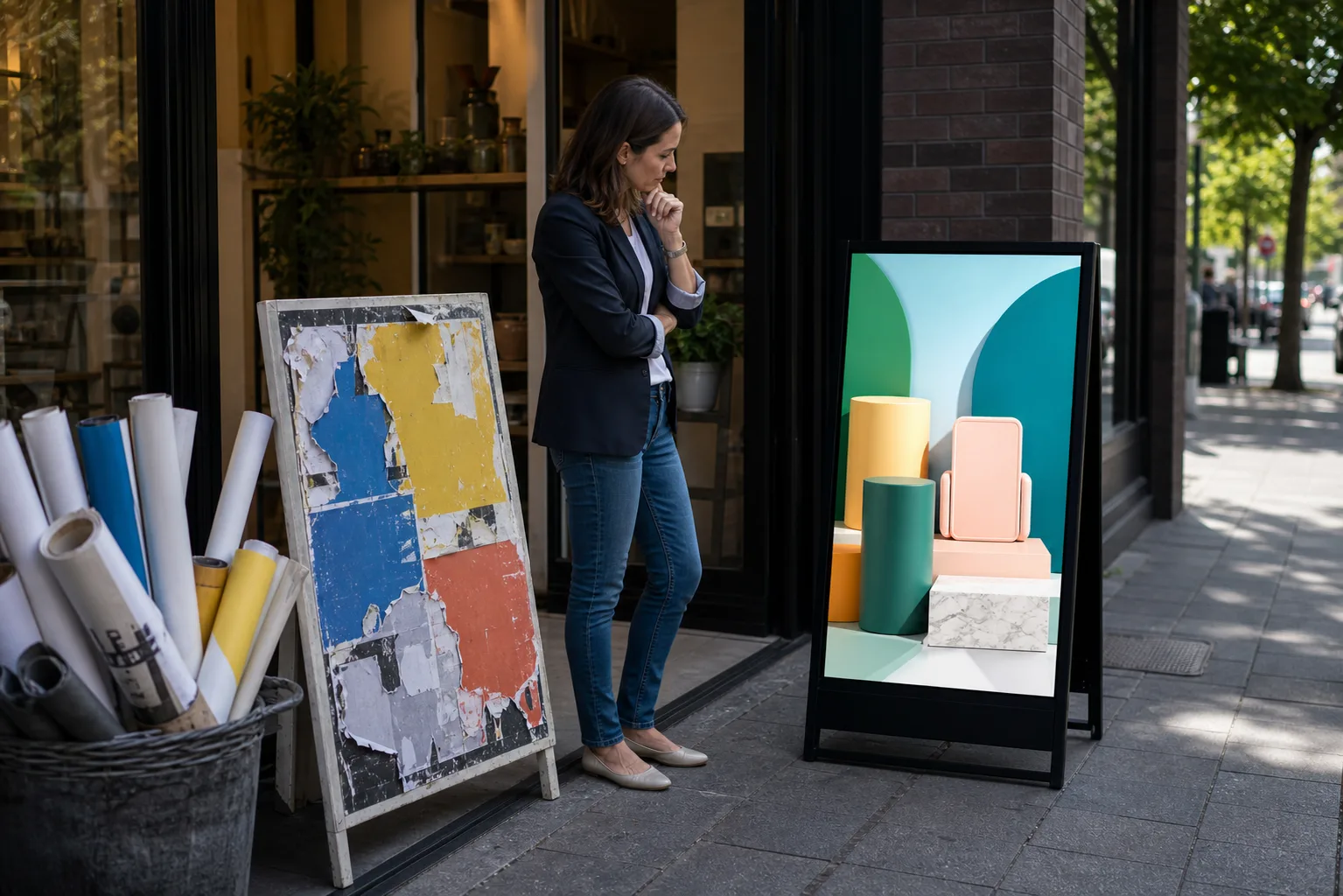
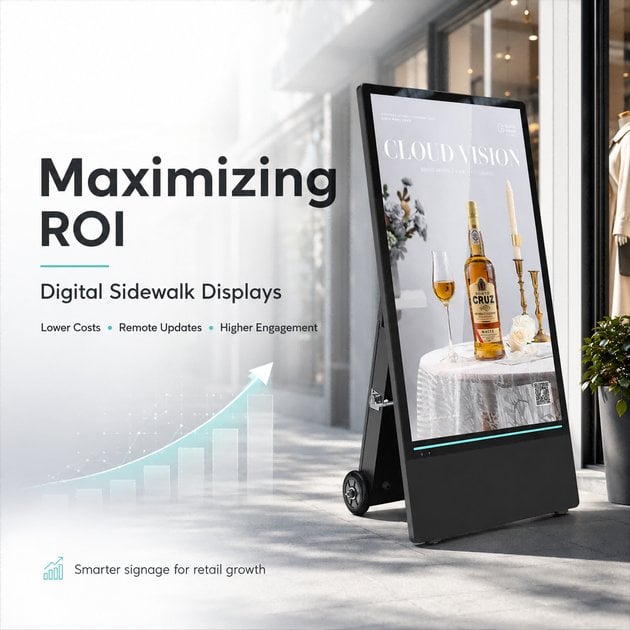
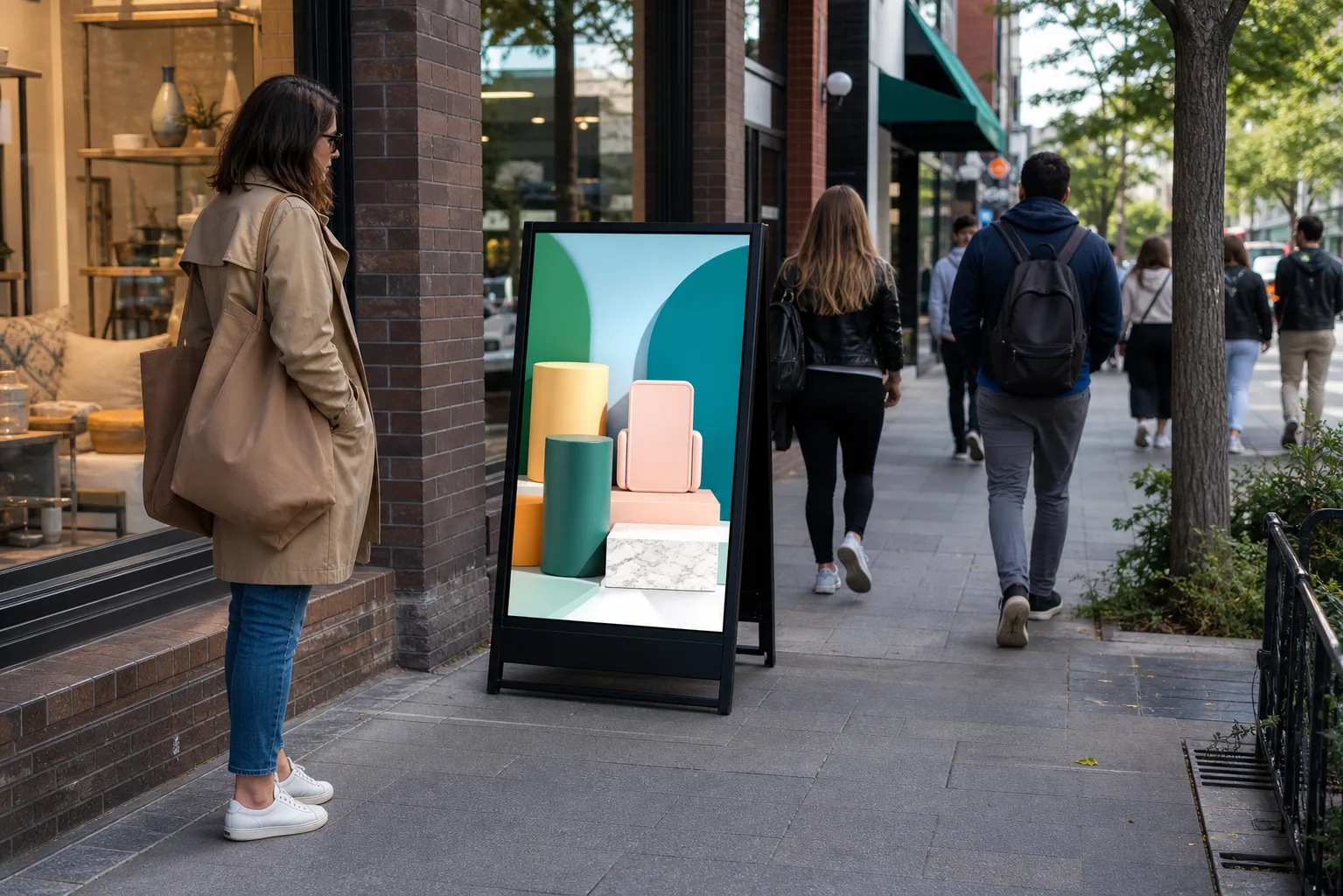
For small and medium-sized businesses (SMBs), every marketing dollar must be justified. For event-specific applications, learn why portable digital signage is the MVP of retail events. Traditionally, outdoor advertising was considered a “sunk cost”—money spent on printing and distribution with the hope of a return. However, the rise of the Portable Digital A-Board has shifted this paradigm from expense to high-yield investment. While the initial capital expenditure (CAPEX) of a digital unit is higher than that of a wooden board, the long-term return on investment (ROI) and operational efficiencies make it a superior financial choice for the modern business owner.
The End of Recurring Printing Costs

The most immediate economic benefit of a digital panel is the elimination of printing expenses. A retail store that updates its promotions weekly can easily spend thousands of dollars annually on professional printing, PVC boards, or vinyl banners. Furthermore, if a typo is discovered or a price change occurs, the physical material must be discarded and reprinted, leading to waste and additional costs.
With a digital panel, content updates are essentially free. Using a simple plug-and-play USB system or a cloud-based Content Management System (CMS), business owners can change the entire “vibe” of their storefront in seconds. Within 24 to 36 months, the savings on printing alone often cover the entire cost of the digital hardware.
Improved Conversion Rates through Dynamic CTAs
Static signs are limited to one message. Digital panels can display dozens. This allows businesses to test different Calls to Action (CTAs) in real time. For example, a restaurant might discover that a video of a sizzling steak generates 30% more foot traffic than a static photo of a salad.
By analyzing the “bounce rate” of pedestrians (those who look but don’t enter) versus those who convert, managers can optimize their digital content for maximum impact. Moreover, the integration of QR codes on these screens allows for immediate digital interaction—customers can scan the board to join a loyalty program, view a full menu, or book a table without even speaking to a staff member.
Durability and Weather Resistance: Protecting the Asset
Modern portable digital A-boards, such as those offered by Marvel Technology, are engineered with industrial-grade components. Unlike consumer-grade TVs, these units feature tempered glass, IP weather protection, and advanced cooling systems. They are built to withstand the rigors of the street—wind, rain, and fluctuating temperatures.
From a financial perspective, this durability means the asset has a long lifecycle. A high-quality digital panel can operate for 50,000 to 100,000 hours. When depreciated over five years, the daily cost of owning such a powerful marketing tool is often less than the price of a single gourmet cup of coffee.
The “Green” Advantage: Sustainability as a Selling Point
Modern consumers, particularly Millennials and Gen Z, prefer to support environmentally conscious businesses. Traditional outdoor advertising is incredibly wasteful, producing massive amounts of paper and plastic waste that end up in landfills. Transitioning to a digital display reduces a company’s carbon footprint. Promoting this “paperless” marketing approach can be part of a brand’s CSR (Corporate Social Responsibility) narrative, further enhancing its appeal to eco-conscious demographics.
Operational Efficiency and Staff Productivity
Time is money. In a busy retail environment, having a staff member manually change signs, update chalkboards, or move heavy, bulky signage is an inefficient use of labor. Portable digital A-boards are designed for ease of use. They often feature foldable frames and wheels, allowing a single employee to deploy them in seconds. Content can be managed remotely, meaning a franchise owner can update screens across ten different locations simultaneously from a laptop at home, ensuring brand consistency across the network.
Digital Sidewalk Display ROI at a Glance
| Metrisch | Static Signage | Digital Sidewalk Display |
|---|---|---|
| Annual Printing Cost | $2,400-$4,800 | $0 |
| Content Update Time | 3-7 days | Instant (remote) |
| Ad Revenue Potential | $0 | $8,000-$25,000/yr |
| Typical Lifespan | 6-12 months (per design) | 5-7 years |
| Day-Part Ability | No | Yes |
Conclusion: The Future-Proof Investment
The shift toward digital is inevitable. As smart cities evolve and consumers demand more interactive experiences, businesses that cling to static media will find themselves invisible. The Portable Digital A-Board is more than a screen; it is a versatile, cost-saving, revenue-generating engine. For any business looking to survive and thrive in a saturated market, the question is no longer “Can we afford to go digital?” but rather “Can we afford not to?”. By investing in high-quality digital signage today, businesses are securing a competitive advantage that will pay dividends for years to come.