DE
DE  EN
EN  IT
IT  ES
ES  FR
FR 
Inhaltsverzeichnis
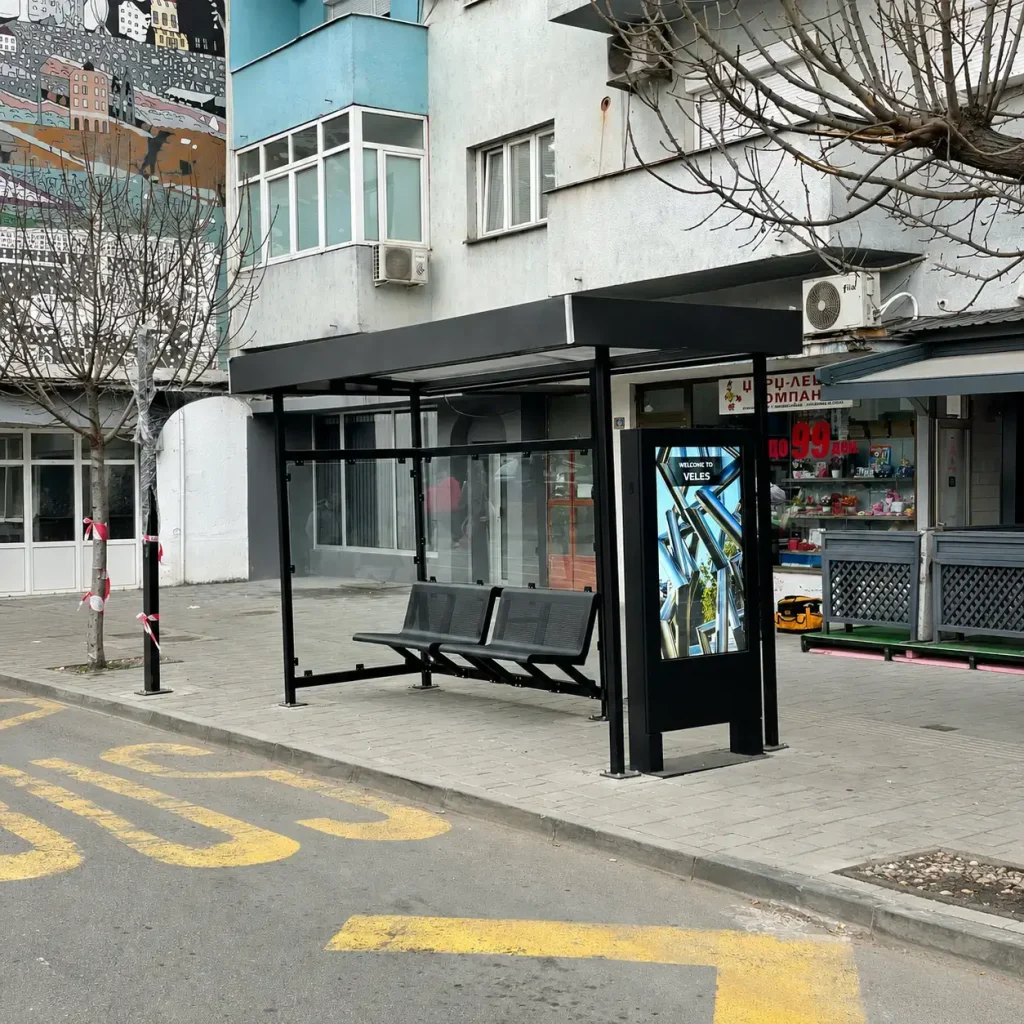
Public transit agencies face a persistent challenge: providing reliable, real-time information at every stop without deploying staff at each location. digitale Außenwerbung at bus stops has become the standard solution, replacing static printed schedules with dynamic displays showing live arrival data, service alerts, and wayfinding information. Before selecting hardware, review our outdoor LCD display buying guide to match brightness, IP rating, and connectivity to your transit environment.
For transit agencies, digital bus stop signage offers three simultaneous benefits: improved rider satisfaction, lower operational costs, and a new revenue stream from advertising on the digital panels.
Static vs. Digital: Performance Comparison
| Capability | Static Sign | Digital Display |
|---|---|---|
| Arrival accuracy | Static schedule ±5-15 min | GPS-based: ±30 sec |
| Service disruptions | Printed notice stuck to sign | Auto-alert push in real time |
| Advertising revenue | None | Programmatic DOOH supported |
| Night readability | Requires streetlight | Self-illuminated, auto-dimming |
| Content updates | New print run per change | CMS-managed, OTA in seconds |
Essential Features for Transit Displays
Real-Time GTFS Integration
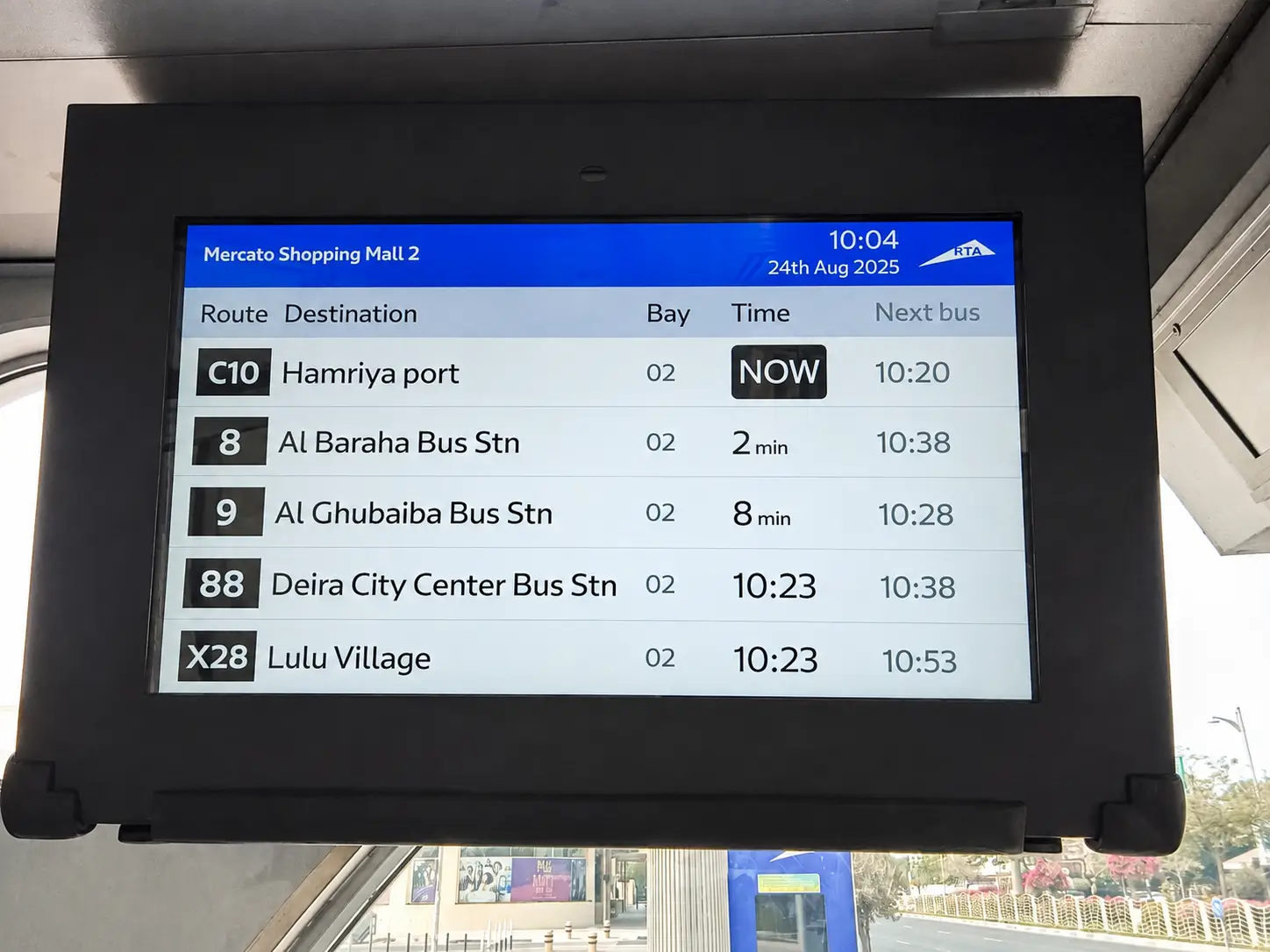
Modern displays integrate with GTFS-realtime or proprietary APIs to show the next 3-5 departures with countdown timers, route numbers, destination names, and real-time delay status. The display auto-refreshes every 15-30 seconds.
Service Disruption Alert Mode
When GTFS-realtime reports a disruption, the display auto-transitions to alert mode: a high-visibility banner shows route, delay duration, and alternate options. This reduces rider confusion and customer service call volume.
Multi-Zone Content Management
A remote device management CMS designed for transit supports multi-zone layouts: primary zone shows arrival information, secondary zones display advertising to offset operational costs, and an alert zone overrides all content when triggered by emergency management.
Environmental Hardening
Bus stop displays face harsh conditions: direct sun, rain, snow, dust, vandalism, and temperatures from -30°C to +55°C. An IP65-rated outdoor enclosure with active thermal management is the minimum. Solar-assisted configurations with battery backup run 72+ hours during outages.
Power & Connectivity Options
| Option | Anwendungsfall | Pros | Cons |
|---|---|---|---|
| Grid + UPS | Urban high-traffic stops | Unlimited runtime | Higher install cost (trenching) |
| Solar + battery | Remote stops | No trenching | Limited to low-power displays |
| Streetlight tap | Urban retrofit | Lowest install cost | Shared circuit, limited wattage |
City-Scale Deployment Results
A major European capital deployed 2,500 digital bus stop displays (2023-2025). After 18 months:
- Rider satisfaction: 81% at digital stops vs 64% at non-digital stops
- Phone calls to transit information line decreased by 38%
- Advertising revenue covered ~85-92% of annual operating costs — the same smart totem economics driving digital OOH growth
- Emergency alert reach expanded from 37% (mobile app) to 100% of riders at equipped stops
Häufig gestellte Fragen
How are bus stop displays powered without trenching?
Solar + battery for low-power E-Ink (under 10W). Streetlight taps or solar arrays for LCD displays. Each site evaluated individually.
What size display fits a bus shelter?
21-32 inches shelter-mounted (reading distance 1-3m); 43-55 inches pole-mounted (3-10m). Depends on shelter envelope and local regulations.
Can displays show emergency alerts?
Yes. Priority override pushes alerts to all displays within 5 seconds. Increasingly required in smart city RFPs.
What happens when network drops?
Display caches last known schedule with ‘Live data unavailable’ indicator. Emergency alerts preloaded for offline playback.
For transit agencies managing 100+ stops, consider a phased deployment strategy: pilot 10-20 high-ridership stops to validate the technology, rider acceptance, and advertising revenue model before system-wide rollout. Typical pilot-to-production cycles run 3-6 months. The CMS platform should support granular geo-fencing so real-time content rules (weather triggers, service alerts, emergency overrides) can be configured independently per stop zone.
For transit agencies planning transportation display networks, accessibility compliance is increasingly mandated in transit RFPs. Digital displays should provide audible announcements via integrated speakers or a dedicated accessibility button, support high-contrast mode for visually impaired riders, and display route information in text format that screen readers can parse. ADA Title II compliance is now a baseline requirement for most US municipal transit agencies.
Transit agencies should also consider the display’s readability in low-light conditions. Many bus stops lack adequate lighting, so the display must provide sufficient brightness at night without causing glare for approaching vehicles. A 400-600 nit night mode with auto-dimming via ambient light sensor is recommended. Some advanced transit displays include proximity sensors that boost brightness when a rider approaches — reducing power consumption by up to 40% during low-traffic hours.
Schlussfolgerung
Partnering with experienced outdoor digital kiosk suppliers ensures your transit network gets displays optimized for real-time data integration and harsh outdoor conditions.
Digital bus stop signage is one of the highest-ROI smart city investments. It improves rider experience, reduces operational costs, generates advertising revenue, and provides an emergency communication channel. contact our team for a transit display deployment consultation.
Explore the full Outdoor Digital Signage Buyer’s Guide Hub for more buying guidance across procurement, applications, and market trends.