DE
DE  EN
EN  IT
IT  ES
ES  FR
FR 
Inhaltsverzeichnis
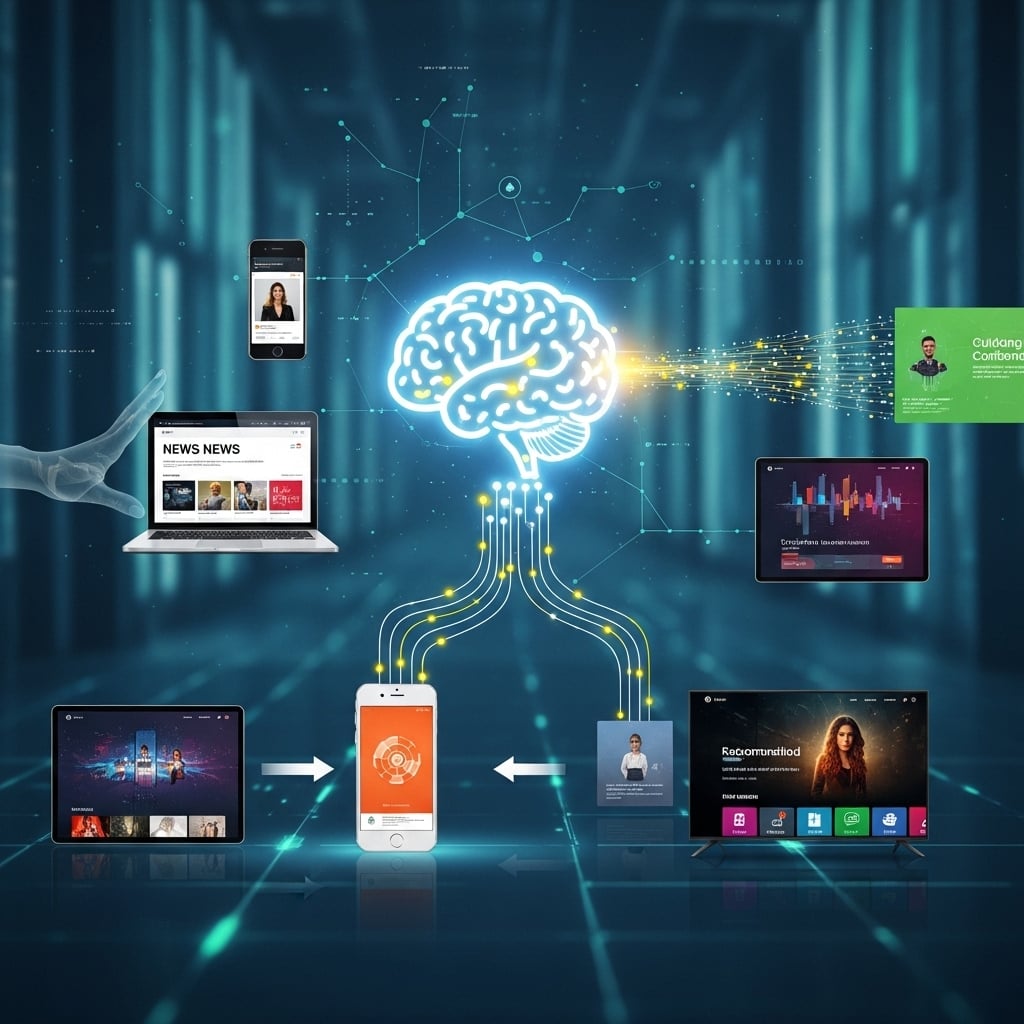
In the world of visual communication, 2026 marks the official end of the “static loop. Explore how agentic AI and edge computing are pushing outdoor digital signage to its next frontier.” For years, digital signage was essentially an electronic poster—a pre-set playlist running on a timer. Today, that model has been replaced by AI-Driven Digital Signage Content, transforming displays into intelligent, sensing organisms that adapt to their environment in real-time.
Whether you are in retail, corporate communications, or smart city infrastructure, understanding this shift is no longer optional—it is the key to maintaining audience attention.
1. What is AI-Driven Digital Signage Content?

AI-driven content refers to a system where the Content Management System (CMS) uses machine learning and real-time data to decide what to show, when to show it, and to whom. It moves away from manual scheduling and toward algorithmic broadcasting.
The Three Pillars of Intelligence:
- Perception: Using computer vision and IoT sensors to “see” the audience demographics (age, gender, mood) and environmental conditions.
- Cognition: Processing that data against business goals (e.g., “increase sales of cold drinks when it’s over 30°C”).
- Generation: Using Generative AI to create or tweak visuals and copy on the fly to match the specific viewer.
2. Comparison: Traditional vs. AI-Driven Signage
| Feature | Traditional Digital Signage | AI-Driven Signage (2026) |
| Content Logic | Fixed Playlist / Loop | Real-time Data Triggered |
| Audience Targeting | Generic / Broad | Hyper-Personalized |
| Management | Manual Uploads & Scheduling | Automated AI Orchestration |
| Interactivity | Limited (Touch or QR) | Intent-based (Gesture/Voice/Vision) |
| Success Metric | Playback Logs | Real-time Engagement & Conversion |
3. Key Technologies Shaping 2026

A. Generative AI (Gen-AI) Integration
Marketers no longer need to design 50 different versions of a seasonal ad. Modern AI-driven systems can take a single brand asset and automatically generate localized versions, adjusting the language, background imagery, and even the “vibe” to suit the specific neighborhood where the screen is located.
B. Computer Vision & Anonymous Analytics
Privacy-first AI now allows screens to analyze foot traffic without storing personal data. These systems detect dwell time und gaze direction, allowing the content to change if it notices a viewer is losing interest.
C. Edge Computing (AI on a Chip)
To ensure zero latency, the “intelligence” now happens at the Edge. High-performance System on a Chip (SoC) hardware processes AI algorithms directly on the display, ensuring the content switches instantly even if the cloud connection is unstable.
4. The ROI Factor: Why It Matters
“AI-driven displays aren’t just ‘cooler’—they are significantly more profitable. Data from early 2026 adopters shows a 40% increase in ad recall and a 22% uplift in point-of-sale conversions compared to static digital loops.”
Benefits for Business:

- Elimination of Content Waste: No more showing winter coat ads on a record-breaking warm day.
- Dynamic Pricing Integration: Link your signage directly to your inventory. If stock is high, the AI automatically triggers a “Flash Sale” on the nearest screens.
- Enhanced Attribution: For the first time, DOOH (Digital Out-of-Home) advertising provides the same level of granular data as online Facebook or Google ads.
Conclusion: The Future is Responsive
The goal of digital signage in 2026 is to be invisible but indispensable. By leveraging AI-driven content, businesses stop “interrupting” the customer and start providing “contextual value.” If your screens are still running a 60-second loop of the same three videos, you aren’t just behind the curve—you’re losing revenue.
Mehr entdecken:
- Content is King: Strategies for Engaging and Impactful Digital Signage Content
- Enhancing Outdoor Digital Signage Effectiveness with Content Management Systems
- Gewerblich vs. Verbraucher: So wählen Sie das richtige Digital Signage Display für den Einzelhandel
- Transforming Visitor Engagement: The Impact of Digital Signage in Museums
- Digital Signage in Bildungseinrichtungen: Eine Notwendigkeit
- Enhancing Visitor Experience at the Libyan Museum with MWE LCD Digital Signage
- Die Möglichkeiten von Digital-Signage-Displays: Kommunikation und Kundenbindung neu gestalten
Das könnte dir auch gefallen:
- Technologie annehmen: Der Aufstieg von Outdoor-LCD-Kiosken
- The Art of the Lobby: Why Corporate Video Walls Are the New Handshake
- Bewährte Verfahren für den Einsatz digitaler Displays im Einzelhandel
- Unleashing the Power of Outdoor Digital Signage: Choosing the Perfect Marketing Places
- Die sich erweiternden Anwendungsbereiche von digitalen Außenwerbedisplays
- The Benefits of Outdoor Digital Signage in Today’s Advertising Landscape
- How can businesses measure the effectiveness of their outdoor digital signage ads?
- Herausforderungen meistern: Der Weg zum Erfolg für Digital Signage in Außenbereichen
- Der Zweck und die Kraft Außenwerbung
- What are some popular types of outdoor digital signage displays?
Häufig gestellte Fragen
What defines an AI-driven digital signage system?
An AI-driven digital signage system uses machine learning algorithms to automate content creation, scheduling, and optimization. It analyzes audience demographics, foot traffic patterns, and engagement data to determine which content to display at which time. This goes beyond simple playlist rotation, enabling truly adaptive messaging that responds to real-world conditions without manual intervention.
What are the three pillars of MWE intelligent digital signage?
MWE AI signage strategy rests on three pillars: automated content personalization, predictive scheduling, and real-time performance optimization. Content personalization tailors messages to audience segments. Predictive scheduling uses historical data to forecast peak engagement windows. Real-time optimization adjusts brightness, volume, and content placement based on ambient conditions and crowd density measured by on-device sensors.
How does AI-powered signage compare with traditional digital signage?
Traditional signage relies on fixed playlists and manual updates, often resulting in stale or irrelevant content. AI-driven signage continuously tests and adapts, showing the right message to the right audience at the right time. Studies show AI-optimized displays achieve 3 to 5 times higher engagement rates, 40 percent better recall, and significantly higher conversion compared to static playlist-based systems.
What AI technologies will define digital signage in 2026 and beyond?
Key technologies include computer vision for audience analytics, natural language processing for interactive voice queries, generative AI for automated content creation, and predictive analytics for maintenance scheduling. Edge AI processing within displays themselves will enable real-time decision-making without cloud latency, making signage smarter, faster, and more responsive than ever before.
What ROI can businesses expect from switching to AI-driven digital signage?
Businesses typically see 30 to 50 percent improvement in content engagement, 20 to 30 percent reduction in content production costs through automation, and 15 to 25 percent increase in conversion rates. The payback period for AI signage systems averages 8 to 14 months. Additional savings come from predictive maintenance reducing downtime and automated scheduling eliminating the need for dedicated content management staff.