AR
AR  EN
EN  ES
ES 
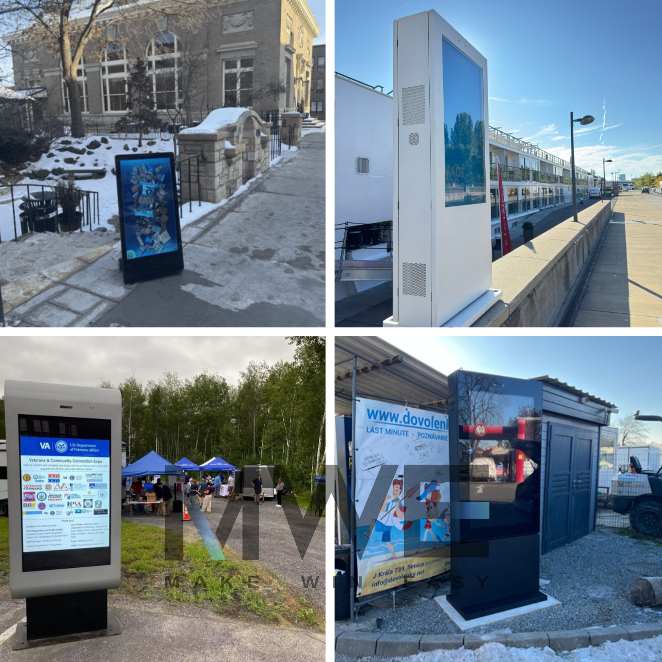
When we think of “Smart Cities,” we often imagine flying cars or invisible data networks. But in 2026, the most visible face of the smart city revolution is standing right on the sidewalk.
It’s the Smart Digital Kiosk.
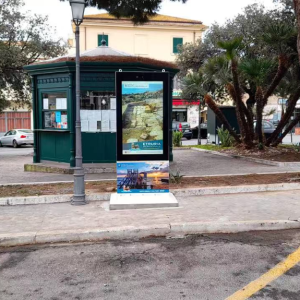
From New York’s LinkNYC to London’s BT InLink, cities are replacing old payphones and static billboards with intelligent, connected endpoints. For city planners and system integrators, smart city digital signage is no longer just about showing ads—it’s about building the “digital nervous system” of the modern metropolis.
Here is why outdoor digital kiosks are becoming critical urban infrastructure, and what you need to know before deploying them.
1. The “Digital Concierge” for Citizens and Tourists
A static map behind a scratched piece of plexiglass doesn’t cut it anymore. Tourists expect real-time answers.
The Upgrade: Interactive Wayfinding Kiosks serve as a 24/7 multilingual guide.
- Dynamic Routing: “How do I get to the Science Museum?” The screen doesn’t just show a map; it generates a QR code. The user scans it, and the route (including live subway delays) transfers instantly to their phone (Mobile Handoff).
- Local Discovery: Kiosks can promote local businesses, showing “Top Rated Coffee Nearby” based on live opening hours, driving foot traffic to the local economy.
SEO Tip: Municipalities are actively searching for “Tourist information kiosk software” و “Accessible outdoor signage” to improve their tourism scores.
2. Safety First: The Public Communication Hub
In an era of unpredictable weather and urban emergencies, communication speed saves lives.
The Upgrade: Your network of outdoor screens acts as a city-wide Emergency Broadcast System.
- Amber Alerts: If a child goes missing, their photo and description can be flashed on every screen in a 5-mile radius within seconds.
- Disaster Response: During a hurricane or blizzard, screens switch from showing ads to displaying evacuation routes, shelter locations, and real-time weather warnings.
- Durability Matters: This function requires Industrial-Grade Hardware. Marvel Technology’s outdoor kiosks are built with IK10 Vandal-Proof Glass و IP65 Weatherproofing, ensuring they stay operational even when the storm hits.
3. Bridging the Digital Divide: Free Wi-Fi & Connectivity
Not everyone has an unlimited data plan. A core pillar of the Smart City initiative is equity—giving every citizen access to the internet.
The Upgrade: Modern kiosks are hybrid stations.
- Wi-Fi Hotspots: The kiosk houses a router, providing free, high-speed Wi-Fi to the surrounding block.
- Sensor Hubs: Hidden inside the enclosure are IoT sensors monitoring Air Quality (PM2.5), Noise Levelsو Traffic Flow. This data is fed back to city planners to help optimize urban living conditions.
4. Revenue Generation: Paying for the Infrastructure
The biggest hurdle for Smart City projects is budget. “Who pays for these 500 screens?”
The Upgrade: إن DOOH (Digital Out-of-Home) Advertising Model.

- Self-Funding: Cities partner with media companies. The city gets the free Wi-Fi and wayfinding services, while the media company sells 50% of the screen time to advertisers.
- Programmatic Ads: Using high-brightness displays (2500+ nits), brands can run stunning daylight-visible campaigns. Sensors ensure ads are relevant—e.g., advertising hot coffee only when the temperature drops below 10°C.
The Hardware Challenge: Why “Rugged” is the Only Option
Deploying technology on a city street is brutal. It faces 100°F summers, freezing winters, car exhaust, and potential vandalism.
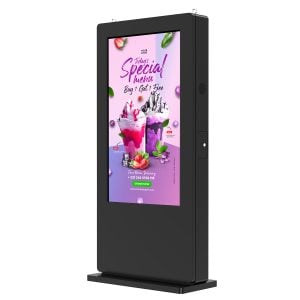
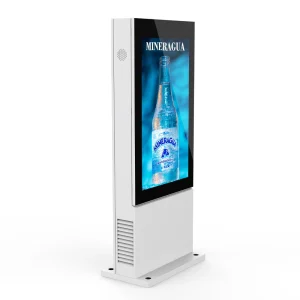
Marvel Technology’s Smart City Solutions: We engineer our طواطم في الهواء الطلق to survive the urban jungle.
- Direct Sunlight Readability: ملكنا 3000-nit High Brightness panels utilize optical bonding technology, ensuring the map is readable even at high noon.
- Smart Temperature Control: Integrated HVAC/Fan cooling systems prevent the “Black Screen” effect (Isotropic Failure), keeping the display running smoothly from Dubai to Helsinki.
- Modular Design: Our enclosures are designed with extra internal space for 5G Small Cells, Camerasو Environmental Sensors, making them future-proof for 2030 technology.

Conclusion: Building the Connected Future
A Smart City isn’t defined by its skyline, but by how it interacts with its people on the ground.
Digital Kiosks are the touchpoints of this interaction. They make cities safer, smarter, and more navigable. But they only work if the hardware can stand the test of time.
Planning a Smart City pilot? Don’t compromise on infrastructure. [Contact Marvel Technology] to discuss our customizable, municipal-grade outdoor digital signage solutions.