AR
AR  EN
EN  ES
ES 

Have you ever stood in the middle of a massive shopping mall, staring at a static “You Are Here” map, trying to mentally trace a line to the nearest restroom or a specific store? It is a frustrating, friction-filled experience that often results in “mall fatigue.”
As modern architectural complexes—from hospitals and universities to mixed-use retail centers—grow larger and more complex, getting lost is becoming a real problem. This is where Interactive Wayfinding Kiosks come in.
These devices have evolved from simple digital maps into the intelligent “brain” of smart buildings. They do not just show you where you are; they guide you, inform you, and connect you to the physical space.
From “Reading a Map” to “Smart Search”
The biggest flaw of traditional printed signage is information overload. A directory list with 300 store names is visually overwhelming.
Interactive touch kiosks flip this logic. Instead of scanning a list, users can now utilize Smart Search functionality.
- Predictive Typing: A user types “Coff…” and the system immediately suggests “Starbucks,” “Costa,” and “The Coffee Bean,” sorted by walking distance.
- Category Filtering: Visitors can simply tap “Food,” “Fashion,” or “Restrooms” to see filtered results.
- 3D Pathfinding: Once a destination is selected, the kiosk generates a dynamic 3D animated path. It visualizes turns, escalator rides, and floor changes, making the route intuitive and easy to remember.
Mobile Handoff: Take the Map with You
A common pain point with stationary kiosks is that once the user walks away, they might forget the directions.
Modern wayfinding solutions bridge the gap between the kiosk and the smartphone via Mobile Handoff technology. A QR code appears on the screen alongside the route. By scanning it, the visitor instantly transfers the map and turn-by-turn directions to their mobile device. This “scan-and-go” feature provides a seamless, uninterrupted navigation experience from the lobby to the destination.
Monetizing Idle Time: The Silent Salesman
For facility managers and building owners, a wayfinding kiosk is also a powerful revenue generator.
Statistically, a kiosk is only being interacted with for a portion of the day. What happens when no one is touching it? It enters “Attract Mode”. The screen automatically loops full-screen video ads, tenant promotions, or event announcements. Because these kiosks are strategically placed in high-traffic zones (entrances, elevator banks), they offer prime advertising inventory.
The moment a user touches the screen, the ads instantly vanish, and the wayfinding interface appears. This dual-functionality ensures the device provides utility to visitors while generating ROI for the operator.
Accessibility and ADA Compliance
A truly smart building must be inclusive. Standard mounted screens are often too high for wheelchair users or children to reach comfortably.
Leading interactive kiosks come with built-in Accessibility Modes to comply with regulations like the ADA (Americans with Disabilities Act). With a single tap of a handicap icon:
- The entire menu interface lowers to the bottom half of the screen for easy reach.
- Route algorithms adjust to avoid stairs and escalators, prioritizing elevators and ramps instead. This ensures that every visitor, regardless of physical ability, can navigate the venue with dignity and independence.
Data Analytics: Understanding Your Visitors
Perhaps the most underrated value of digital wayfinding is the data it collects. Every search query is a data point.
- Most Searched Brands: Which stores are driving the most interest?
- Peak Hours: When are people looking for food vs. shopping?
- Missed Opportunities: Are people searching for a brand you don’t have?
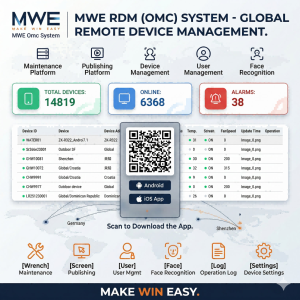
This backend analytics dashboard provides actionable insights for leasing teams and operations managers, helping them optimize tenant mix and staffing schedules based on real demand.
خاتمة
Interactive Wayfinding Kiosks are no longer a “nice-to-have” novelty; they are essential infrastructure for any large-scale venue. By reducing visitor anxiety, improving accessibility, and providing valuable data, they transform a confusing maze into a welcoming, user-friendly environment. In the age of Smart Cities, your building needs to be as smart as the people using it.