AR
AR  EN
EN  ES
ES 
Beyond the Four Walls: The Engineering MWE of Outdoor Digital Signage
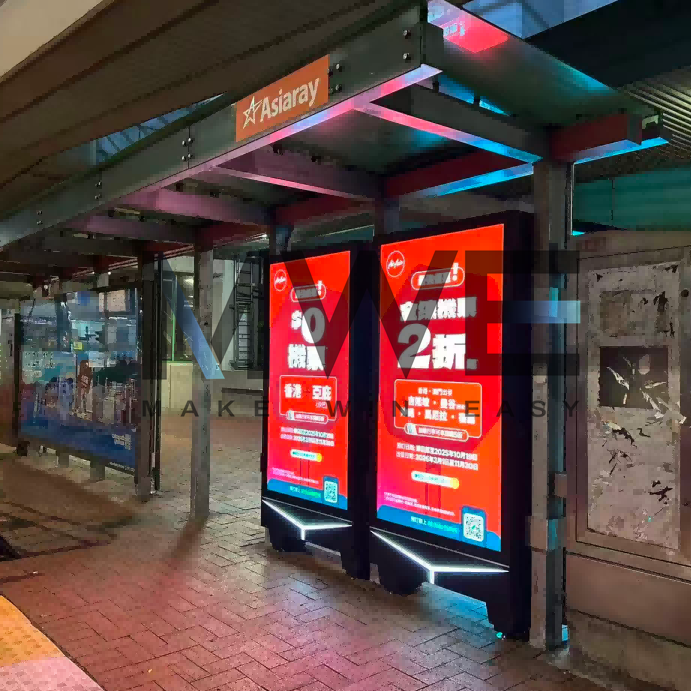
Taking your digital message outdoors unlocks a massive audience. From bus stops and train stations to city plazas and ski resorts, outdoor digital signage places your content directly in the path of the public. However, the outdoor world is a hostile environment for sophisticated electronics. Rain, dust, extreme temperature fluctuations, and physical vandalism pose constant threats.
For an outdoor advertising project to yield a return on investment (ROI), the hardware must be more than just a screen in a box—it must be an industrial fortress designed to survive and thrive in the elements.
The First Line of Defense: IP65 Protection
The most critical specification for any outdoor kiosk is its Ingress Protection (IP) rating. For reliable outdoor performance, the industry gold standard is IP65.
- The “6” (Dust Tight): This indicates complete protection against contact. No dust can enter the enclosure. This is vital because dust accumulation on internal components acts as an insulator, causing overheating and short circuits.
- The “5” (Water Jets): This certifies that the enclosure can withstand water projected by a nozzle from any direction. It ensures the unit remains operational during heavy rainstorms, snowmelt, or even when being cleaned with low-pressure water hoses.
Achieving this rating requires precision manufacturing, utilizing automotive-grade waterproof rubber sealing strips and specialized waterproof glue for the glass bonding process.
Thermal Management: The Heart of the Beast
Temperature control is the biggest challenge for لافتات رقمية خارجية. The unit faces two heat sources: the internal heat generated by the high-brightness backlight and the external solar loading (heat from the sun). Without active cooling, the internal temperature can easily cook the PC and power supply.
There are two primary cooling technologies used:
- Smart Air Cooling: This system uses high-velocity fans and sensors. When the internal temperature rises, the fans activate, pulling in cool air through specialized filters and exhausting hot air. It is energy-efficient and suitable for most temperate climates.
- Integrated Air Conditioning (HVAC): For regions with extreme heat (such as the Middle East or Arizona), simple fans are insufficient. These kiosks are equipped with built-in air conditioning units that maintain a stable internal temperature (e.g., 20-25°C) regardless of the scorching 50°C heat outside. Conversely, in freezing climates, internal heating elements prevent components from freezing and ensure “cold start” capabilities.
Built to Resist: Anti-Vandalism and Safety
Public spaces are unpredictable. An outdoor kiosk must be able to withstand accidental impacts or malicious intent. This is where IK10-rated glass comes into play.
The front face of a professional outdoor kiosk is protected by 6mm (or thicker) AR (Anti-Reflective) tempered glass. The IK10 rating means the glass can withstand an impact of 20 joules—equivalent to dropping a 5kg mass from 400mm—without shattering. If it does break under extreme force, it crumbles into small, blunt granular chunks (like a car windshield) rather than dangerous jagged shards, ensuring public safety.
خاتمة Deploying outdoor digital signage is a complex engineering feat. It requires balancing brightness, thermal dynamics, and structural integrity. By choosing a solution that prioritizes IP65 waterproofing, intelligent thermal management, and vandal-proof construction, businesses can ensure their message stands tall and bright, rain or shine. In the world of outdoor advertising, durability is not just a feature; it is the foundation of visibility.