AR
AR  EN
EN  ES
ES 

Meta Description: Explore interactive retail kiosks in Singapore. Learn how self-service solutions و customer personalization tools enhance the in-store experience, manage queues, and provide in-store analytics
Singaporean shoppers are among the most discerning in the world. They are tech-savvy, well-informed, and, above all, value efficiency. They are comfortable with self-service solutions and expect a seamless, personalized journey. In this environment, the traditional sales model is under pressure. Shoppers often prefer to browse independently before engaging with staff, yet they still demand instant access to deep product information.
This is where the interactive retail kiosk comes in. It acts as a “smart” sales assistant—always on, infinitely patient, and packed with information. These kiosks are a cornerstone of modern تكنولوجيا البيع بالتجزئة سنغافورة, simultaneously enhancing customer personalization and boosting store efficiency.
The Kiosk’s Multifaceted Role in Singaporean Retail
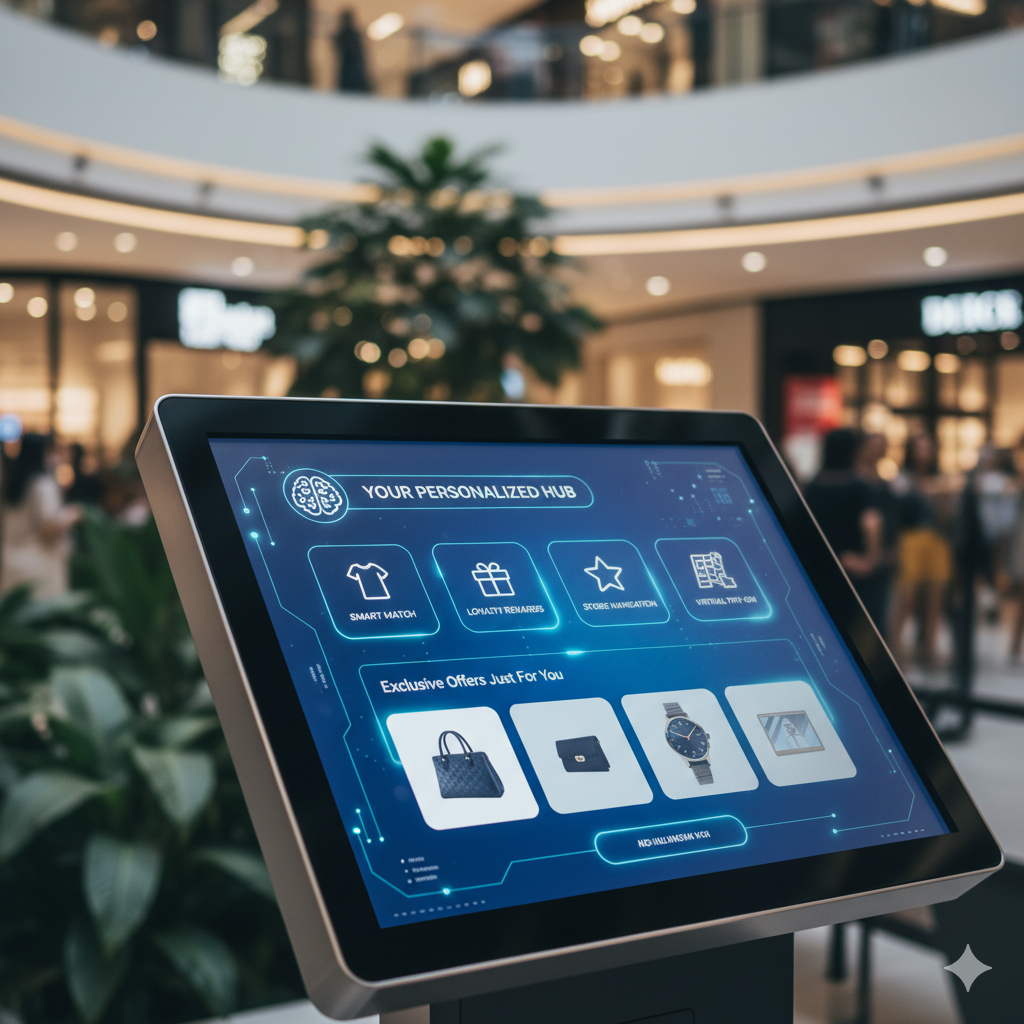
أكشاك البيع بالتجزئة التفاعلية are far more than just “information points.” They are versatile tools that solve several key challenges for retailers in high-rent, high-traffic environments like Singapore.
1. The “Endless Aisle” to Combat Space Constraints: Retail space in Singapore is expensive. This means most stores, especially in fashion, can’t stock every product in every size and color. This is a major source of lost sales. The “Endless Aisle” kiosk solves this. A shopper can browse the brand’s entire online catalog from the shop floor. If a product is out of stock, they can use the kiosk to order it directly to their home. This simple قنوات البيع بالتجزئة الشاملة strategy saves the sale, merges the online and offline worlds, and makes a small physical store feel infinitely large.
2. Self-Service Solutions and Queue Management: Singaporean shoppers value speed. Self-service solutions are hugely popular for this reason.
- Self-Checkout: Pioneered by fast-food and now common in retailers like Uniqlo, self-checkout kiosks dramatically reduce wait times, lower staff costs, and improve إدارة قائمة الانتظار.
- Click-and-Collect: Kiosks can streamline the “click-and-collect” process. A customer who bought online can simply scan a QR code at a kiosk to be directed to a locker or collection point, bypassing the main queue.
- Self-Ordering: In F&B, self-ordering kiosks are now standard. They reduce order errors, speed up throughput, and famously increase average order value by never forgetting to “upsell.”
3. Deep Customer Personalization: This is where kiosks truly shine as “smart” assistants. They can guide a customer through a complex decision-making process.
- Guided Selling: A kiosk at a Sephora might ask, “What is your skin type?” or “What look are you going for?” It then provides a personalized list of product recommendations.
- Product Configurators: A kiosk at a furniture store could allow a customer to customize a sofa with different fabrics and colors, visualizing the result in real-time.
This customer personalization provides immediate value to the shopper and gives them the confidence to make a purchase.

The Secret Weapon: In-Store Analytics and Data Collection
Beyond the customer-facing benefits, interactive retail kiosks are powerful in-store analytics tools. While staff can provide anecdotal feedback, a kiosk provides hard data collection. It tracks:
- What products are customers searching for most?
- What questions are they asking?
- What sizes/colors are most requested?
- At what times of day is the kiosk used?
This data is pure gold for store managers and corporate merchandisers. It provides an unfiltered, real-time look into customer intent, allowing for smarter inventory, layout, and promotion decisions.
Conclusion: The Hardest-Working Employee in the Store
In the fast-paced Singaporean retail scene, interactive retail kiosks are no longer a novelty; they are essential. They cater perfectly to the local shopper’s desire for efficiency, control, and digital integration.
They enhance the user experience (UX) through customer personalization, solve operational bottlenecks with self-service solutions, and provide the in-store analytics needed to compete. An interactive retail kiosk is, quite simply, the hardest-working, most data-rich “employee” a retailer can have.