AR
AR  EN
EN  ES
ES 

In today’s service economy, speed, convenience, and مشاركة العملاء are paramount. The interactive kiosk has emerged as a cornerstone of modern retail technology and public service, empowering customers to help themselves and freeing up staff to handle more complex tasks. These powerful self-service solutions are streamlining operations and dramatically improving the overall تجربة المستخدم.
What is a Touch Screen Kiosk?
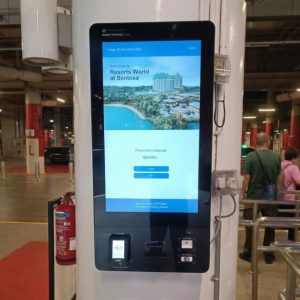
At its heart, a touch screen kiosk is a standalone terminal that provides access to information and applications. It combines a commercial-grade touch screen with a powerful internal computer, all housed in a durable and secure enclosure. Unlike a simple tablet, a true interactive kiosk is designed for constant public use, featuring a rugged build and software that can be locked down to a specific purpose, ensuring reliability and security.
The Rise of the Self-Service Kiosk
The applications for a كشك الخدمة الذاتية are transforming industries. In quick-service restaurants, they reduce queues by allowing customers to place and pay for their own orders. In healthcare, patients can check in for appointments and update their information without waiting for a receptionist. Hotels use them for seamless check-in/out, while cinemas have adopted them as self-serve ticketing booths. This automation enhances efficiency and gives customers more control over their journey.
Guiding the Way: The Wayfinding Kiosk
One of the most popular uses for this technology is the wayfinding kiosk. Deployed in large, complex venues like shopping malls, airports, hospitals, and corporate campuses, these kiosks function as a smart interactive directory. Visitors can quickly look up a store or office and see an animated path guiding them to their destination. A wayfinding kiosk reduces frustration, improves traffic flow, and adds a layer of modern convenience to any large facility.
Whether it’s serving as a primary information kiosk, a point of sale, or a guide, the interactive kiosk is a versatile tool. By putting control directly into the user’s hands, businesses can reduce overhead, gather valuable user data, and deliver a superior service that meets the expectations of today’s tech-savvy consumer.