AR
AR  EN
EN  ES
ES 
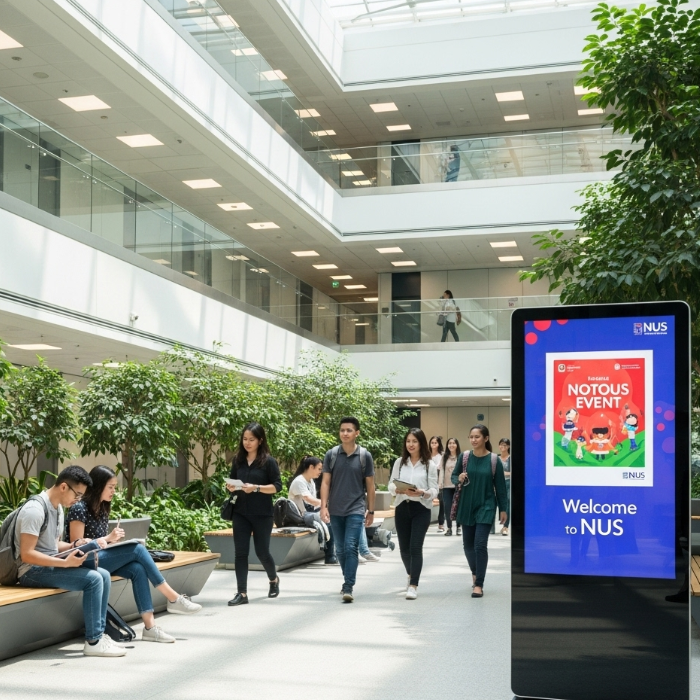
In the dynamic educational landscape of August 2025, effectively communicating across a sprawling university campus or a multi-level school building is a complex challenge. Traditional methods like cork notice boards quickly become cluttered and outdated. Meanwhile, important email blasts often get lost in the digital noise of student and staff inboxes. Consequently, educational institutions in Singapore are turning to a more powerful and centralized solution: digital signage.
This technology is about far more than simply replacing paper with screens. In fact, it represents a strategic shift towards a modern, responsive, and engaging communication ecosystem. From kindergartens to universities, digital displays are revolutionizing how educators and administrators share information. Let’s explore how.
1. Centralized, Instantaneous Announcements for a Campus on the Move
A school campus is a living entity with constantly changing schedules, events, and news. Digital signage provides the agility that modern education demands.
For instance, imagine needing to announce a last-minute lecture hall change at a university. In the past, this would require a frantic chain of emails. With a centralized digital signage network, however, an administrator can push this update instantly to every screen on campus—in libraries, canteens, and faculty buildings. This ensures they deliver critical information with unparalleled speed and visibility. Similarly, for primary and secondary schools, screens at entrance ways can display daily announcements, celebrate CCA achievements, and remind parents of upcoming events, all from one easy-to-use platform.

2. Interactive Wayfinding for Complex and Unfamiliar Campuses
For new students, visiting parents, or international guest lecturers, navigating a large university or polytechnic campus can be an intimidating experience. Static maps are often confusing and fail to provide the context needed for easy navigation.
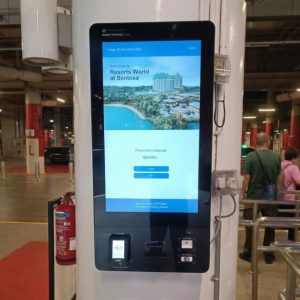
This is where أكشاك الإرشاد التفاعلية become invaluable. These touch-screen directories provide a superior experience. For example:
- الاتجاهات خطوة بخطوة: Users can search for a specific lecture theatre and receive an animated, easy-to-follow 3D path. Many systems can even send these directions to a user’s smartphone via a QR code.
- Accessibility Information: Furthermore, they can highlight accessible, barrier-free routes for individuals with mobility challenges, fostering a more inclusive campus environment.
- Event-Specific Navigation: During an Open House or orientation week, administrators can program kiosks with special event maps and schedules, guiding thousands of visitors seamlessly.
3. Enhancing Campus Safety and Security
The safety of students and staff is the absolute highest priority. For this reason, digital signage now plays a crucial role in modern campus security strategies.
By integrating a display network with the school’s emergency alert system, administrators can override all scheduled content in a crisis. In seconds, every screen can display critical, uniform instructions. For instance, in the event of a security lockdown or a severe weather warning from the NEA, screens provide clear, color-coded alerts with instructions on how to shelter in place or evacuate. This ability to deliver instant, consistent emergency information is a powerful upgrade to campus safety protocols.
4. Fostering a Vibrant and Connected School Culture
A great school is more than just a place of learning; it’s a community. Digital signage is the perfect canvas for building and showcasing this vibrant culture. Schools use screens in common areas to:
- Celebrate Achievements: Display photos and names of contest winners, sports teams, and academic high-achievers.
- Showcase Student Work: Run slideshows of student art, videos from school plays, or highlights from science fairs.
- Build Community: Share photos from recent field trips, wish students happy birthday, and post welcome messages for new staff.
Ultimately, this constant, positive reinforcement creates a more engaging and connected atmosphere.
5. Modernizing the Learning Environment Itself
Beyond just communication, digital displays are becoming part of the learning landscape. For example, libraries can use interactive screens as resource finders or for booking study rooms. In addition, large-format displays in lecture halls can stream educational content or guest speaker events, extending learning beyond the traditional classroom.
The MWE Display Solution for Education في عرض MWE, we understand the unique demands of the education sector. We build our displays to be durable and safe for high-traffic school environments. Our cloud-based Content Management System (CMS) is designed to be incredibly user-friendly, allowing non-technical administrative staff to easily schedule and update content. With a complete range of solutions—from large, bright screens for assembly halls to robust interactive kiosks for wayfinding—we provide the tools to help you build a truly smart and modern campus.